
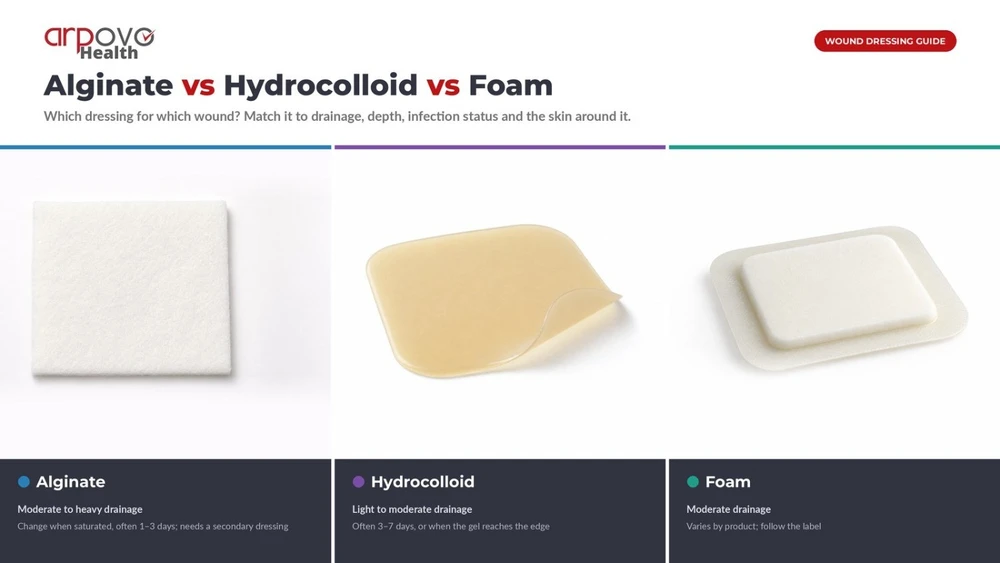
Alginate vs Hydrocolloid vs Foam: A Deeper Comparison
Oct 26th 2026
Choosing between an alginate vs hydrocolloid vs foam dressing starts with the wound, not the product name. The amount of drainage, wound depth, infection status, and condition of nearby skin determine the most suitable category. The advanced wound dressings overview explains the main types; this guide focuses on choosing between them. Deep, infected, or non-healing wounds need professional assessment before selecting a dressing.
Alginate Dressings
Alginate dressings are generally suited to moderate or heavy drainage. Made from seaweed-derived fibers, they absorb fluid and form a soft gel. Some products absorb many times their weight, although exact capacity varies by product.
Clinicians may select alginates for draining cavities or wounds with light bleeding. These dressings usually need a secondary dressing to hold them in place and manage additional fluid. Change them when saturated, often within one to three days, following the product instructions.
When should you avoid alginate?
Avoid it on dry wounds or wounds producing little fluid. Without enough moisture, the material may not gel properly and could stick to tissue. Deep wounds and cavities require professional assessment and appropriate guidance.
Hydrocolloid Dressings
Hydrocolloid dressings often suit shallow, clean wounds with light to moderate drainage. They use an adhesive surface and form a gel when they absorb wound fluid. This helps maintain a moist wound environment while protecting the area.
Common uses include minor abrasions and certain pressure injuries. Depending on drainage and product instructions, a hydrocolloid dressing may remain in place for three to seven days.
The gel beneath the dressing can look yellowish or cloudy. This appearance can be normal, so do not assume it means infection automatically. However, worsening pain, spreading redness, warmth, or other concerning changes need professional advice.
When should you avoid hydrocolloids?
Avoid using it on infected or heavily draining wounds without clinical direction. Its adhesive may also damage fragile surrounding skin during removal. Ask a healthcare professional to assess wounds with these concerns.
Foam Dressings
Foam dressings generally suit moderate drainage and provide cushioning against friction or pressure. They absorb wound fluid while helping protect the surrounding area. Some products have silicone edges that allow gentler removal from fragile skin.
Foam dressings may also cover an alginate dressing when additional absorption or protection is needed. However, suitability depends on the exact product and wound.
When should you avoid foam?
Foam is generally unsuitable for dry wounds that need added moisture. Absorbency, construction, and recommended wear time differ between products. Always follow the manufacturer's instructions rather than assuming every foam dressing works alike.
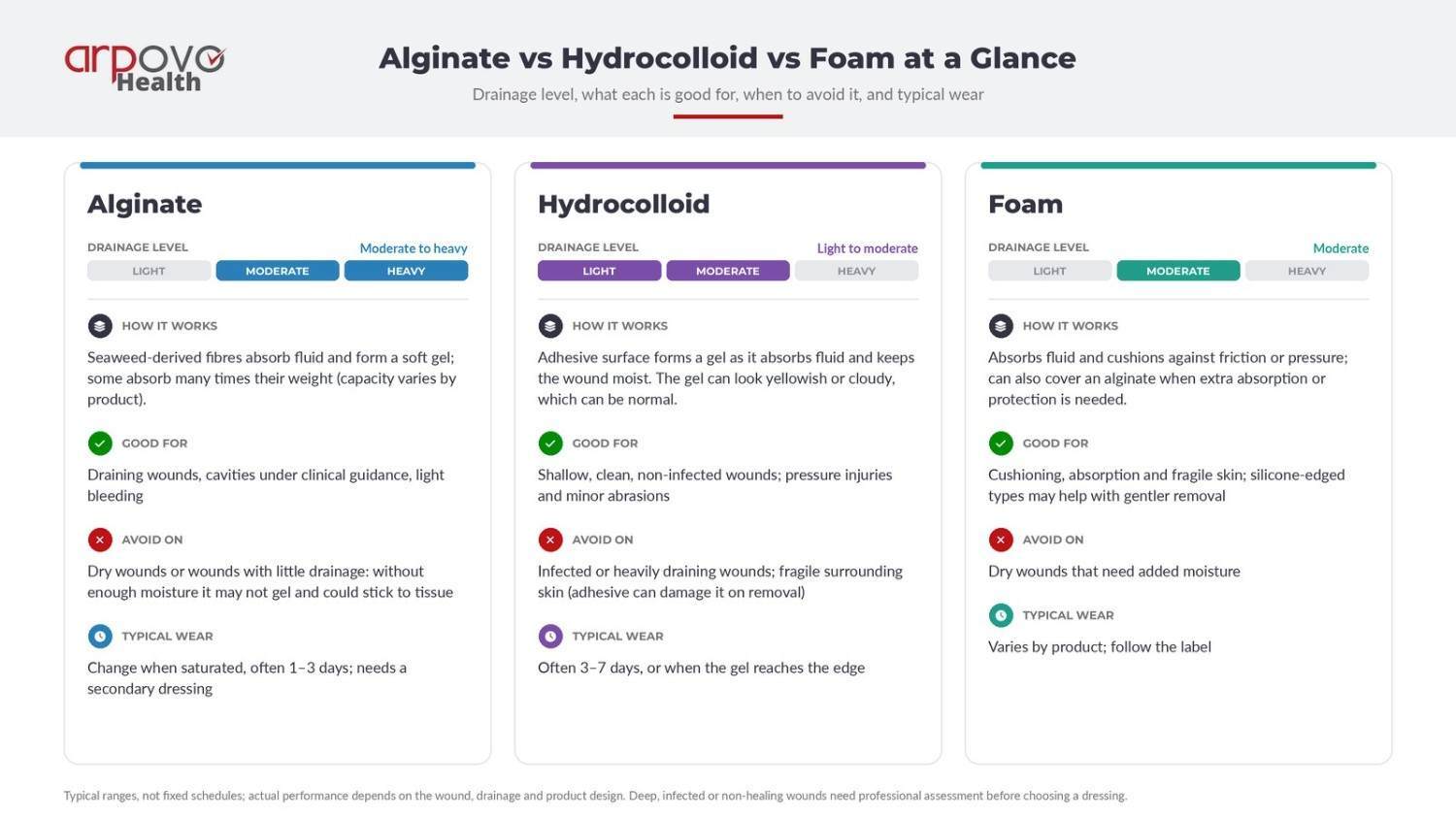
Comparison Table
Use this wound dressing comparison to identify the main differences at a glance.
|
Dressing |
Drainage Level |
Good For |
Avoid On |
Typical Wear |
|
Alginate |
Moderate to heavy |
Draining wounds, cavities under clinical guidance, light bleeding |
Dry wounds or wounds with little drainage |
Change when saturated, often 1–3 days; needs a secondary dressing |
|
Hydrocolloid |
Light to moderate |
Shallow, clean, non-infected wounds; suitable for pressure injuries and minor abrasions |
Infected or heavily draining wounds; fragile surrounding skin |
Often 3–7 days, or when gel reaches the edge |
|
Foam |
Moderate |
Cushioning, absorption, and fragile skin; silicone-edged types may help |
Dry wounds |
Varies by product; follow the label |
These wear times are typical ranges, not fixed schedules. Actual performance depends on the wound, drainage, and product design. For further clinical context, see the American Academy of Family Physicians' pressure-injury guidance, which recommends choosing dressings by injury stage and the amount of drainage.
Choosing by Situation
The best dressing depends on the wound's actual condition, not simply personal preference.
- Heavy drainage: A clinician may choose alginate with a suitable secondary dressing.
- Shallow wound with light to moderate drainage: Hydrocolloid may suit a clean, non-infected wound with healthy surrounding skin.
- Moderate drainage and fragile skin: Consider silicone-edged foam if the product suits the wound.
- Dry wound: None of these three is usually the first choice. A moisture-adding option, such as hydrogel, may be more appropriate under professional guidance. See the advanced wound dressings overview.
- Possible infection: Contact a healthcare provider instead of choosing a dressing yourself.
Drainage alone does not determine the right choice. Wound depth, tissue condition, skin sensitivity, and the care plan also matter. The same AAFP guidance covers pressure injuries specifically, but its core principle applies more widely: match the dressing to the wound's characteristics and drainage, and use hydrogel rather than an absorbent dressing when a wound has little drainage.
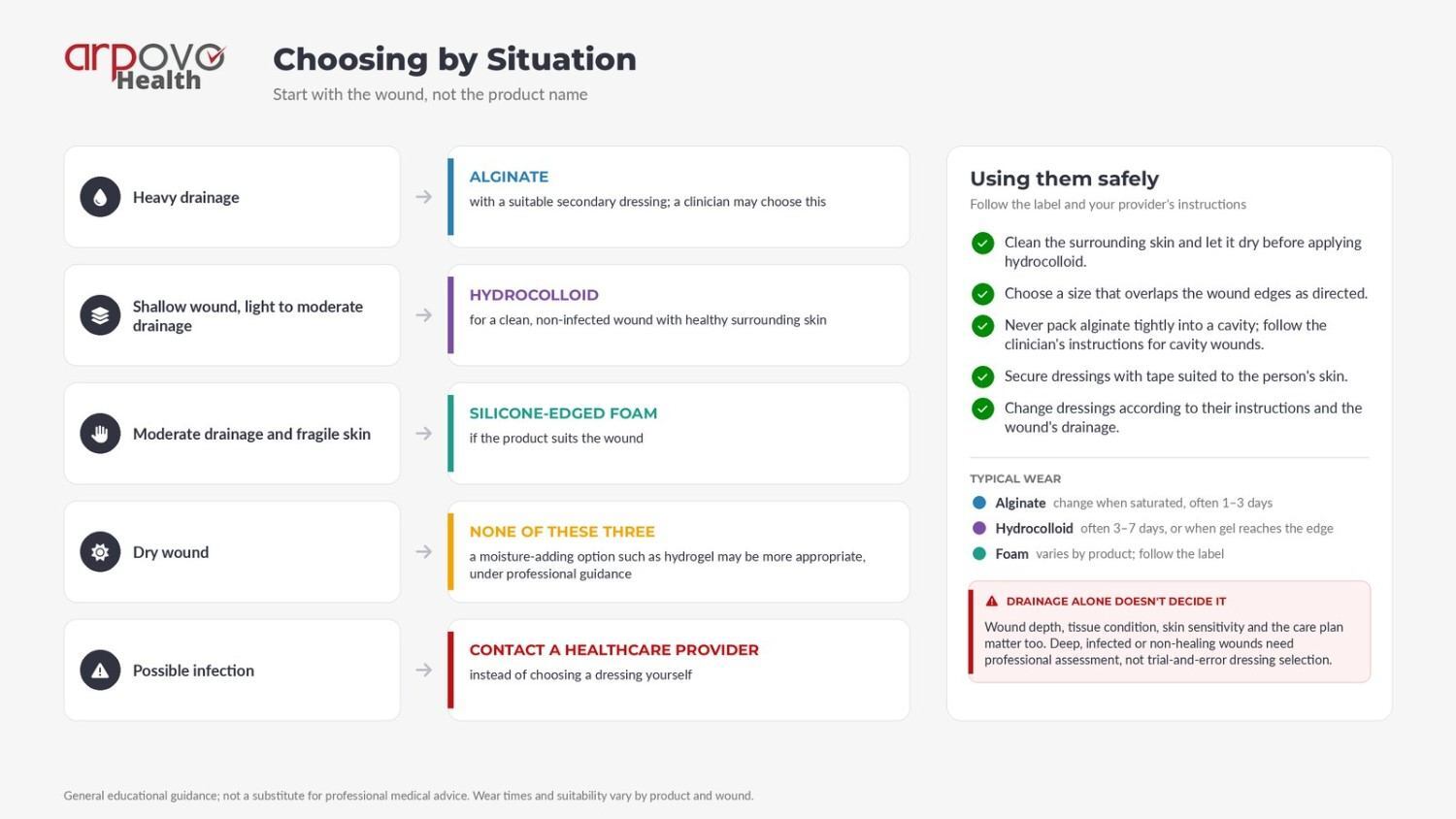
Using Them Safely
Follow the product label and your healthcare provider's instructions when using these dressings.
- Clean the surrounding skin and let it dry before applying hydrocolloid.
- Choose a dressing size that overlaps the wound edges as directed.
- Never pack alginate tightly into a cavity. Follow the clinician's instructions for cavity wounds.
- Secure dressings with tape suited to the person's skin. The medical tape comparison explains common options.
- Change dressings according to their instructions and the wound's drainage.
Review these common wound care mistakes to avoid habits that may disrupt recovery. For wound cleaning information, read the guide on proper wound irrigation. Deep, infected, or non-healing wounds need professional assessment rather than trial-and-error dressing selection.
Find Wound Care Supplies
Choosing between alginate, hydrocolloid, and foam starts with proper wound assessment. Browse Arpovo Health's wound care category for currently listed supplies. Check individual product listings for availability and suitability before ordering.
Frequently Asked Questions
Which dressing is best for a heavily draining wound?
Alginate is commonly used for moderate to heavy drainage because it absorbs fluid and forms a gel. It needs a secondary dressing, and a healthcare provider should assess a heavily draining wound.
Can I use a hydrocolloid dressing on an infected wound?
Hydrocolloids are generally not recommended for infected wounds. Contact a healthcare provider if you notice possible signs of infection.
Can I use alginate on a dry wound?
No. Alginate needs wound fluid to form a gel, so it may stick to dry tissue and cause damage during removal.
How long can a hydrocolloid dressing stay on?
Often three to seven days, depending on drainage and the product. Follow the label and change it when the gel reaches the dressing's edge.
What is the difference between a foam and a hydrocolloid dressing?
Foam cushions the area and absorbs moderate drainage. Hydrocolloid forms a gel and often suits shallow wounds with lighter drainage.
This article is for general educational purposes and isn't a substitute for professional medical advice. If a wound is deep, infected, heavily draining, or not healing, contact a healthcare provider before choosing a dressing.