
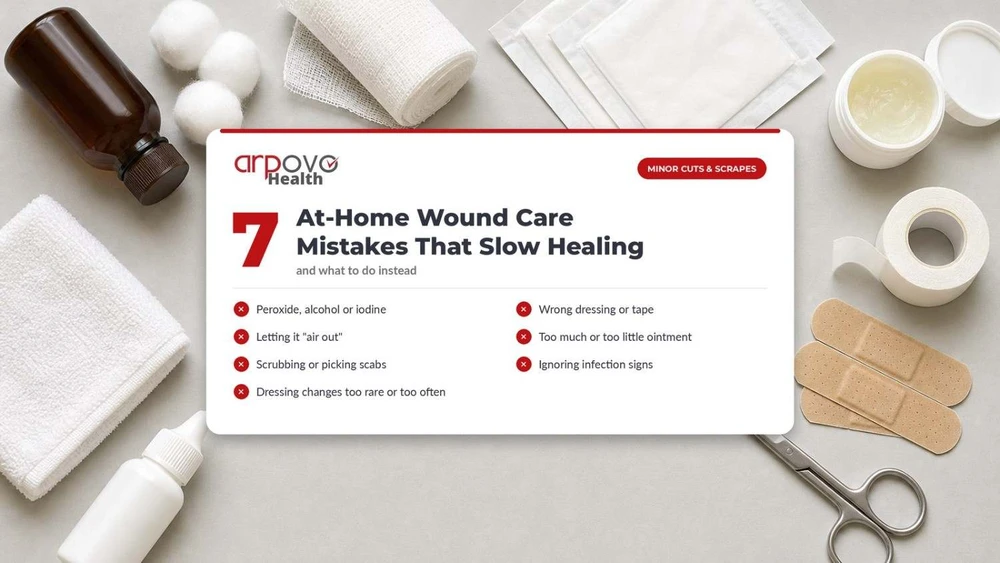
7 At-Home Wound Care Mistakes That Slow Healing
Oct 19th 2026
The main wound care mistakes to avoid include harsh cleaners, air-drying, scrubbing, poor dressing changes, unsuitable supplies, incorrect ointment use, and ignored infection signs. Most minor cuts and scrapes heal well with simple care, and many of these habits are passed down for years without anyone questioning them. These seven fixes can help you care for minor wounds more safely.
1. Using Hydrogen Peroxide, Alcohol, or Iodine on the Wound
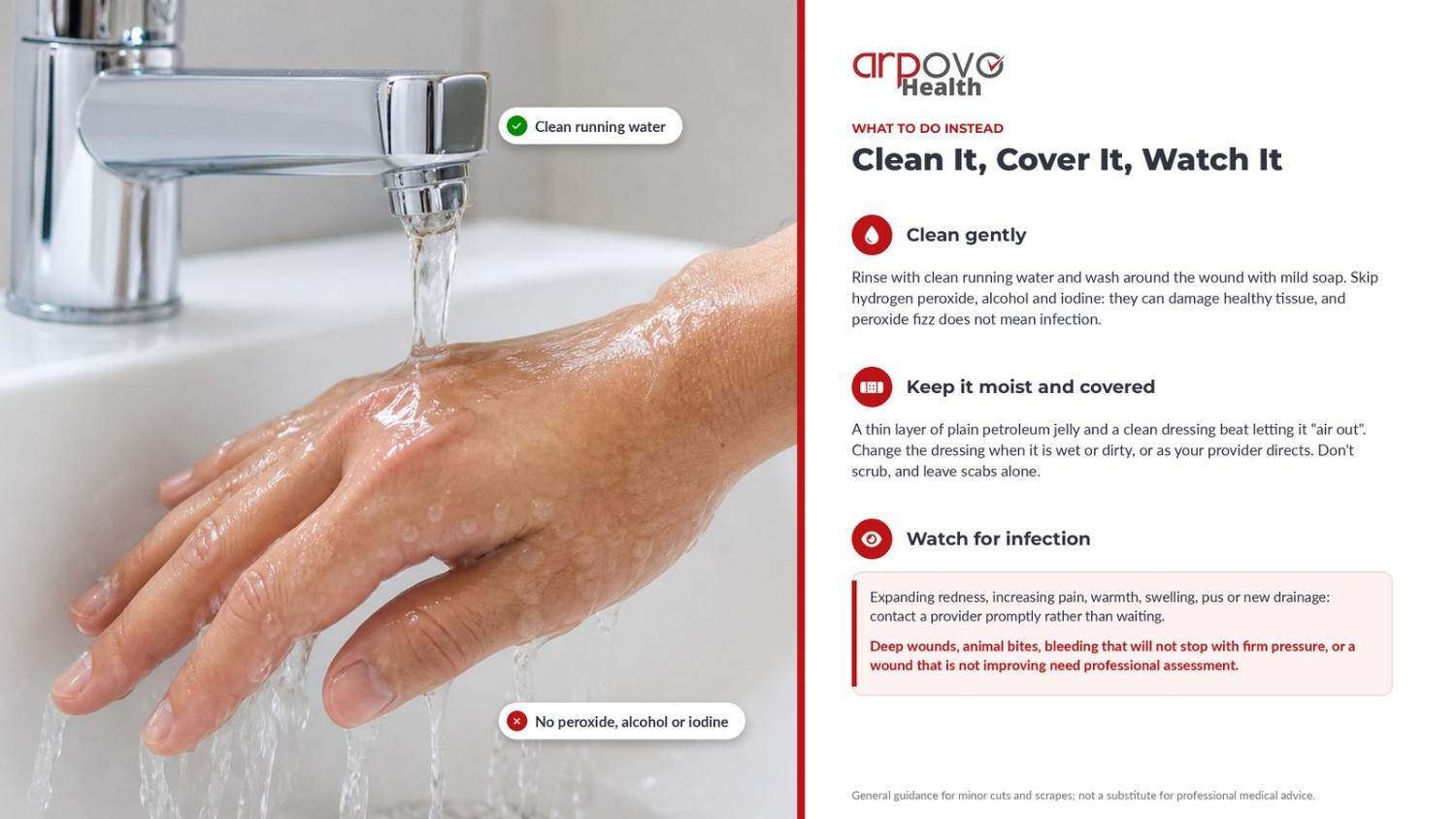
Hydrogen peroxide, rubbing alcohol, and iodine can irritate or damage healthy tissue. In lab tests, antiseptics strong enough to kill germs also harmed the skin cells that help a wound heal. Instead, rinse a minor wound with clean running water and wash around it with mild soap, as the Mayo Clinic's cuts and scrapes guidance advises. Peroxide bubbles on wounds whether they are infected or not, so fizzing cannot diagnose infection. For the full cleaning routine, read the guide to proper wound irrigation.
2. Letting the Wound "Air Out"
Leaving a minor wound uncovered can dry its surface and encourage a scab. Scabs can slow new skin cells from moving across the wound, and dermatologists' wound care guidance notes that wounds with scabs tend to take longer to heal than moist, covered ones. For many minor cuts, a thin layer of petroleum jelly and a clean dressing help keep the area moist and protected. Learn more in the advanced wound dressings guide.
3. Scrubbing the Wound or Picking the Scab
Scrubbing can injure fragile tissue that is trying to repair itself. Picking a scab may reopen the wound, restart bleeding, and expose the raw tissue underneath to bacteria again. Rinse gently instead, and let scabs fall away naturally. If dirt remains embedded, contact a healthcare professional rather than digging at it.
4. Changing the Dressing Too Rarely or Too Often
A wet, dirty, or loose dressing may no longer protect the wound properly. However, replacing a clean dressing repeatedly can disturb fragile tissue and irritate nearby skin. How often to change it depends on the wound, how much it drains, and the type of dressing. As a rule, change the dressing when it is wet or dirty, or follow your healthcare provider's schedule. Check the wound and surrounding skin during each change.
5. Using the Wrong Dressing or Tape
The right dressing depends on wound location, drainage, and the care plan. A dressing that is too absorbent can dry a wound out, while one that holds too much moisture can soften the surrounding skin. Adhesives also affect skin differently, especially on older or fragile skin. Choose supplies that suit the wound and follow package instructions. Compare options in the advanced wound dressings guide and learn about adhesives in Medical Tape Types Compared.
6. Using Too Much or Too Little Ointment
A thick layer can leave wound edges overly soft and white. Too little may let the surface dry and form a hard crust. For a minor, non-infected cut, a thin layer of plain petroleum jelly is often enough, and wound-care sources note it works about as well as antibiotic ointment on minor wounds that are not infected. Antibiotic ointment is not always necessary. Some antibiotic ingredients cause a rash, so stop using them and seek advice if irritation develops.
7. Ignoring Early Signs of Infection
Expanding redness, increasing pain, warmth, swelling, pus, or new drainage can signal infection. Contact a healthcare provider promptly instead of waiting. A change in how a wound looks does not always mean infection, so watch for signs that are getting worse rather than a single day of pinkness. Deep wounds, animal bites, bleeding that will not stop with firm pressure, and wounds that are not improving need professional assessment. Diabetes raises the stakes because foot injuries may heal slowly or go unnoticed; read the guide to diabetic foot ulcers.
Quick Reference
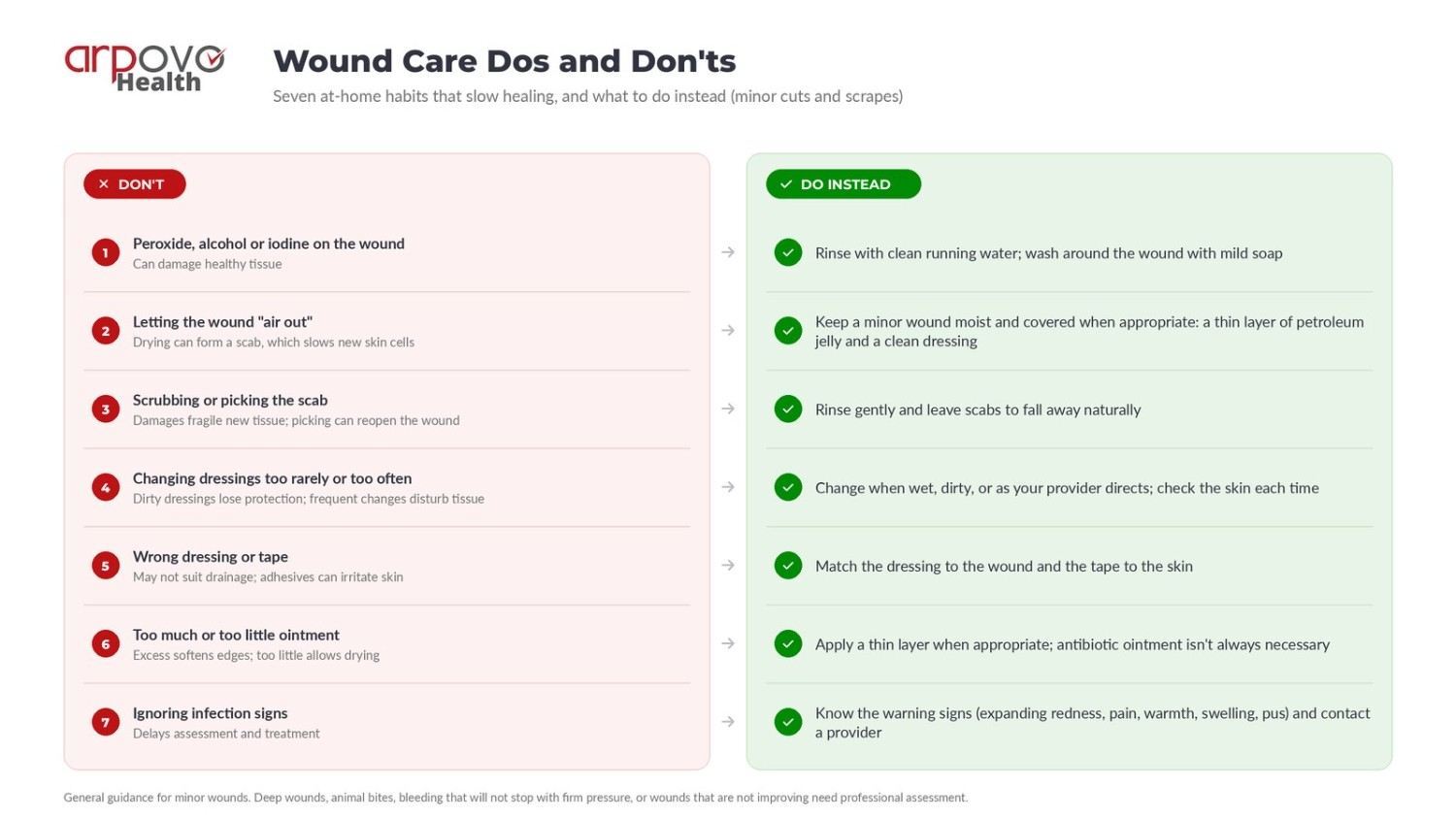
Use this table to remember key wound care dos and don'ts for minor injuries.
|
Mistake |
Why It Can Slow Healing |
What to Do Instead |
|
Peroxide, alcohol, or iodine |
Can damage healthy tissue |
Rinse with clean water; wash around the wound with mild soap |
|
Letting the wound "air out" |
Drying can form a scab |
Keep a minor wound moist and covered when appropriate |
|
Scrubbing or picking |
Damages fragile new tissue |
Rinse gently and leave scabs alone |
|
Changing dressings too rarely or too often |
Dirty dressings lose protection; frequent changes disturb tissue |
Change when wet, dirty, or as directed |
|
Wrong dressing or tape |
May not suit drainage and can irritate skin |
Match the dressing to the wound and tape to the skin |
|
Too much or too little ointment |
Excess softens edges; too little allows drying |
Apply a thin layer when appropriate |
|
Ignoring infection signs |
Delays assessment and treatment |
Know warning signs and contact a provider |
Find Wound Care Supplies
Good wound care starts with gentle cleaning, suitable coverage, and knowing when to get help. Browse Arpovo Health's advanced wound care supplies for dressings and related products. Follow your healthcare provider's advice when choosing supplies.
Frequently Asked Questions
Should I let a wound air out or cover it?
For many minor cuts and scrapes, keep the wound moist and covered with a clean dressing. Follow medical advice for surgical wounds or injuries needing special care.
Is hydrogen peroxide good for cleaning cuts?
No. It can irritate or damage healthy tissue. Use clean running water and mild soap around the wound instead.
Does hydrogen peroxide bubbling mean a wound is infected?
No. Bubbling can happen whether a wound is infected, so it isn't a reliable test.
How often should I change a wound dressing?
Change it when wet or dirty, or as your healthcare provider directs. Avoid unnecessary changes that disturb healing tissue.
What are the signs a wound is infected?
Watch for expanding redness, increasing pain, warmth, swelling, pus, or drainage. Contact a healthcare provider if you notice these signs.
This article is for general educational purposes and isn't a substitute for professional medical advice. If a wound is deep, bleeding heavily, shows signs of infection, or isn't healing, contact a healthcare provider.