
What Are Advanced Wound Dressings? A Guide
Aug 12th 2026
For most of modern medical history, the standard advice for a wound was to keep it dry and let it "breathe." That changed in 1962, when researcher George Winter published a study showing that wounds covered to stay moist re-epithelialized roughly twice as fast as wounds left exposed to air. That single finding reshaped wound care and is the reason advanced wound dressings exist at all: they're built to manage the wound's environment, not just cover it up.
The Science Behind Modern Wound Care
Winter's experiment, run on superficial wounds in pigs, showed that new skin cells migrate across a moist wound bed far more easily than across a dry one a dry scab actually acts as a physical barrier that new cells have to grow underneath rather than across. That single insight is the foundation almost every advanced dressing builds on: control moisture, and you speed up healing. A plain gauze pad or adhesive strip does one job it covers the wound. An advanced dressing actively manages the wound's moisture level, which is a meaningfully different function.
Types of Advanced Wound Dressings
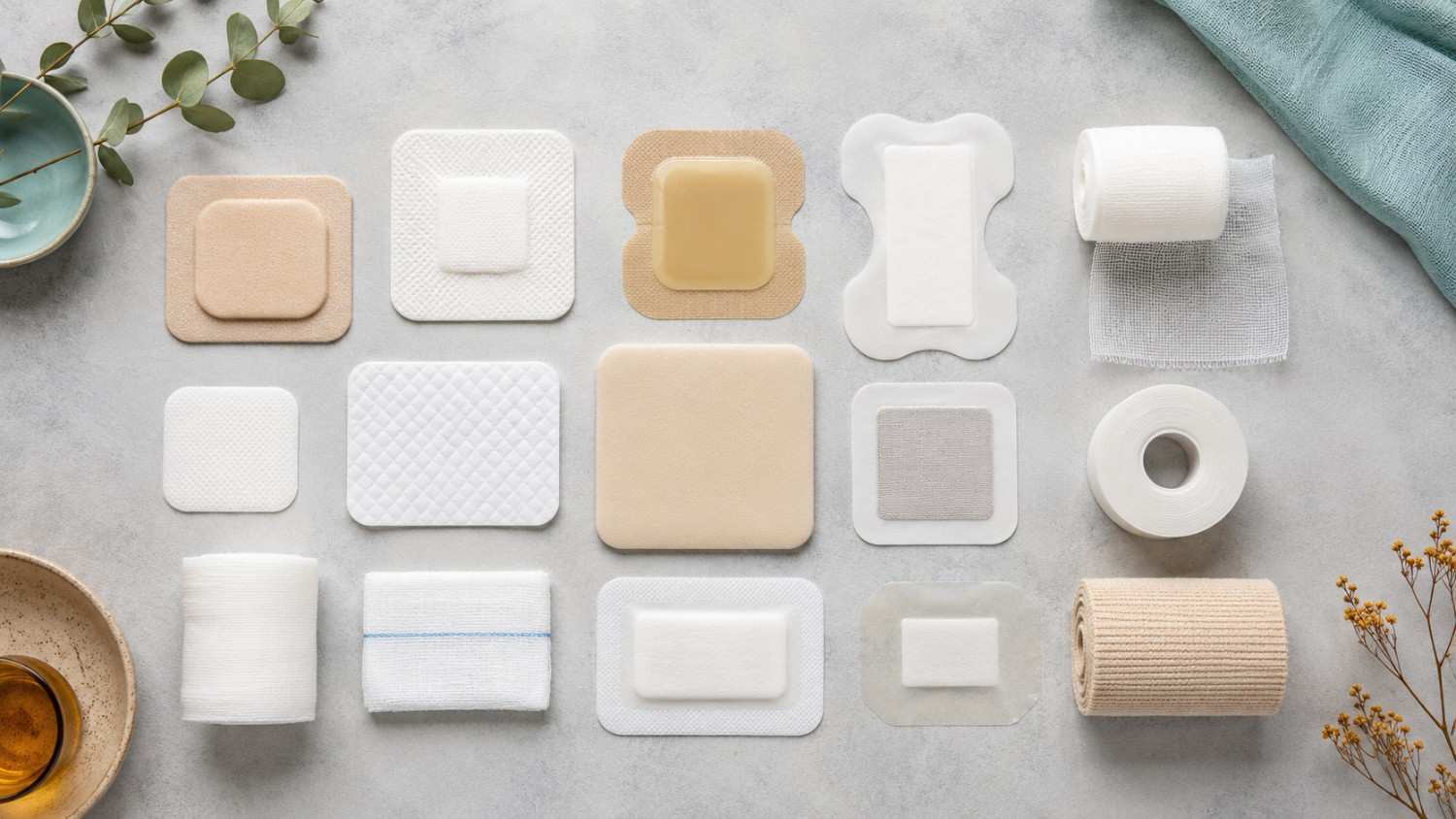
Different wounds produce different amounts of fluid and need different things from a dressing. Here's how the main categories differ:
Hydrocolloids
Hydrocolloid dressings are self-adhesive and form a gel when they contact wound fluid, creating a moist seal over the wound. They work well for wounds with light-to-moderate drainage, like pressure sores and minor burns, and can typically stay in place for several days without changing, which reduces disruption to healing tissue.
Alginates
Made from seaweed-derived fibers, alginate dressings are built for the opposite problem: wounds that produce heavy drainage. They can absorb many times their weight in fluid, turning into a soft gel as they do, which makes them a common choice for deep or heavily exuding wounds. Clinicians often pair them with a secondary dressing to hold them in place and lock in that absorbed fluid.
Foams
Foam dressings sit in the middle ground, absorbent enough for moderate drainage, cushioned enough to protect the wound from pressure and friction. They're a frequent choice for surgical sites, donor sites, and ulcers where the skin around the wound is fragile, since they can be removed without pulling at healing tissue.
Hydrogels
Hydrogels do the opposite job of alginates: instead of absorbing fluid, they add moisture to wounds that are too dry, such as wounds with dead tissue that needs to soften before it can be cleared away. They're a common choice for wounds that need rehydration rather than drainage management.
Honey-Based Dressings
Medical-grade honey dressings (often made with Leptospermum, or manuka, honey) bring natural antibacterial activity and help draw out dead tissue while keeping the wound bed moist. They've become a common option for infected or slow-healing chronic wounds where reducing bacterial load matters as much as moisture control.
Antimicrobial and Silver Dressings
For wounds at high infection risk, some dressings incorporate silver or other antimicrobial agents directly into the material, releasing them gradually to help control bacterial growth at the wound surface while the base material still manages moisture the way a foam or hydrocolloid would.
How Clinicians Choose Between Them
Picking a dressing isn't about which one is "best"; it's about matching the dressing to what the wound is actually doing. A framework many wound care clinicians use looks at four things:
- Tissue: Is there dead or non-viable tissue that needs to be managed?
- Infection/Inflammation: Is there a current or elevated risk of infection?
- Moisture balance: Is the wound too wet, too dry, or well-balanced?
- Edge: Is the wound border healing and advancing, or stalled?
Answering those questions points toward a category: a dry wound with dead tissue often calls for a hydrogel; a heavily draining wound calls for an alginate or foam; a wound with elevated infection risk might call for a honey or silver-based option. Wound depth, the patient's skin sensitivity, and how often the dressing can realistically be changed all factor in too.
When Advanced Dressings Make the Real Difference
Basic dressings work fine for minor cuts and scrapes that heal on their own timeline. Advanced dressings earn their place with wounds that don't follow that timeline chronic wounds like diabetic foot ulcers, venous leg ulcers, and pressure injuries, which can take months to heal and are prone to complications along the way. These aren't a small population: recent Medicare data puts the number of beneficiaries dealing with a chronic wound at roughly 10.5 million, a figure driven largely by the rising rate of diabetes in the U.S. For wounds in this category, the right dressing isn't a comfort upgrade; it's often what keeps a slow-healing wound from becoming an infected one.
Frequently Asked Questions
What makes a dressing "advanced" instead of basic?
Basic dressings like gauze and adhesive bandages simply cover a wound. Advanced dressings actively manage the wound's moisture level, and in some cases release antimicrobial agents to support faster and safer healing.
How do I know if a wound needs an advanced dressing?
Wounds that are slow to heal, produce significant drainage, are at elevated infection risk, or come from a chronic condition like diabetes are the ones where advanced dressings typically make a measurable difference. For a specific wound, follow your provider's wound care plan.
Can advanced dressings be used at home?
Many can, particularly hydrocolloids and foams, once a clinician has recommended the right type and shown the correct application and change schedule for that specific wound.
How often do advanced dressings need to be changed?
It varies by type and wound: some hydrocolloids can stay in place for several days, while heavily draining wounds with alginates may need more frequent changes. Follow the specific product's instructions and your provider's guidance.
Are honey-based dressings actually effective, or just a natural-product trend?
Medical-grade honey dressings are a genuine clinical tool, not a wellness trend the honey used is processed and sterilized specifically for wound care, and its antibacterial properties are well documented in wound care literature.
This article is for general educational purposes and isn't a substitute for advice from your doctor or wound care specialist. Always follow your provider's specific wound care plan.
Browse Arpovo Health's full range of advanced wound care dressings, including honey-based dressings and other options across every category above.