
Diabetic Foot Ulcers: Early Warning Signs and Home Care Basics
Sep 28th 2026
Catching early signs of diabetic foot ulcers matters because the stakes are real: nearly 1 in 4 people with diabetes, and by some more recent estimates as many as 1 in 3, will develop a foot ulcer in their lifetime, according to research published by the American Diabetes Association. Left untreated, these can lead to serious infection and, in advanced cases, amputation. Two factors make ulcers more likely and harder to catch early: neuropathy, which reduces sensation, and poor circulation, which slows healing once an injury occurs.
Early Warning Signs to Watch For
These diabetic foot ulcer warning signs often show up before an ulcer fully forms, which is exactly when catching them matters most.
|
Category |
What to Look For |
Why It Happens |
|
Sensation changes |
Numbness, tingling, or burning, especially at night |
Neuropathy reduces nerve signaling in the feet |
|
Skin color |
Red, brown, or black patches; redness that doesn't fade when pressed |
Signals tissue damage or reduced blood flow beneath the surface |
|
Temperature |
One area of the foot feels noticeably warmer than the rest |
The body sends extra blood to an injured or inflamed area |
|
Swelling |
Localized swelling, even without an obvious injury |
Inflammation response to underlying tissue stress |
|
Drainage or odor |
Discharge on socks or an unusual smell |
A sign a wound may already be open or infected beneath a callus |
|
Skin breaks |
A sore, blister, or callus that doesn't heal, or a dark spot under a callus |
The clearest and most direct warning sign of an ulcer |
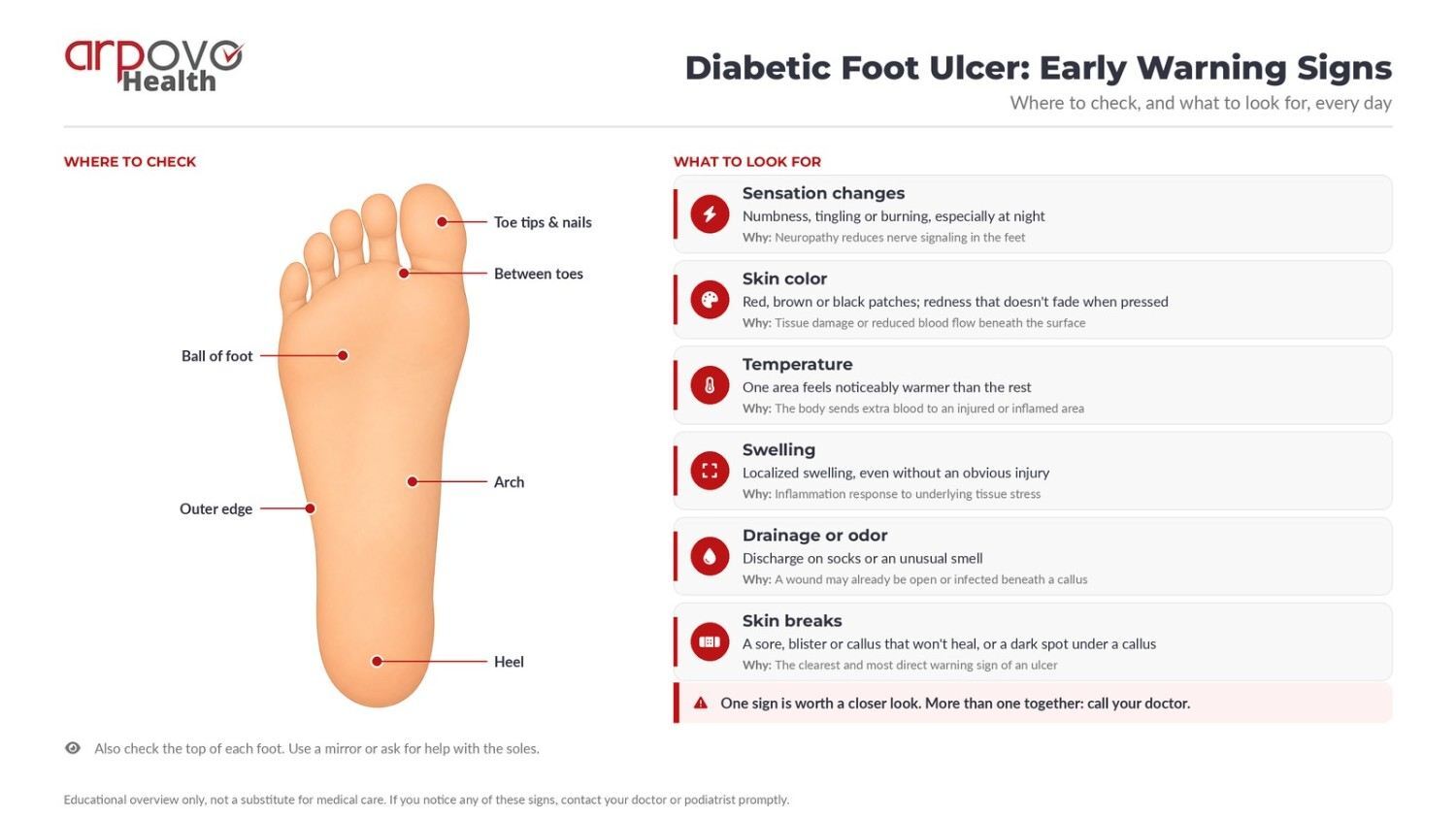
None of these signs alone means you definitely have an ulcer, but any of them is worth a closer look, and more than one together is worth calling your doctor about.
Why You Might Not Feel It Coming
Diabetic neuropathy foot symptoms like reduced sensation are exactly why relying on pain to notice a problem doesn't work. A person with reduced sensation may not feel a pebble in their shoe, a blister forming, or early tissue damage the way someone without diabetes would notice right away. This is exactly why visual daily checks matter more than waiting to feel something wrong. Someone without diabetes usually notices a problem through discomfort long before it becomes serious; someone with reduced sensation may not get that warning at all.
A Daily Foot-Check Routine
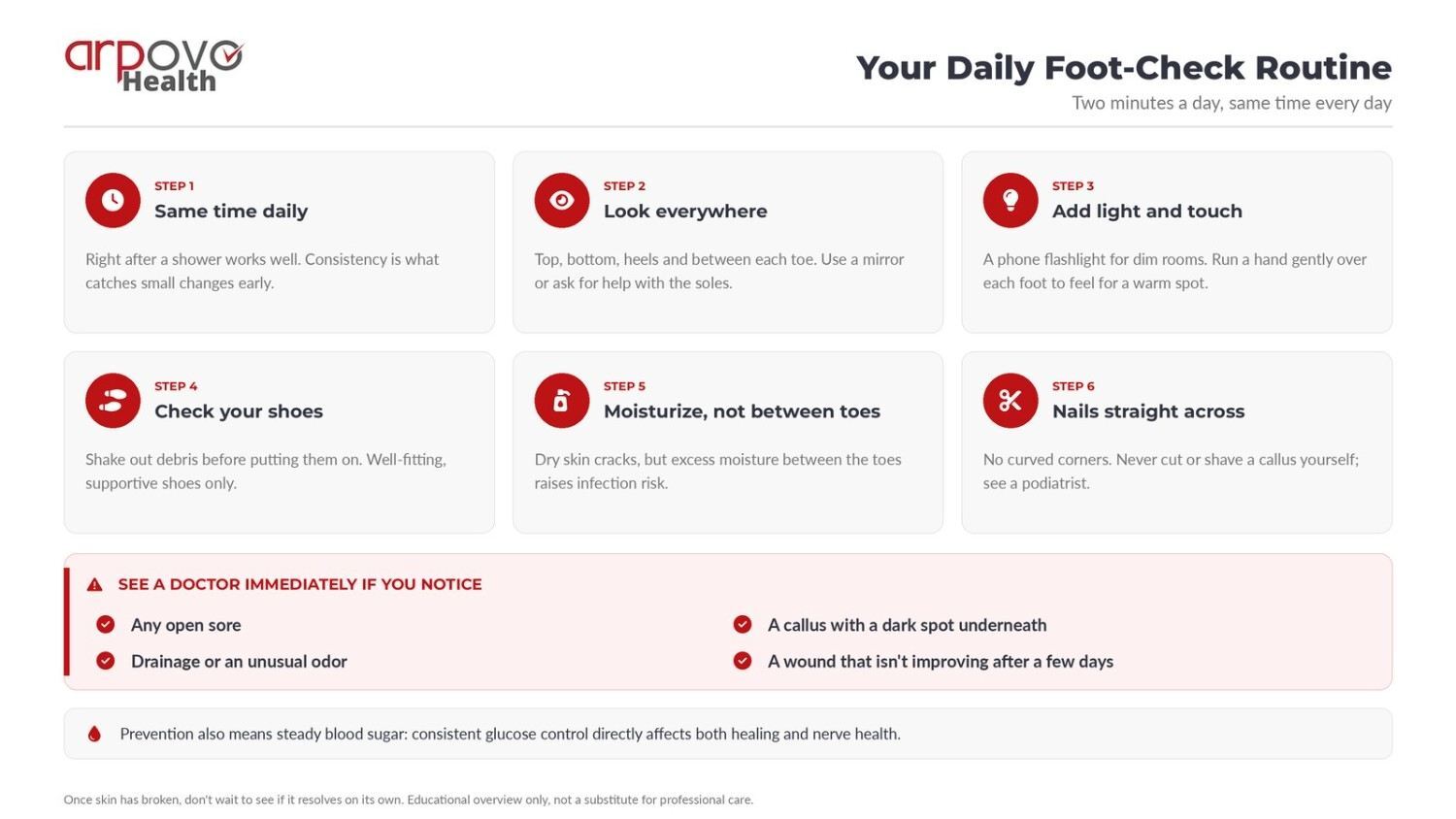
Checking your feet daily, at the same time each day, catches changes while they're still minor. Pick a consistent time, right after a shower works well, and look at the top, bottom, heels, and between each toe. Use a mirror or ask for help checking the sole if bending or flexibility is limited. A phone flashlight helps if bathroom lighting is dim, and running a hand gently over each foot can catch a temperature difference your eyes might miss. Look specifically for the signs in the table above.
Home Care Basics for Healthy Feet
A handful of diabetic foot care at home habits meaningfully lower ulcer risk, and none of them require special equipment. Moisturize regularly, but avoid the skin between your toes, since excess moisture there raises infection risk. Never self-treat a callus by cutting or shaving it; see a podiatrist instead. Wear well-fitting, supportive shoes, and check inside them for debris before putting them on. Keep blood sugar managed, since consistent glucose control directly affects both healing capacity and nerve health, which is part of why glucose monitoring belongs in the prevention picture, not just day-to-day management. Trim toenails straight across rather than curved at the corners, since a curved cut can grow inward and become an entry point for infection.
When to See a Doctor Immediately
Knowing when to see a doctor about a foot sore comes down to a short, clear list, and none of these are a wait-and-see situation:
- Any open sore
- A callus with a dark spot underneath
- Drainage or an unusual odor
- A wound that isn't improving after a few days
Once skin has actually broken, don't wait to see if it resolves on its own.
For minor skin concerns caught early, advanced wound dressings can support healing, and Arpovo's full wound care catalog covers supplies for a range of needs. On the prevention side, consistent blood glucose monitoring supplies are worth having on hand too. An actual open ulcer always needs professional care first.
Frequently Asked Questions
What is the earliest sign of a diabetic foot ulcer?
Often it's a sensation change (numbness, tingling, or burning) or a skin color or temperature change, rather than pain; neuropathy can mask pain even as tissue damage begins.
Why don't diabetic foot problems always hurt?
Diabetic neuropathy reduces nerve sensation in the feet, so injuries, pressure sores, or early ulcers may not trigger the pain response that would normally prompt someone to notice and address them.
How often should I check my feet?
Daily is the standard recommendation; a quick visual check, ideally at the same time each day, catches changes early enough to matter.
Can I treat a diabetic foot ulcer at home?
Early warning signs (dry skin, minor pressure marks) can be managed with good daily foot care, but an actual open sore or ulcer needs professional medical attention; this is not a wound to manage on your own.
What shoes are best for preventing foot ulcers?
Well-fitting, supportive shoes with enough room to avoid pressure points, checked for debris before wearing. A podiatrist can recommend specific options for higher-risk feet.
(This article is for general educational purposes and isn't a substitute for professional medical care. If you notice a sore, wound, or any of the warning signs above, contact your doctor or podiatrist promptly.)