
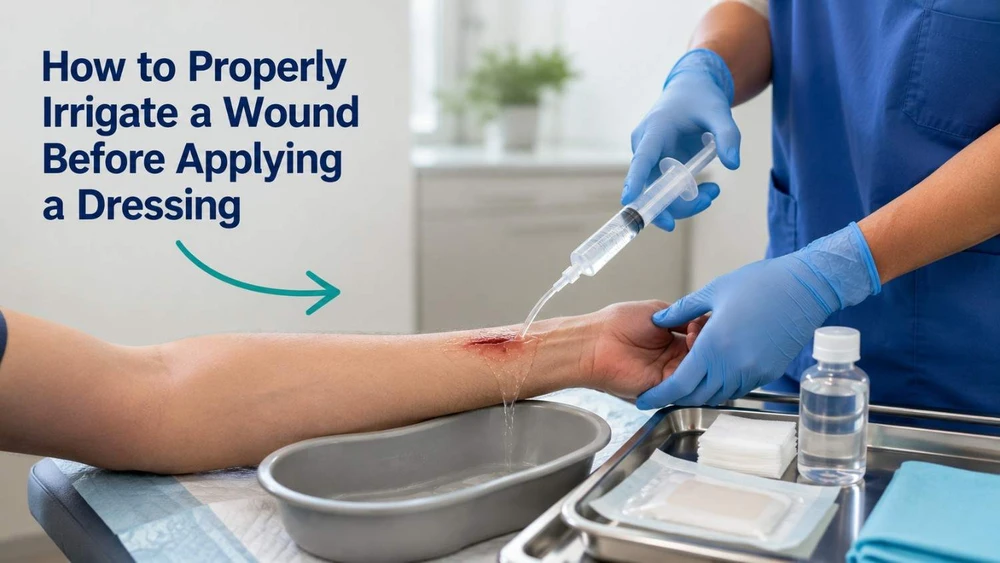
How to Properly Irrigate a Wound Before Applying a Dressing
Aug 19th 2026
Cleaning a wound before dressing it isn't just a formality it's the step that determines how well everything applied afterward actually works. A dressing placed over a wound that's still carrying debris or a high bacterial load has a much harder job to do. Getting the irrigation step right first makes every product that follows more effective.
Why Irrigation Comes First
Irrigation removes loose debris, surface bacteria, and contaminants before a dressing goes on. Skipping or rushing this step is a major reason minor wounds turn into infected ones clinical guidelines developed by the Agency for Healthcare Research and Quality (AHRQ) treat proper wound cleansing as a standard, non-optional step in wound care, not an extra precaution.
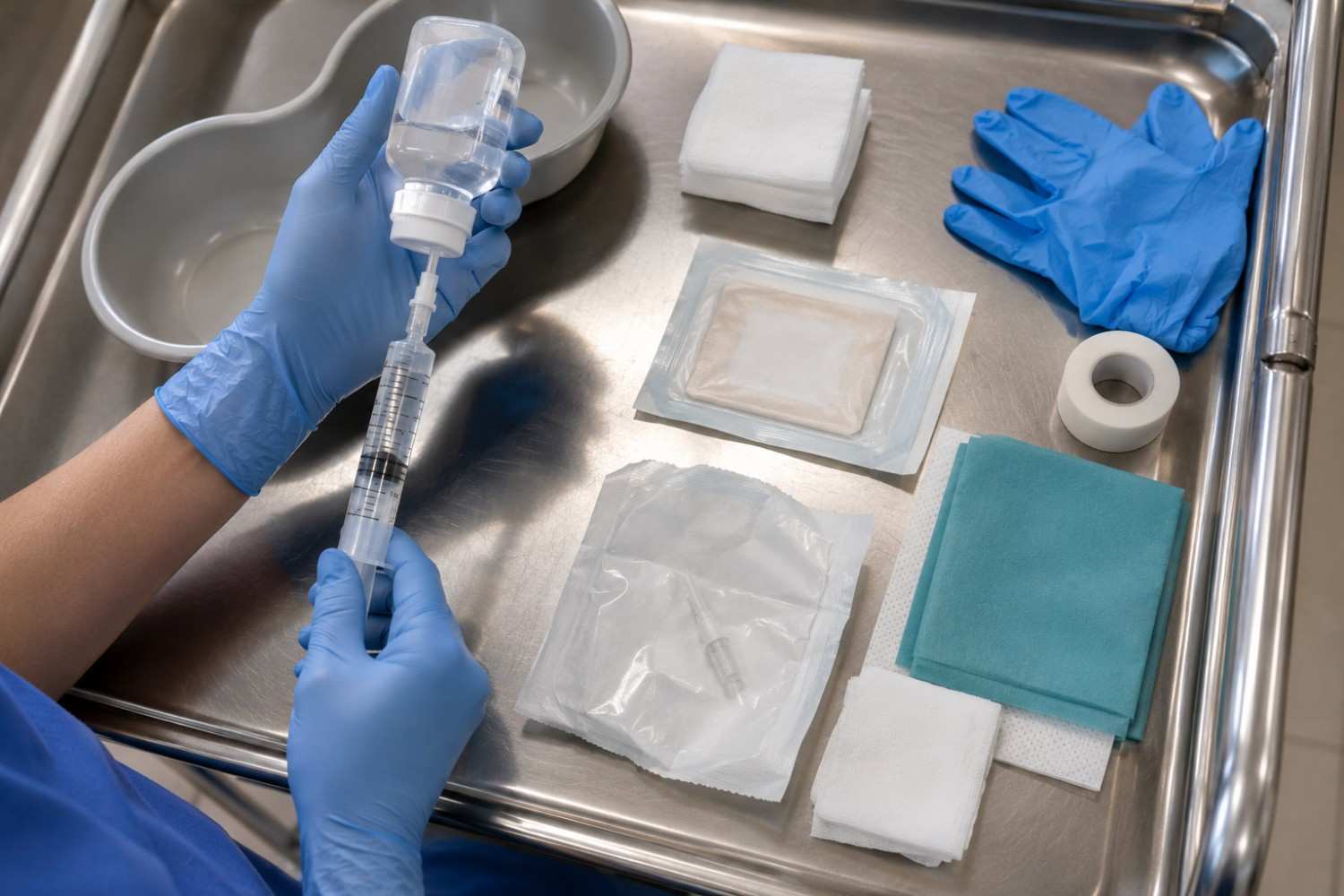
What You'll Need
- A clean irrigation solution (normal saline or clean tap water see below)
- A 35 mL syringe, ideally with an 18- or 19-gauge tip
- Sterile gauze
- Clean gloves
Saline vs. Tap Water: What the Evidence Actually Shows
This is one of the more evidence-backed questions in wound care, and the answer surprises people: multiple systematic reviews and randomized trials have found no meaningful difference in infection rates between wounds cleaned with sterile saline and wounds cleaned with clean tap water, for straightforward wounds. One scoping review pooling six randomized trials found a difference of less than half a percentage point between the two. Saline remains the standard choice in clinical settings and is the safer default for surgical wounds or anything cleaned within 48 hours of a procedure, but for everyday minor wounds, clean tap water is a legitimate, well-supported option when saline isn't on hand.
Getting the Pressure Right
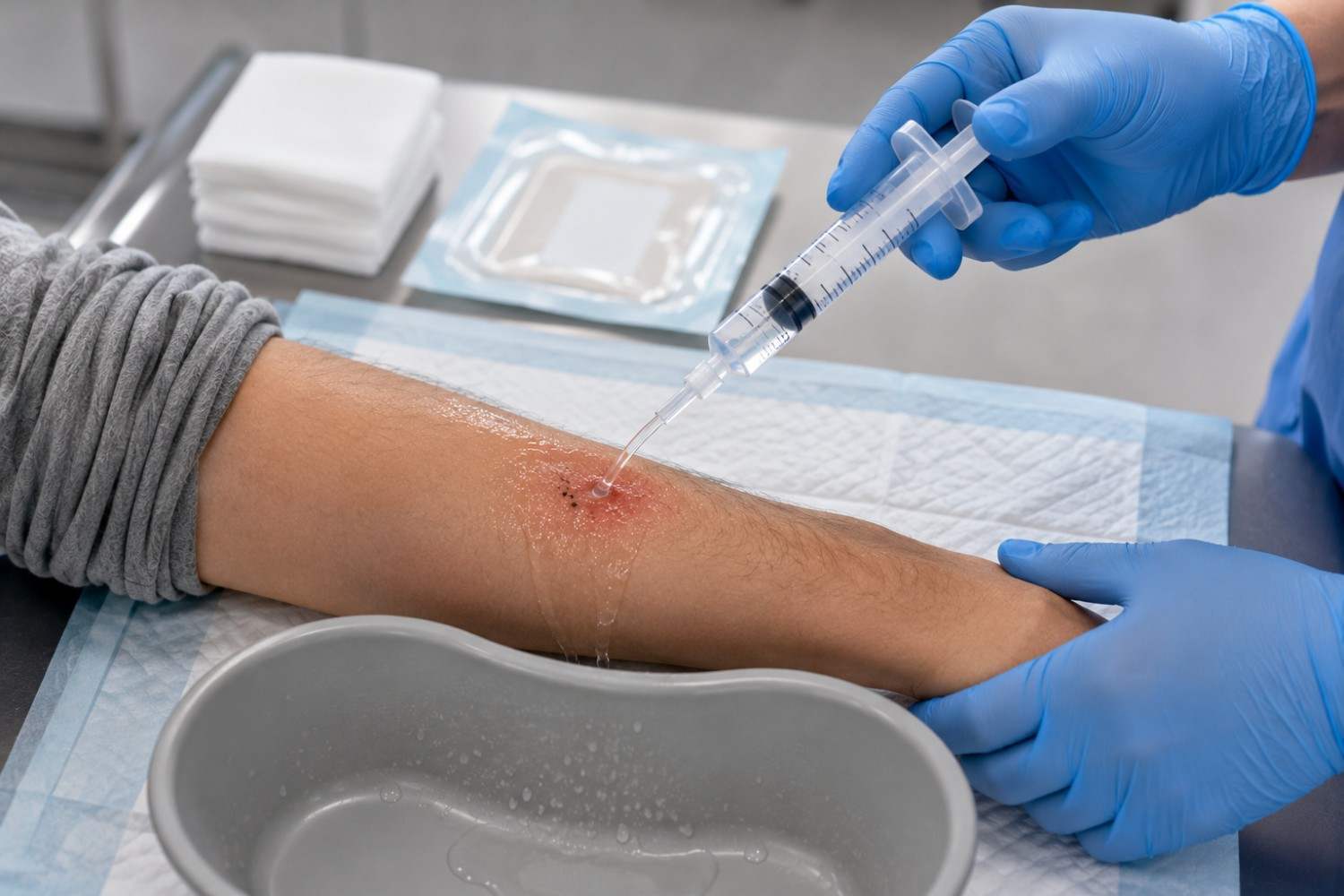
Pressure matters more than most people expect. Guidelines from AHRQ and multiple wound-care reviews put the effective range at 4–15 psi enough to dislodge debris and reduce bacterial load without damaging healthy tissue. Too little pressure won't clear contamination effectively; too much can force bacteria deeper into the wound and damage the tissue you're trying to protect.
In practice, a 35 mL syringe fitted with an 18- or 19-gauge tip delivers pressure in roughly this range, which is why it's the standard recommendation for both clinical and home irrigation.
Step-by-Step
- Wash your hands and put on clean gloves. This is the single most effective infection-control step in the entire process, according to CDC hand-hygiene guidance.
- Position the wound so fluid drains away from it, not back into it. Gravity should be helping you here, not working against the cleaning.
- Irrigate with steady, gentle pressure, covering the entire wound surface. Don't rush this step thorough coverage matters more than speed.
- Remove loose debris with the irrigation stream or clean instruments never scrub. Scrubbing pushes bacteria deeper into tissue and damages the wound bed, working against everything the irrigation just accomplished.
- Pat the surrounding skin dry with sterile gauze (not the wound itself) before applying a dressing. Dry surrounding skin helps a dressing adhere properly.
What Not to Use
Hydrogen peroxide, Betadine (povidone-iodine), and rubbing alcohol all have a well-documented downside on open wounds: they damage healthy tissue along with bacteria, which can slow healing rather than support it. These have legitimate uses elsewhere (surface disinfecting, for instance), but not as a wound irrigation solution. Saline or clean tap water remains the safer, evidence-backed choice for the wound itself.
When to Skip Home Care Entirely
Some wounds need professional attention instead of home irrigation:
- Deep wounds or puncture wounds
- Bleeding that doesn't stop with direct pressure
- Redness, swelling, or pus
- Fever or other signs of spreading infection
- A wound that isn't improving after several days
Frequently Asked Questions
Is tap water really as safe as saline for cleaning a wound?
For straightforward, minor wounds, yes research consistently shows comparable infection rates between the two. Saline is still preferred for surgical wounds or wounds within 48 hours of a procedure.
Why shouldn't I use hydrogen peroxide on a wound?
It kills bacteria, but it also damages healthy tissue cells in the process, which can slow healing rather than help it better reserved for surface disinfecting than direct wound care.
What pressure should I aim for when irrigating a wound?
Roughly 4–15 psi, which a standard 35 mL syringe with an 18- or 19-gauge tip typically delivers.
Should I scrub a wound to remove debris?
No. Use the irrigation stream itself, or gently lift debris with clean instruments scrubbing pushes bacteria deeper and damages healing tissue.
Stock up on saline solutions and advanced wound care dressings to complete your wound care routine after irrigation.