

Medical Tape Types Compared: Which One for Which Wound?
Oct 9th 2026
Understanding medical tape types for wounds starts with one key fact: tape holds a dressing in place, but the wrong adhesive on fragile skin can tear or strip it, sometimes creating a new wound in the process. Paper, cloth, silk, transparent, waterproof, foam, and silicone tapes each suit different skin types and situations. Once a wound itself is clean, the guide to properly irrigating a wound covers that earlier step; this guide picks up from there, matching tape to the skin and situation in front of you, not just whatever's on the shelf.
Paper Tape
Paper tape is breathable, gentle, and tears easily by hand, making it a strong default for fragile skin. It sticks even to damp skin and works well for pediatric, elderly, or post-surgical skin, along with lighter dressings generally, including a minor burn appropriate for home care. If you're not sure a burn qualifies for home care in the first place, the burn degree guide walks through that distinction. The trade-off with paper tape is hold: it isn't elastic and provides a weaker grip on heavier dressings that need to stay put under movement or pressure.
Cloth and Silk Tape
Cloth and silk tape trade gentleness for strength: a firm, long-wearing hold suited to intact, durable skin. It's a solid choice for heavier dressings that need to stay secure through daily activity. The trade-off runs the other direction from paper tape: removal is harsher, which makes it a poor first choice for fragile skin.
Transparent Tape
Transparent tape's main advantage is visibility: you can check the skin around a wound without lifting the tape to look. That matters most anywhere regular visual monitoring is part of the care routine, since you catch a developing problem without disturbing the dressing underneath. Hold varies from product to product, so check the label for how securely a given tape grips.
Waterproof, Foam, and Silicone Tape
Three more specialized types round out the options: waterproof, foam or elastic, and silicone. Waterproof tape keeps dressings in place through showers and sweat. Foam or elastic tape flexes with joints and curved areas where a stiffer tape would lift or crease, useful alongside advanced wound dressings for wounds that need more than basic gauze. Silicone tape offers a gentle, clean release, suited to very fragile skin or dressings that get changed often, usually at a higher price than the other options.
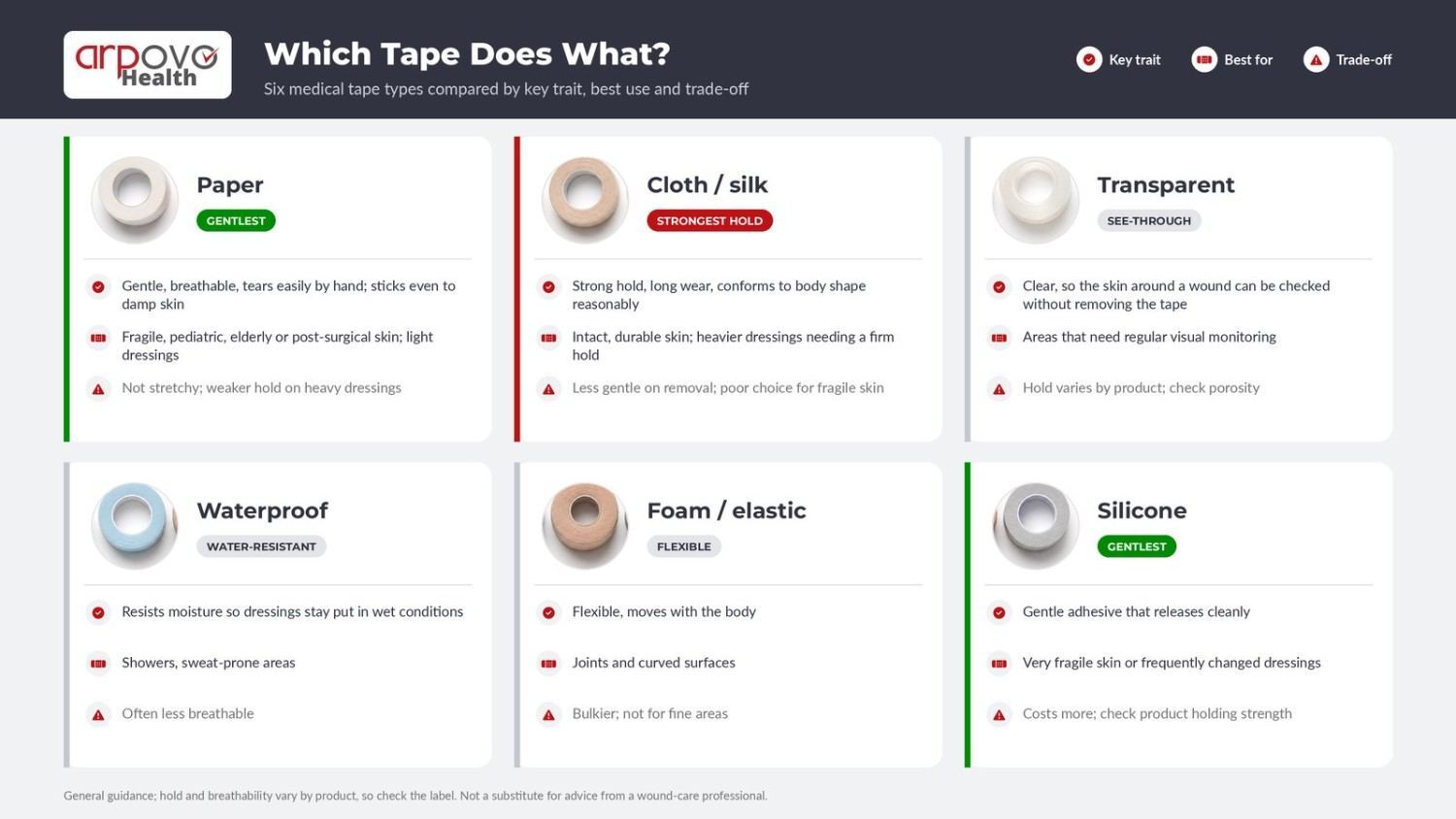
Quick Comparison
|
Type |
Key trait |
Best for |
Trade-off |
|
Paper |
Gentle, breathable, tears easily by hand; sticks even to damp skin |
Fragile, pediatric, elderly or post-surgical skin; light dressings |
Not stretchy; weaker hold on heavy dressings |
|
Cloth/silk |
Strong hold, long wear, conforms to body shape reasonably |
Intact, durable skin; heavier dressings needing a firm hold |
Less gentle on removal; poor choice for fragile skin |
|
Transparent |
Clear, so the skin around a wound can be checked without removing the tape |
Areas that need regular visual monitoring |
Hold varies by product; check porosity |
|
Waterproof |
Resists moisture so dressings stay put in wet conditions |
Showers, sweat-prone areas |
Often less breathable |
|
Foam / elastic |
Flexible, moves with the body |
Joints and curved surfaces |
Bulkier; not for fine areas |
|
Silicone |
Gentle adhesive that releases cleanly |
Very fragile skin or frequently changed dressings |
Costs more; check product holding strength |
How to Choose: Match Tape to Situation
Matching tape to your specific situation comes down to a handful of common scenarios.
- Fragile or elderly skin: paper or silicone.
- A dressing that must survive showers: waterproof.
- Over a knee, elbow, or other joint: foam or elastic.
- A heavy dressing on tough skin: cloth or silk.
- Need to watch the wound edges: transparent.
Applying and Removing Tape Safely
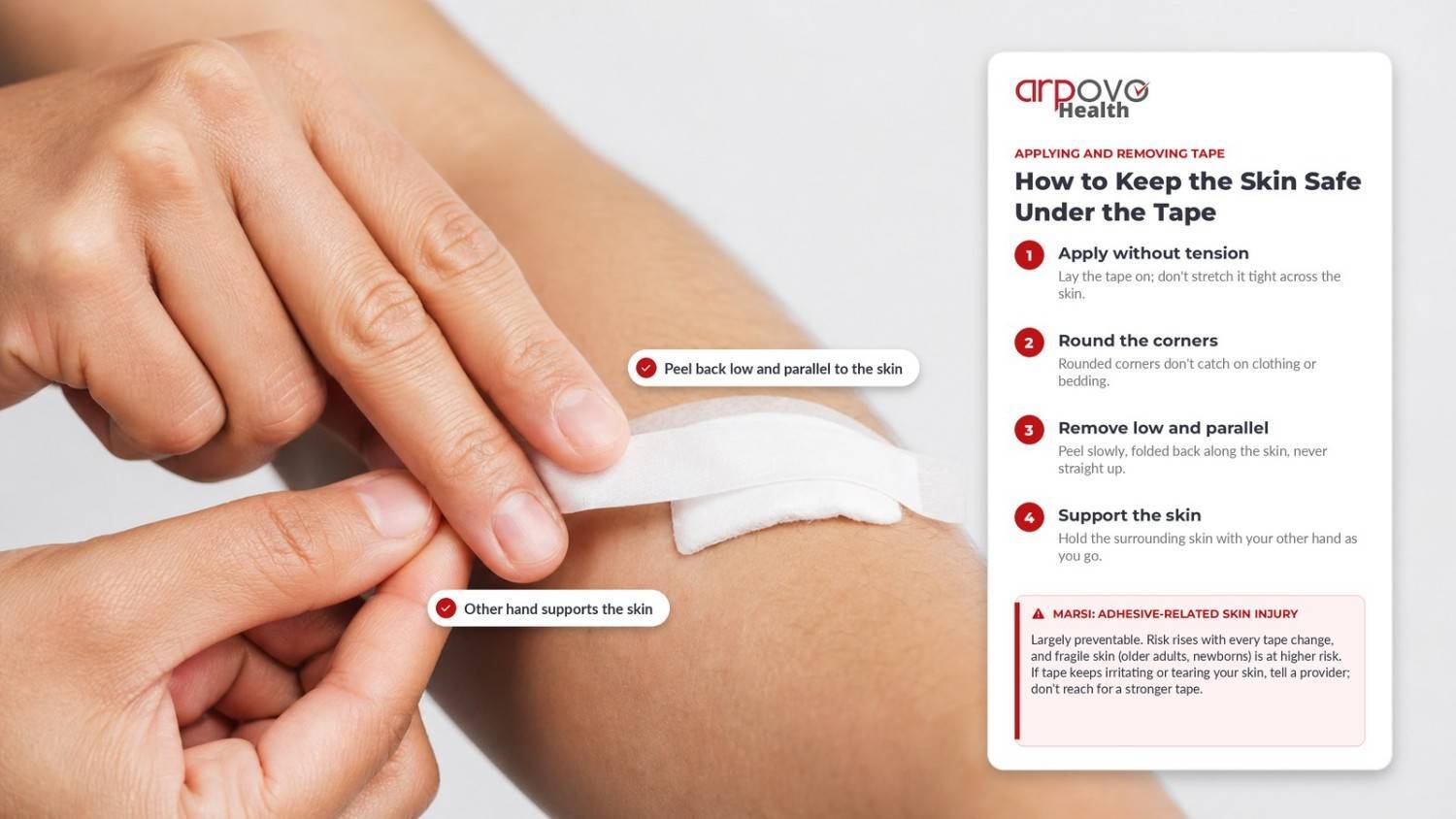
How you apply and remove tape matters almost as much as which type you choose. Apply it without stretching the tape tight across the skin, and round the corners so they don't catch on clothing or bedding. Remove it slowly, low and parallel to the skin rather than pulling straight up, supporting the surrounding skin with your other hand as you go.
This technique directly addresses medical adhesive-related skin injury (MARSI), the term clinicians use for skin damage caused by adhesives. It is considered largely preventable through careful product choice and proper application and removal, and the risk rises the more often tape is applied and removed. Fragile skin, including that of older adults and newborns, is at higher risk, which is why avoiding unnecessary tape changes matters as much as choosing a gentle tape. Wound-care clinicians publish guidance on preventing MARSI built on a widely cited 2013 consensus statement. If tape repeatedly irritates or tears your skin, tell a provider; don't just keep reaching for a stronger tape.
Once you've picked your tape type, round out your supplies with Arpovo Health's full wound care catalog.
Frequently Asked Questions
What is the gentlest medical tape?
Paper and silicone tapes are generally the gentlest; paper is a common choice for fragile, pediatric and elderly skin, while silicone suits very fragile skin or frequent dressing changes.
Which tape is best for sensitive skin?
Paper or silicone tape. Avoid strong-hold cloth or silk tape on skin that tears or irritates easily.
Can I use medical tape on a wet area?
Paper tape sticks reasonably well to damp skin, and waterproof tape is made for wet conditions such as showers. Check the product label.
Why does tape sometimes tear my skin?
Adhesive that is too strong for the skin, tape applied under tension, or pulling it off quickly can all damage skin. Use a gentler tape and remove it slowly, low and parallel to the skin.
Do I need tape for every dressing?
No. Some dressings have their own adhesive border. Tape is for dressings and gauze that need securing.