
What Is A Hypodermic Needle Used For?
Aug 11th 2026
A hypodermic needle is a thin, hollow tube with a sharp beveled tip, designed to pierce the skin and either deliver fluid into the body or draw fluid out of it. Paired with a syringe, it's one of the most-used tools in modern healthcare. Every year, hospital-based healthcare workers alone handle hundreds of thousands of needle-based procedures. That scale is exactly why understanding how these needles work, and how to use and dispose of them safely, matters for anyone handling them, whether in a clinic or at home.
A Brief History
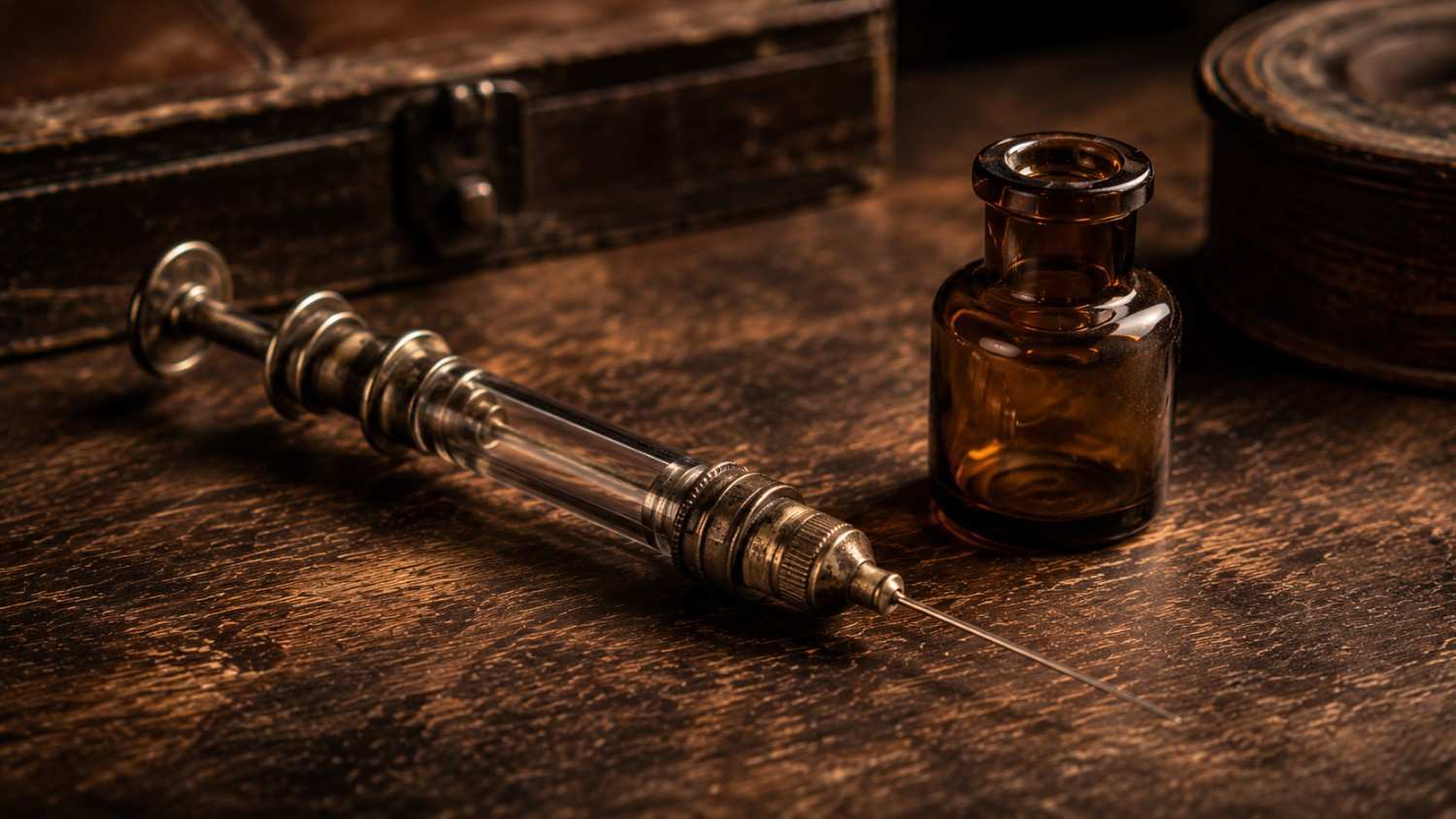
The hypodermic needle as we know it dates back to the 1850s. Scottish physician Alexander Wood is credited with pairing a hollow needle with a syringe in 1853 to inject morphine directly under the skin, a breakthrough that let doctors deliver medication far faster than swallowing a pill ever could. The Luer connection that lets a needle attach securely to a syringe barrel came a few decades later, named after the German instrument maker who designed it. That same basic design, refined for safety and precision, is still what's inside every hypodermic needle sold today.
How a Hypodermic Needle Is Built
Three parts do the work:
- The shaft, a hollow stainless-steel tube (the "bore") that fluid travels through.
- The bevel: the angled cut at the tip that lets the needle slide into skin with minimal resistance and discomfort.
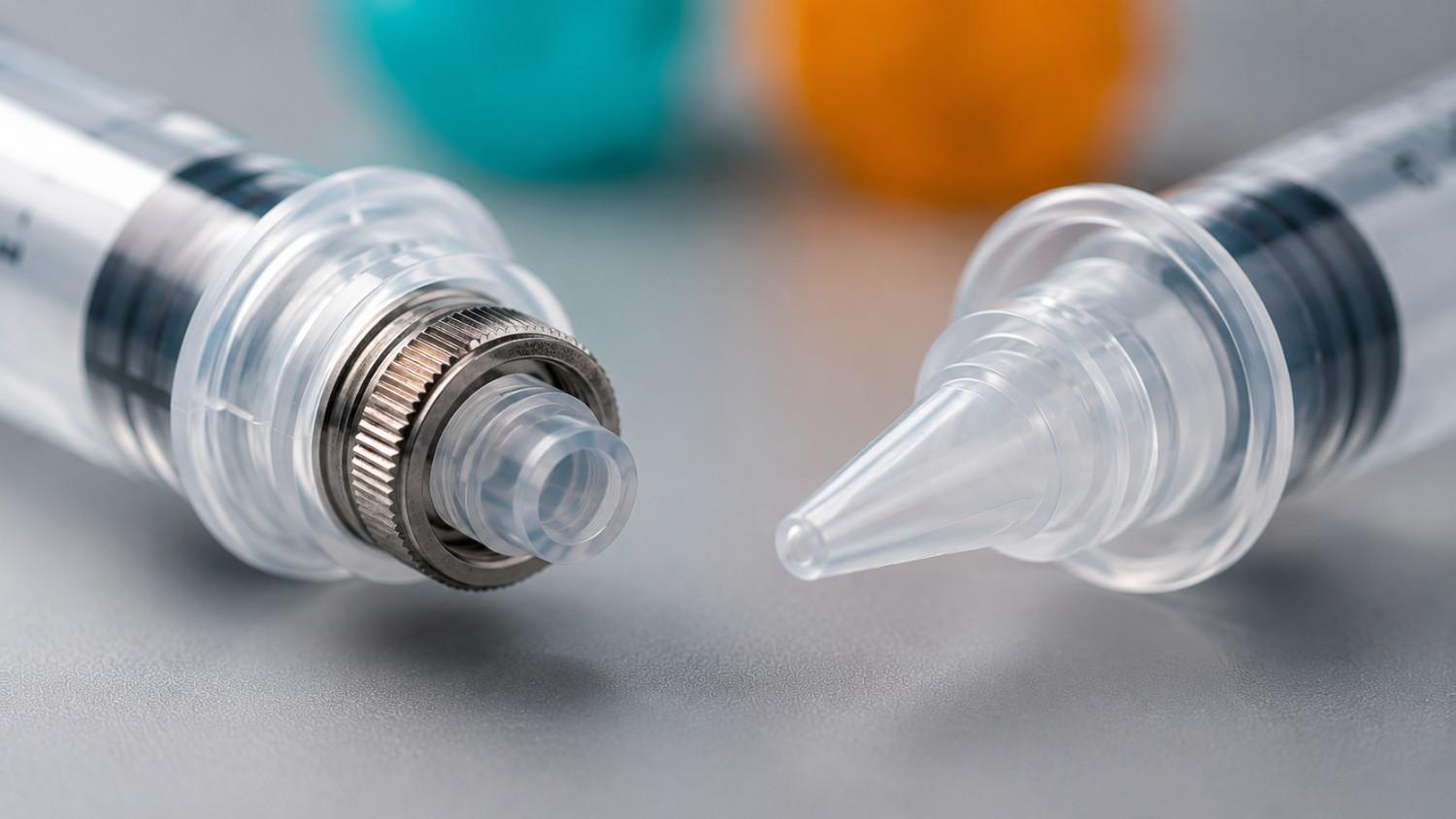
- The hub: the base that connects to the syringe, either by a simple push-fit (Luer Slip) or a twist-on threaded connection (Luer Lock).
The needle's gauge, a number like 18G, 25G, or 30G, tells you how thick the shaft is. Counterintuitively, a higher gauge number means a thinner needle. Thinner (higher-gauge) needles cause less discomfort and are typically used for insulin and other subcutaneous injections, while thicker (lower-gauge) needles move fluid faster and are better suited to blood draws or more viscous medications.
Primary Medical Uses
Administering injections. This is the use most people are familiar with. Depending on how deep the needle goes, an injection can be:
- Subcutaneous into the fatty layer just under the skin, used for insulin and many vaccines, where slow, steady absorption is the goal.
- Intramuscular: into muscle tissue, used for vaccines and medications that need faster absorption into the bloodstream.
- Intravenous: directly into a vein, used when a medication needs to take effect almost immediately.
Drawing blood. The same hollow-needle design that delivers fluid can pull it out just as precisely, which is why blood draws for lab testing, diagnostics, and donation all rely on hypodermic needles. Smaller gauges are typically chosen for routine draws to minimize discomfort, while larger gauges are used when a larger blood volume is needed quickly.
Uses Beyond the Doctor's Office
A few applications get less attention but are just as common in day-to-day healthcare:
- Reconstituting medication. Many drugs are shipped as a powder and mixed with a liquid diluent right before use. A hypodermic needle and Luer Lock syringe barrel are used to inject that diluent and draw the mixed dose back out.
- Intradermal testing. TB skin tests and allergy testing rely on a very shallow, precise injection just into the skin's top layer, a job suited to the finest-gauge needles.
- Biopsies. Fine-needle aspiration uses a hypodermic needle to draw a small tissue sample for lab analysis, often as a faster, less invasive alternative to surgical biopsy.
- Veterinary and laboratory use. The same needle types used in human medicine administer vaccines and medications to animals and handle precise fluid transfers in research settings.
Luer Lock vs. Luer Slip: Does It Matter Which You Use?
It depends on the procedure. A Luer Slip needle pushes onto the syringe tip and holds by friction, quick to attach, which is why it's common for routine vaccinations and general injections. A Luer Lock needle screws on and locks in place, which keeps it from popping off under pressure. That matters most when reconstituting medication, pushing thicker fluids, or working with an IV line, where a sudden disconnect isn't just inconvenient; it's a safety and sterility problem. If you're not sure which your procedure calls for, check the fitting on your existing syringe barrels before ordering needles separately.
Needle Safety Matters More Than People Realize
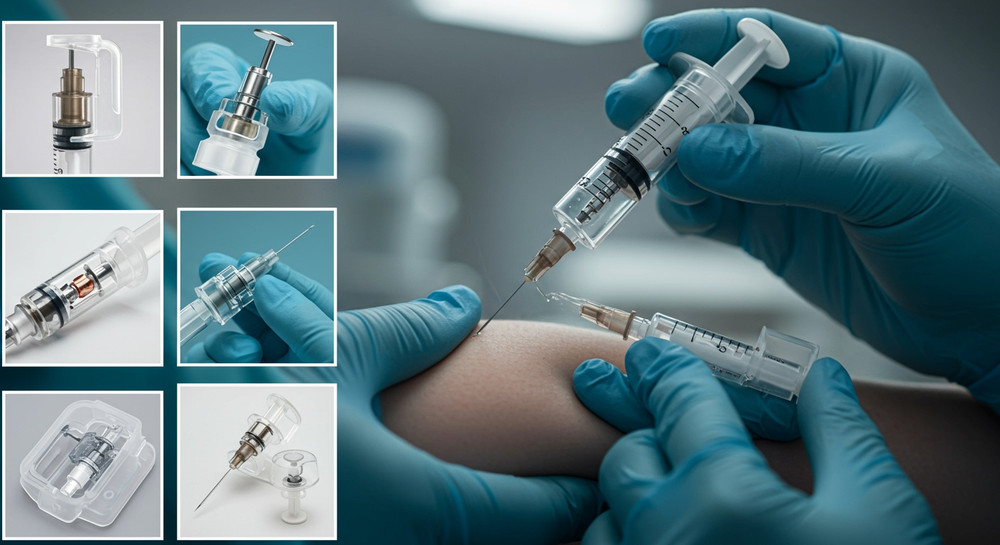
The CDC estimates that hospital-based healthcare workers sustain roughly 385,000 sharps and needlestick injuries every year in the U.S. alone. Most of these happen during or immediately after use, not from careless storage, but from routine handling. That's the reasoning behind safety-engineered needles with retractable shields or locking guards, which are now standard practice in most clinical settings and required under OSHA's Bloodborne Pathogens Standard for many healthcare employers.
A few habits reduce risk regardless of the needle type in use:
- Never recap a used needle by hand.
- Dispose of used needles immediately in an FDA-cleared sharps container, not the household trash.
- Use the correct gauge and length for the injection type to avoid unnecessary tissue damage or a failed draw.
Frequently Asked Questions
What is a hypodermic needle used for, in short?
Mainly for giving injections (subcutaneous, intramuscular, or intravenous) and for drawing blood, but also for reconstituting medications, intradermal testing, and fine-needle biopsies.
What's the difference between a hypodermic needle and a syringe?
The needle is the hollow, pointed component that pierces the skin; the syringe is the barrel-and-plunger device that holds and pushes or pulls fluid through the needle. They're sold separately and paired based on the gauge and Luer fitting the procedure requires.
What gauge needle is used for insulin injections?
Insulin injections typically use fine gauges (commonly 29G–31G) since the dose is small and the goal is minimal discomfort with subcutaneous delivery.
Can a hypodermic needle be reused?
No. Hypodermic needles are single-use medical devices. Reuse risks infection, cross-contamination, and a duller, more painful needle tip.
Are hypodermic needles the same as insulin needles?
Insulin needles are a type of hypodermic needle, generally shorter and thinner, and often sold pre-attached to an insulin syringe rather than as a separate component.
Looking for the right needle for the job? Browse Arpovo Health's full range of hypodermic needles, including safety-engineered options and gauges from fine (insulin) to standard (blood draw and general injection).