
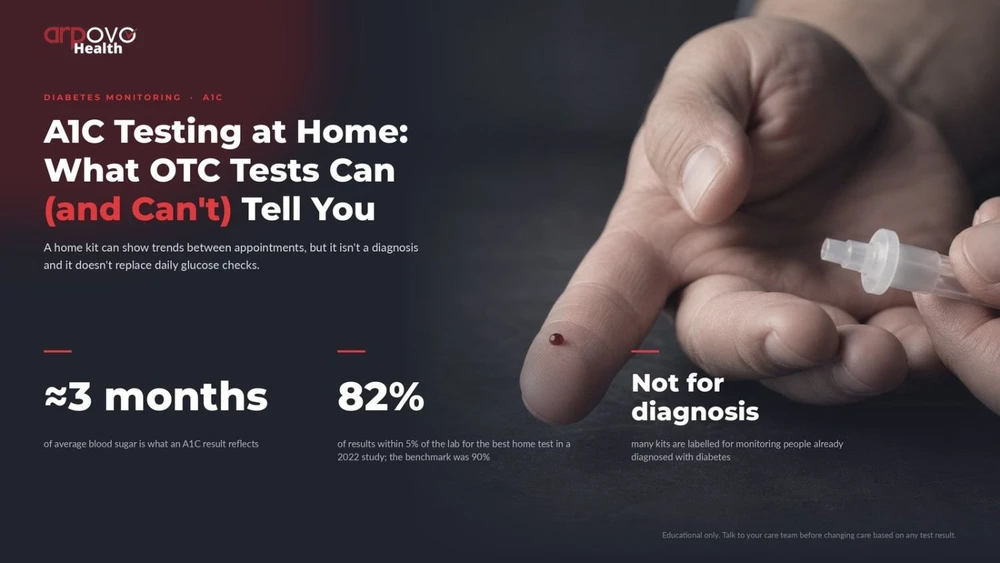
A1C Testing at Home: What OTC Tests Can (and Can’t) Tell You
Nov 13th 2026
An at-home A1C test estimates average blood sugar over roughly three months from a small blood sample. It may help someone already living with diabetes review trends between appointments. However, some home tests differ from laboratory results, and many are intended for monitoring, not diagnosis. A1C cannot replace daily glucose checks, which show changes throughout the day.
What A1C Actually Measures
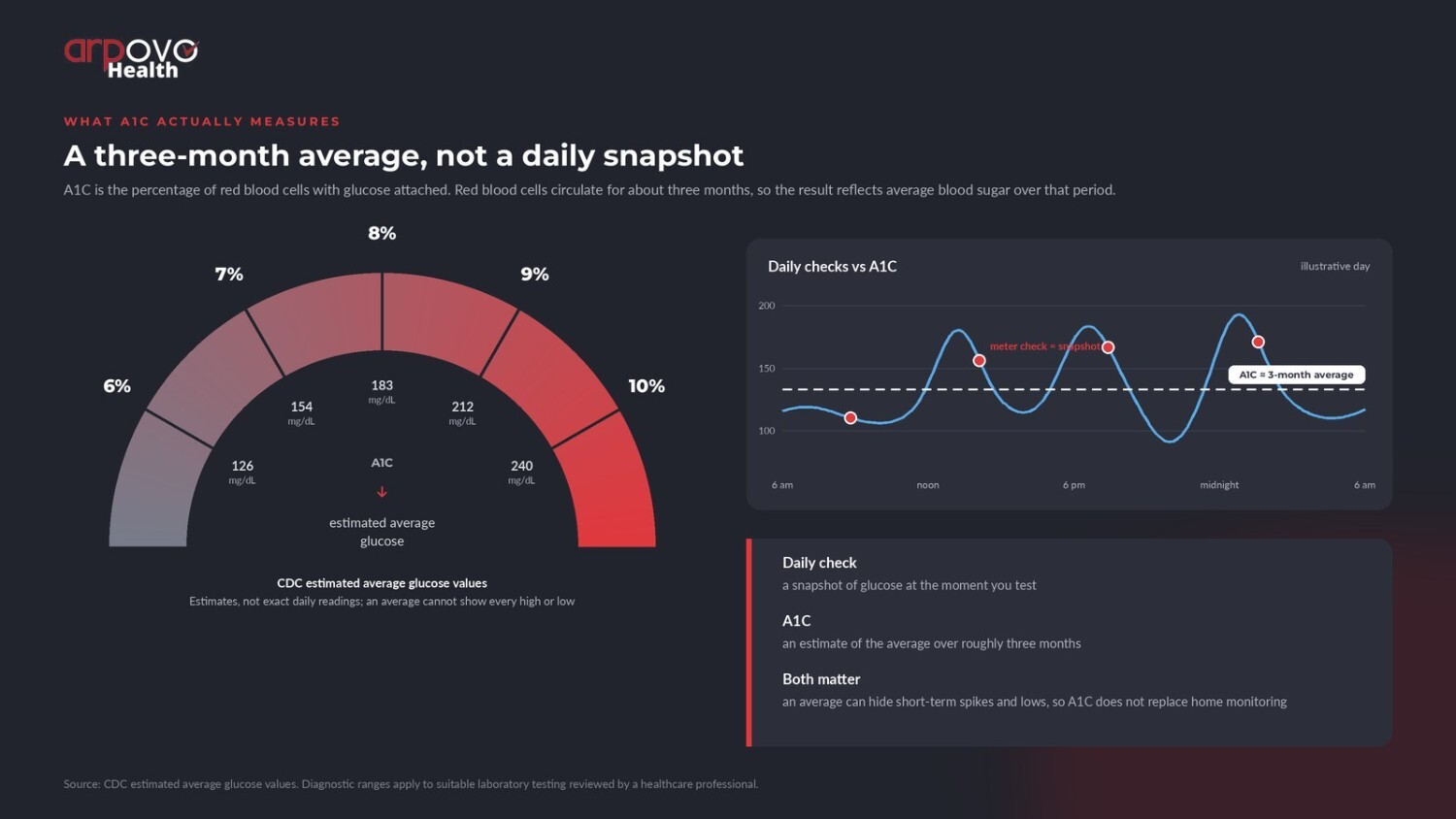
A1C measures the percentage of red blood cells with glucose attached. Because red blood cells circulate for about three months, the result reflects average blood sugar over that period. A daily check is a snapshot; A1C gives a longer-term picture.
The CDC provides these estimated average glucose values:
|
A1C |
Estimated average glucose (mg/dL) |
|
6% |
126 |
|
7% |
154 |
|
8% |
183 |
|
9% |
212 |
|
10% |
240 |
These are estimates, not exact daily readings. An average cannot show every high or low. Diagnostic ranges apply to suitable laboratory testing reviewed by a healthcare professional.
How OTC A1C Tests Work
Most home A1C test kits start with a small fingerstick sample. Some use a portable device that displays a percentage within minutes. Others collect a sample that you mail to a laboratory. Follow the kit's collection and handling instructions.
Check the product's intended use before relying on its result. Some kits are labeled for monitoring people already diagnosed with diabetes, not for diagnosis. For example, FDA documentation for a mailed-sample home test explicitly excludes diagnosis and screening. Read the FDA device summary before treating all home kits as interchangeable.
How Accurate Are They?
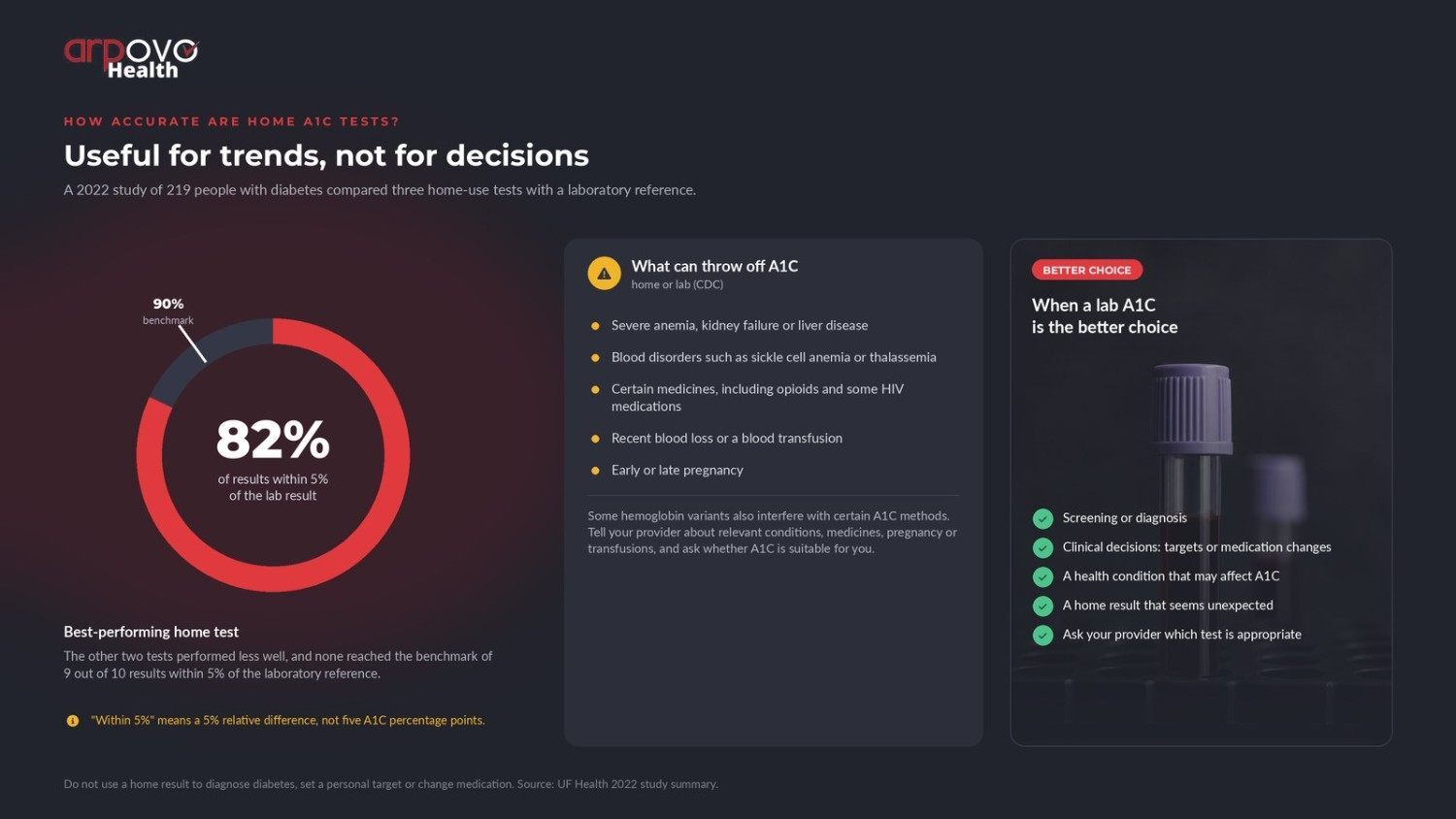
At-home A1C test accuracy varies by test. A 2022 study used a benchmark requiring at least nine out of ten results within 5% of a laboratory reference. This means a 5% relative difference, not five A1C percentage points.
The study included 219 people with diabetes and evaluated three home-use tests. The best-performing test placed 82% of results within 5% of the lab result. The other two performed less well. None reached the 90% benchmark.
A home result may suggest a different level of glucose control. Discuss it with your provider; do not change medication or care based on it. Read the UF Health study summary.
What Can Throw Off an A1C Result (Home or Lab)
Some health conditions can falsely raise or lower A1C results. The CDC lists:
- Severe anemia, kidney failure, or liver disease.
- Blood disorders such as sickle cell anemia or thalassemia.
- Certain medicines, including opioids and some HIV medications.
- Recent blood loss or blood transfusion.
- Early or late pregnancy.
Some hemoglobin variants also interfere with certain A1C methods. Tell your provider about relevant conditions, medicines, pregnancy, or recent transfusions, and ask whether A1C is suitable for you.
A1C vs. Daily Glucose Checks
A1C and daily glucose checks answer different questions. A1C estimates your average over three months; a meter shows glucose at the moment you test. An average may hide short-term spikes and lows, so A1C does not replace home monitoring.
Arpovo lists glucose meters and compatible test strips for daily checks. Our guide to how accurate home glucose meters are explains meter error margins.
When a Lab A1C Is the Better Choice
Use a lab or doctor's-office A1C for screening, diagnosis, or clinical decisions. It is also important when a health condition may affect A1C or a home result seems unexpected. Ask your provider which test is appropriate.
Do not use a home result to diagnose diabetes, set a personal target, or change medication. A clinician can review it alongside your health history and other tests.
Frequently Asked Questions
Are at-home A1C tests accurate?
They can show trends, but some are less accurate than laboratory tests. In a 2022 study, the best-performing home test placed 82% of results within 5% of the lab result, below the study's 90% benchmark.
Can I diagnose diabetes with a home A1C test?
No. Diagnosis requires appropriate testing ordered and reviewed by a healthcare professional. Many home kits monitor people already diagnosed with diabetes, rather than diagnose it.
How is A1C different from my daily blood sugar?
A daily check is a snapshot. A1C estimates average blood sugar over roughly three months, so they provide different information.
What can make an A1C result wrong?
Severe anemia, kidney or liver disease, certain blood disorders or medicines, blood loss, transfusion, and pregnancy can affect results. Tell your provider if any apply.
Do I still need daily glucose checks if I test my A1C?
Yes. A1C does not replace home monitoring because it cannot show every daily rise or drop. Ask your care team how often to check.
A1C testing and daily monitoring serve different purposes. Browse Arpovo's diagnostic instruments and supplies for glucose meters, compatible strips, and related supplies for daily monitoring.
This article is for general educational purposes and isn’t a substitute for advice from your doctor or diabetes care team. Talk to your healthcare provider before changing your diabetes care based on any test result.