
Using Medihoney in Emergency Situations
Aug 18th 2026
Medical-grade honey has real clinical evidence behind it: a Cochrane review of 26 trials found honey-based dressings healed partial-thickness burns roughly 4–5 days faster than conventional dressings, largely through a moist healing environment, sustained low-level hydrogen peroxide release, and antibacterial activity against several resistant bacteria strains. That evidence is exactly why it's worth having on hand for genuine minor emergencies and exactly why knowing its limits matters just as much as knowing its benefits.
What "Emergency" Actually Means Here
This isn't about replacing professional care. It's about the gap between "too minor for a doctor visit" and "needs immediate attention" a kitchen burn, a scraped knee on a trail, a small cut that needs more than a dry bandage. Medihoney fits that gap well. It does not fit the gap for anything more serious than that, covered below.
Kitchen and Household Burns
Burns are classified by depth: first-degree affects only the outer skin layer (think a mild sunburn or brief contact burn), second-degree involves the layer beneath it and typically blisters, and third-degree burns destroy both layers and always need emergency care.
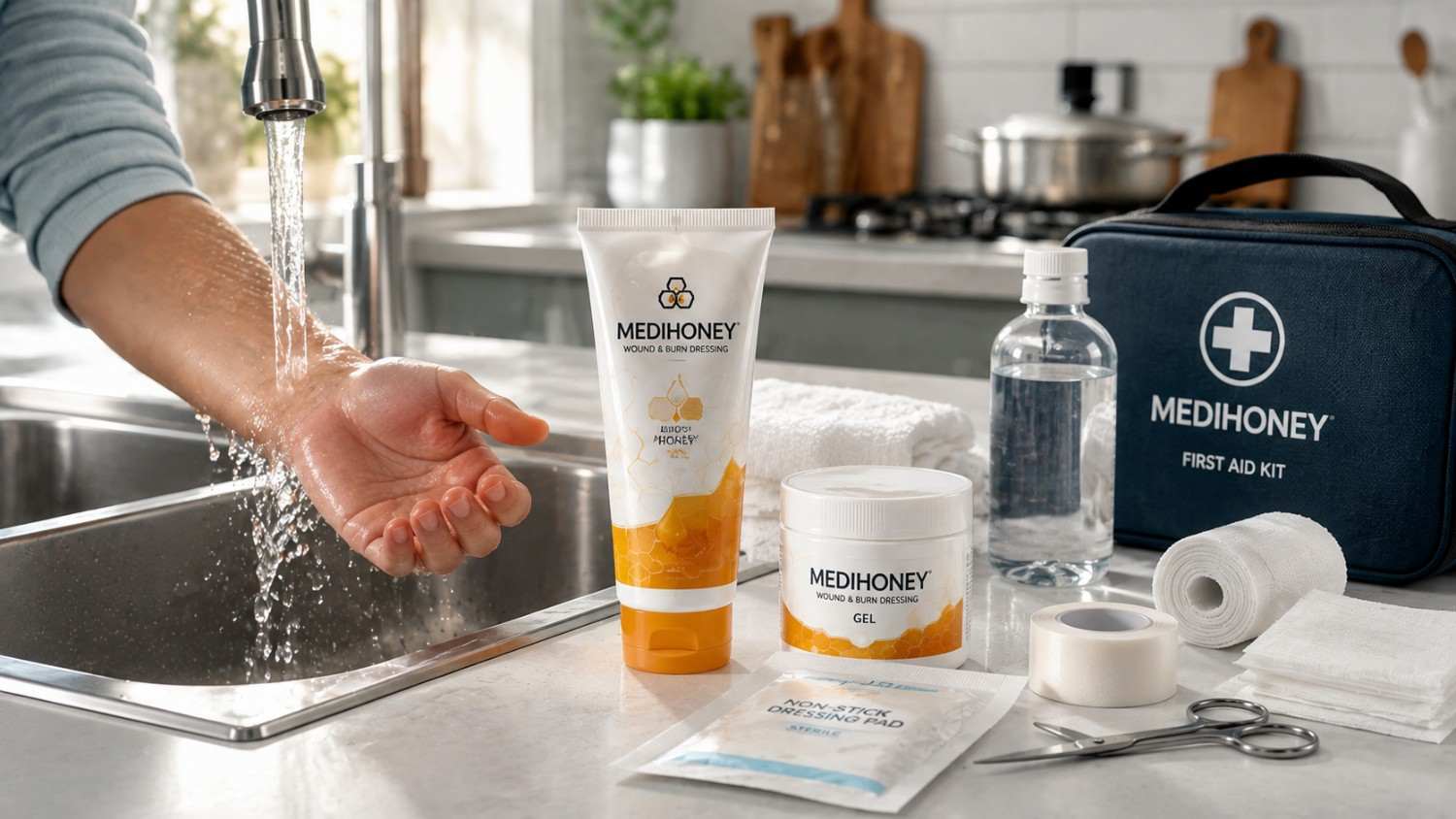
For a genuine first-degree or minor second-degree burn: cool it under clean running water for 10–20 minutes first this does more to limit tissue damage than anything applied afterward. Pat the area dry, then apply Medihoney and cover with sterile, non-stick gauze. Reapply and change the dressing daily.
Do not treat these at home: burns larger than the palm of the person's hand, burns on the face, hands, feet, joints, or genitals, any third-degree burn, or blistering burns beyond a small, minor blister. All of these need professional evaluation, not home treatment.
Camping and Outdoor Cuts
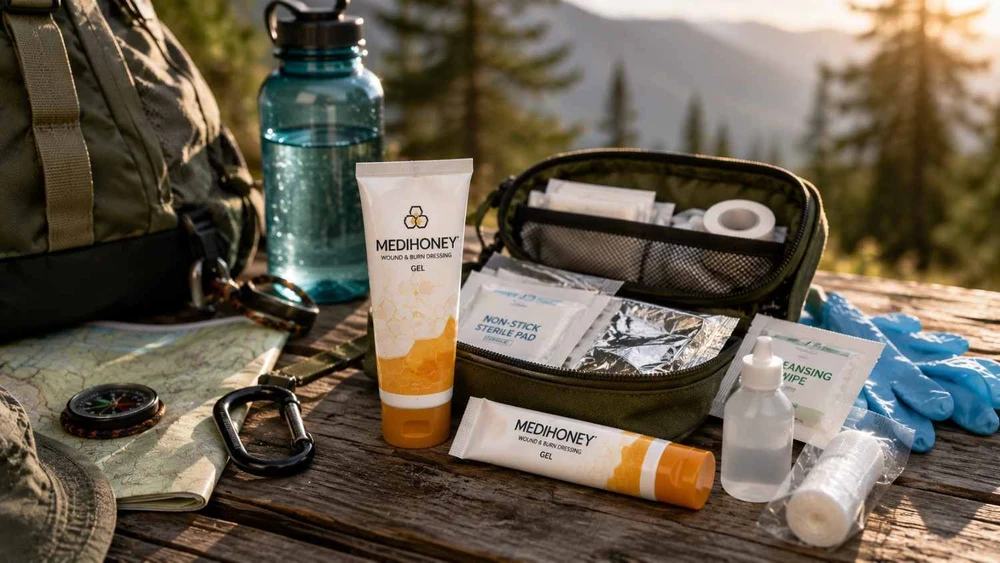
Trail injuries carry more contamination risk than household ones, simply because dirt and debris are harder to avoid. The sequence still matters more than the honey: clean the wound thoroughly before applying anything, since honey supports healing but doesn't substitute for removing debris first. Compact tubes of Medihoney paste are genuinely practical here they take up little space in a field kit and reduce contamination risk versus repeatedly dipping into a larger container.
After applying and covering the wound, keep monitoring it over the following days for the same warning signs listed below, since outdoor conditions make it easier to miss early signs of a problem.
Signs You've Moved Past Home Treatment
Watch for any of these, regardless of how the wound happened:
- Increasing redness, warmth, or swelling after the first day or two
- Pus or a foul odor from the wound
- Red streaking extending away from the wound
- Fever
- No improvement after about a week of consistent care
Any of these warrant a call to a provider rather than continuing home treatment. Deep wounds, animal bites, and heavily contaminated wounds should go straight to professional care rather than starting with home treatment at all.
Building a Kit Worth Trusting
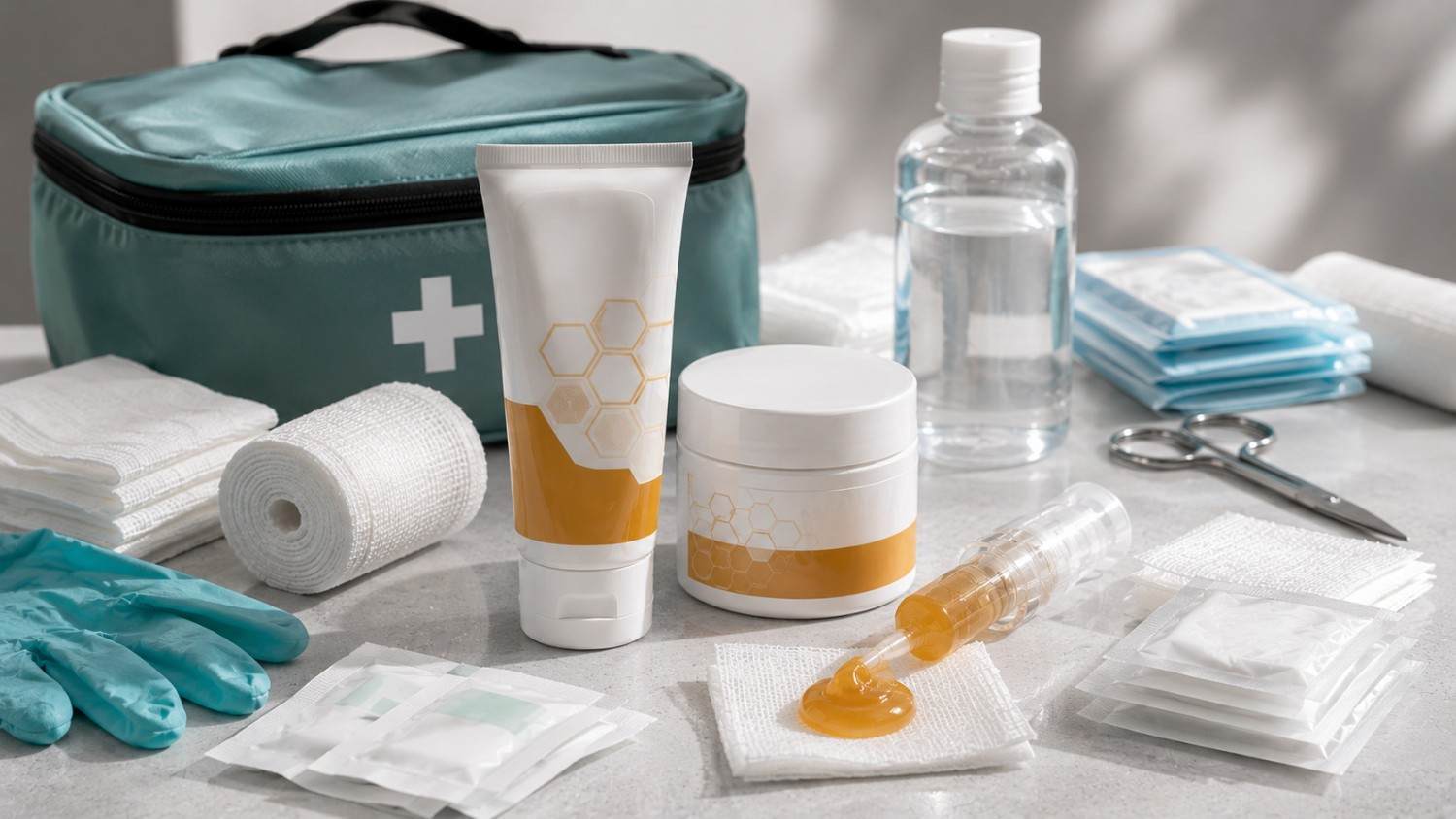
A basic emergency kit built around Medihoney should include: the honey product itself (gel for larger or irregular areas, paste for more controlled application), sterile non-stick gauze, medical tape, and clean water or saline for the cleaning step that has to happen first. Keep it sealed and check the expiration date periodically a kit is only useful if what's in it is still good when you need it.
Frequently Asked Questions
Can I use regular kitchen honey instead of Medihoney for a wound?
No. Medical-grade honey is sterilized and processed specifically for wound use; raw honey isn't sterile and can introduce contamination, particularly a risk for deeper wounds or anyone immunocompromised.
How is Medihoney different from Neosporin or similar ointments?
They work differently Medihoney creates a moist, antibacterial healing environment through the honey's own properties, while antibiotic ointments work through active pharmaceutical ingredients. Either can have a place in a first aid kit; they're not direct substitutes for each other.
Is Medihoney safe for children?
For minor cuts and first-degree burns, generally yes, but avoid giving any honey product orally to children under 12 months, and use caution with topical honey on infants specifically check with a pediatrician first.
Can Medihoney replace a trip to urgent care?
Only for genuinely minor injuries. Anything involving a burn larger than a palm, a deep or heavily bleeding wound, an animal bite, or visible infection needs professional care, not a honey dressing.
This article is for general educational purposes and isn't a substitute for professional medical advice. When in doubt about a wound's severity, seek care rather than waiting.
Build your kit with Arpovo's medical honey wound dressings, available in both gel and travel-friendly paste formats.