
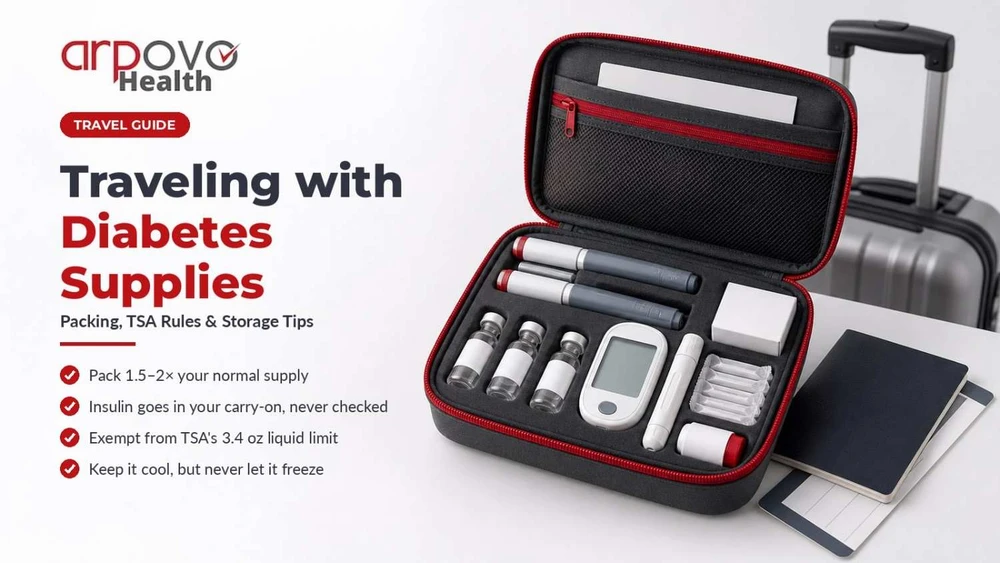
Traveling with Diabetes Supplies: Packing, TSA Rules, and Storage Tips
Sep 7th 2026
The CDC estimates that more than 38.4 million Americans live with diabetes, and a huge number of them travel every year with insulin, glucose monitors, and the supplies that go with managing the condition on the road. None of it has to be complicated, but it does take a bit more planning than packing a toothbrush mainly because insulin and some other diabetes medications are temperature-sensitive, and airport security has specific (if unfamiliar) rules for medical supplies. This guide walks through what to pack, how much, how to get through security without a hitch, and how to keep everything at a safe temperature the whole way.
How Much to Pack
The general rule diabetes educators recommend: pack roughly 1.5 to 2 times what you'd normally use for the length of your trip. A seven-day trip, in other words, is worth packing for closer to ten to fourteen days.
That extra margin covers more than you might expect: a flight delay, a lost bag, an insulin vial that breaks, or a few unplanned extra days away from home. Estimate your daily use of insulin, lancets, test strips, and any other supplies, then build in that buffer before you leave rather than trying to source replacements once you're already traveling.
TSA Rules for Insulin, Syringes, and Lancets
Airport security has clear, established rules for diabetes supplies, and knowing them ahead of time makes the checkpoint far less stressful.
- Insulin is exempt from the standard 3.4 oz liquid limit. You can carry insulin, along with other necessary liquids like glucose gel, in reasonable quantities for your trip.
- Syringes, pen needles, and lancets are allowed when they accompany your prescribed medication.
- CGMs, insulin pumps, and other wearable devices can go through screening TSA officers can conduct a visual or hand inspection instead of a scanner if you prefer, particularly for pump-connected devices.
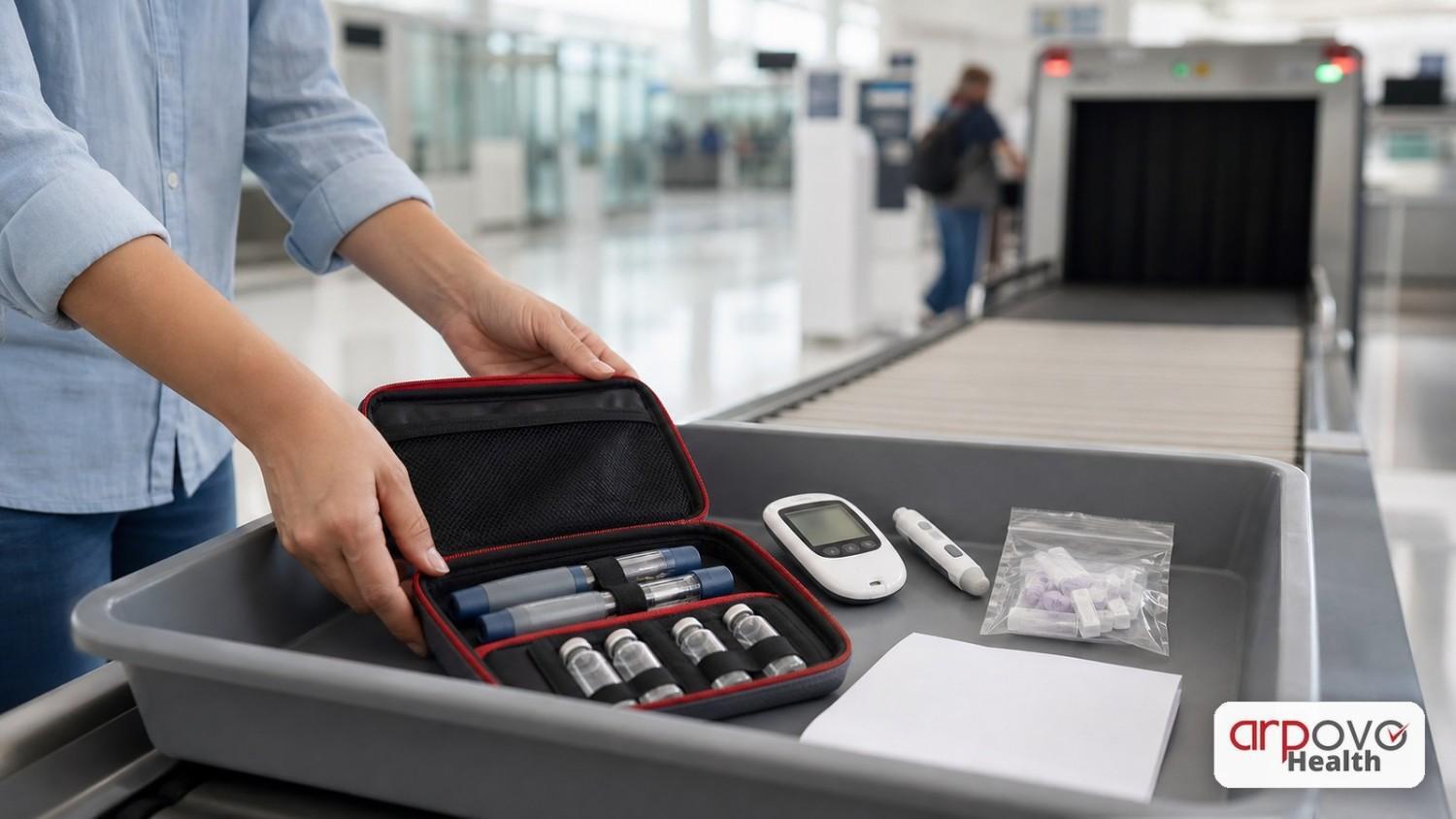
At the checkpoint: tell the officer you're carrying diabetes supplies before screening begins. This isn't required, but it heads off confusion and generally speeds things up. Keep insulin and other medications in their original, labeled packaging where possible, and request a visual inspection if a device's manufacturer advises against X-ray exposure.
Worth carrying, even though it's not required domestically: a copy of your prescriptions, a current medication list, and a letter from your prescribing provider. None of this is mandatory for U.S. domestic flights, but it can smooth things over if you're asked additional questions, and it becomes genuinely useful, sometimes necessary for international travel.
Carry-On vs. Checked Luggage
This is the single most important packing rule in this whole guide: insulin and any other temperature-sensitive medication should always go in your carry-on, never in checked luggage.
Cargo holds aren't temperature-controlled the way the cabin is. Depending on the flight and route, cargo temperatures can swing from well below freezing to well above safe storage range. Insulin that freezes is damaged insulin permanently, even if it looks completely normal once it thaws. Checked luggage also gets lost or delayed far more often than what you're carrying with you, and losing your only supply of insulin mid-trip is a problem worth avoiding entirely.
Keeping Insulin Cold During Travel
Once you're keeping insulin in your carry-on, the next question is how to keep it at a safe temperature for the duration of the trip.
A few reliable options:
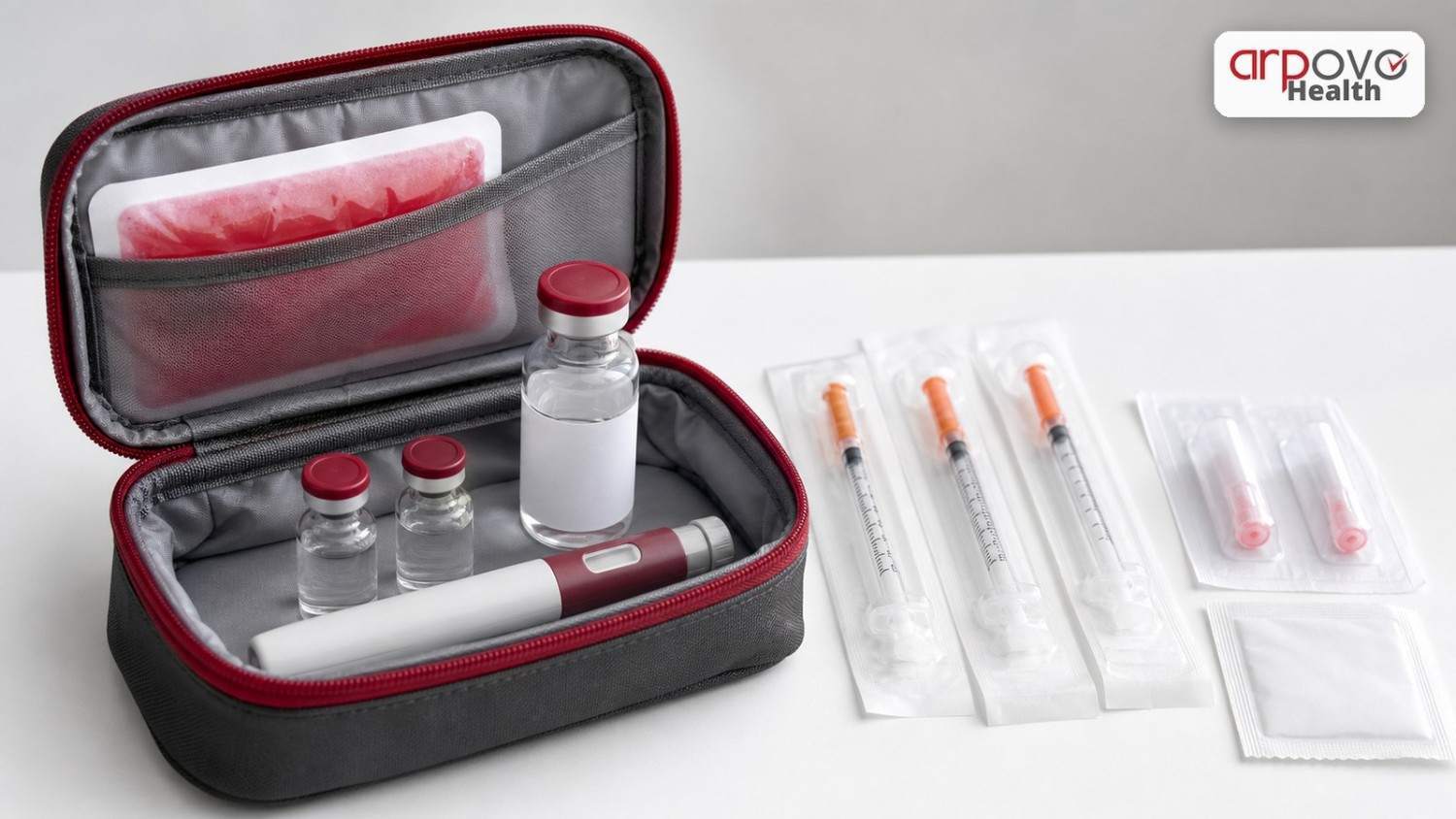
- Insulated medication pouches are simple, lightweight, and effective for short trips.
- Reusable gel packs pair well with an insulated pouch; just don't let insulin sit in direct contact with an ice pack, since that risks freezing it.
- Evaporative cooling wallets (like FRIO) use water evaporation rather than ice, which makes them useful for longer trips without needing to refreeze anything.
- Portable medication coolers are worth it for longer trips or hot climates where consistent temperature control matters most.
Whichever method you use, avoid direct sunlight and follow your specific insulin's manufacturer storage guidance allowable temperature ranges and in-use windows vary by product, so check your label or ask your pharmacist rather than assuming a universal number.
Traveling with Bacteriostatic Water and Other Prescribed Diluents
If your medication routine includes a provider-prescribed diluent like bacteriostatic water used to reconstitute a powdered or freeze-dried medication before injection it needs the same careful handling as insulin, with a few of its own specifics.
Before opening: store at controlled room temperature, away from direct light, per the product's label.
Once it's been used to reconstitute a medication: follow that specific product's labeled in-use window. Many multi-dose vials are labeled for use within 28 days of the first puncture, but this varies by checking the label rather than assuming.
While traveling: keep it in your carry-on alongside the medication it's paired with, avoid letting it freeze, and don't let it sit in direct sunlight or a hot car. The same cooling methods that work for insulin (insulated pouches, gel packs, cooling wallets) work here too.
As with insulin, if you're ever unsure whether a diluent or reconstituted medication is still good after a temperature exposure, don't guess check with your pharmacist or provider before using it.
International Travel: What Changes
Traveling abroad adds a few extra considerations on top of everything above.
Documentation matters more. Some countries have stricter requirements around bringing injectable medications across their border. Original prescription labels, a letter from your provider, and a printed medication list all help avoid a customs delay.
Products and compatibility can differ by country. Insulin and other medications may be sold under different brand names abroad, even when the active ingredient is identical and not every country's pen needles or supplies are interchangeable with what you use at home. The safest approach is bringing enough of your own supply for the full trip rather than planning to restock locally, since availability and compatibility aren't guaranteed.
Research your specific destination's requirements before you leave rules vary enough by country that a general guideline isn't a substitute for checking.
Road Trips: Protecting Supplies from Heat
Car interiors heat up fast; a parked car can exceed 120°F on a warm day, even with mild outside temperatures. Never leave insulin or other temperature-sensitive supplies in an unattended vehicle, even for a quick stop.
For road trips: keep supplies in an insulated container, out of direct sunlight, and bring them inside with you rather than leaving them in the car overnight. Heat exposure can reduce a medication's effectiveness even when there's no visible change in how it looks.
Quick Travel Checklist
|
Category |
What to Pack |
|
Medication supplies |
Extra insulin, syringes, pen needles, lancets, test strips, and any prescribed diluent |
|
Monitoring supplies |
Backup glucose meter, extra CGM sensors, spare batteries, charging cables |
|
Emergency items |
Fast-acting glucose tablets, medical ID, emergency contact list, prescription copies |
|
Documentation |
Medication list, provider's letter (recommended for international travel), insurance information |
Frequently Asked Questions
How much extra insulin should I pack for a trip?
A common guideline is 1.5 to 2 times your normal usage for the length of the trip, to cover delays, loss, or unplanned extra days.
Can insulin go through TSA security?
Yes. Insulin is exempt from the standard liquid limit, and syringes and pen needles are allowed when they accompany your prescribed medication. Always keep them in your carry-on.
What happens if my insulin freezes?
It's permanently damaged, even if it looks normal after thawing. This is exactly why insulin should never go in checked luggage or sit directly against an ice pack.
Do I need a doctor's note to travel with diabetes supplies?
It's not required for domestic U.S. flights, but it's worth carrying, and becomes more important for international travel where documentation requirements can be stricter.
Can bacteriostatic water go through airport security the same way as insulin?
Yes, keep it in your carry-on alongside the medication it's paired with, and treat it with the same care around temperature and sun exposure.
Ready to stock up before your next trip? Browse Arpovo Health's diluent solutions, lancets and lancing devices, and pen needles to round out your travel kit.