
SOL-M vs EasyTouch Insulin Syringes: Which Is Right for You?
Aug 5th 2026
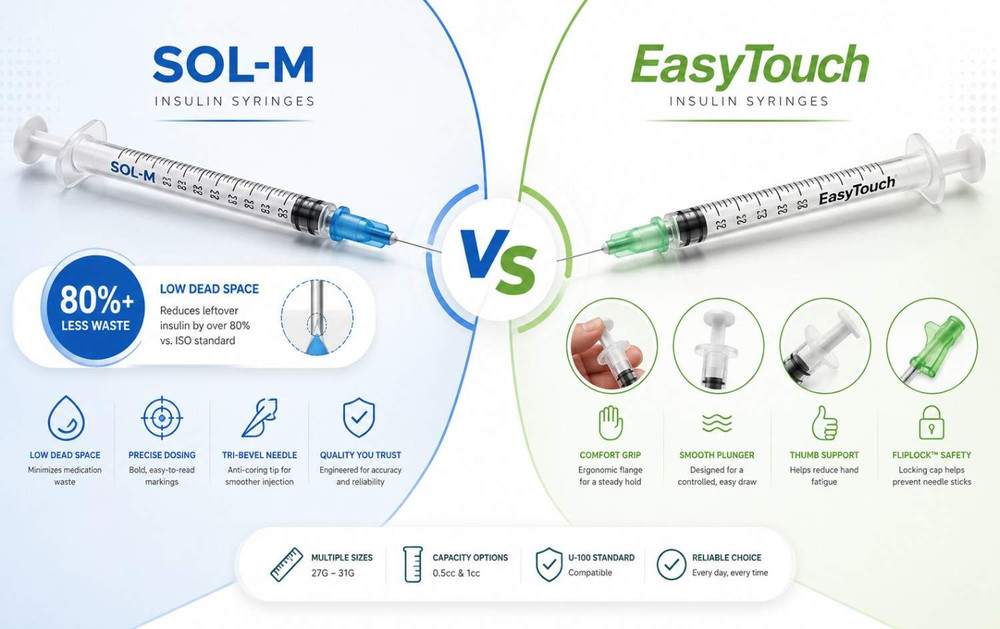
A SOL-M vs EasyTouch syringe comparison comes down to what each brand optimizes for, not which one is objectively better. SOL-M is built around minimizing medication waste, using a low dead space design that can reduce leftover insulin in the needle and syringe tip by more than 80% compared to the ISO standard. EasyTouch is built around handling comfort, with a plunger and grip designed for steady daily use, plus a FlipLock™ option that adds a built-in safety cap. If you already know you want one of these two brands and just need to choose between them, here's exactly how they differ.
SOL-M vs EasyTouch: What Actually Sets Them Apart
The real difference between these two brands isn't quality. It's the focus. SOL-M's entire design centers on low dead space, cutting down on wasted medication with every injection. EasyTouch centers on handling comfort, and in its FlipLock line, built-in needle-stick safety. Neither brand is simply better than the other. They're engineered around different priorities, and the right pick depends on which priority matters more in your day-to-day routine.
SOL-M Insulin Syringes: Strengths
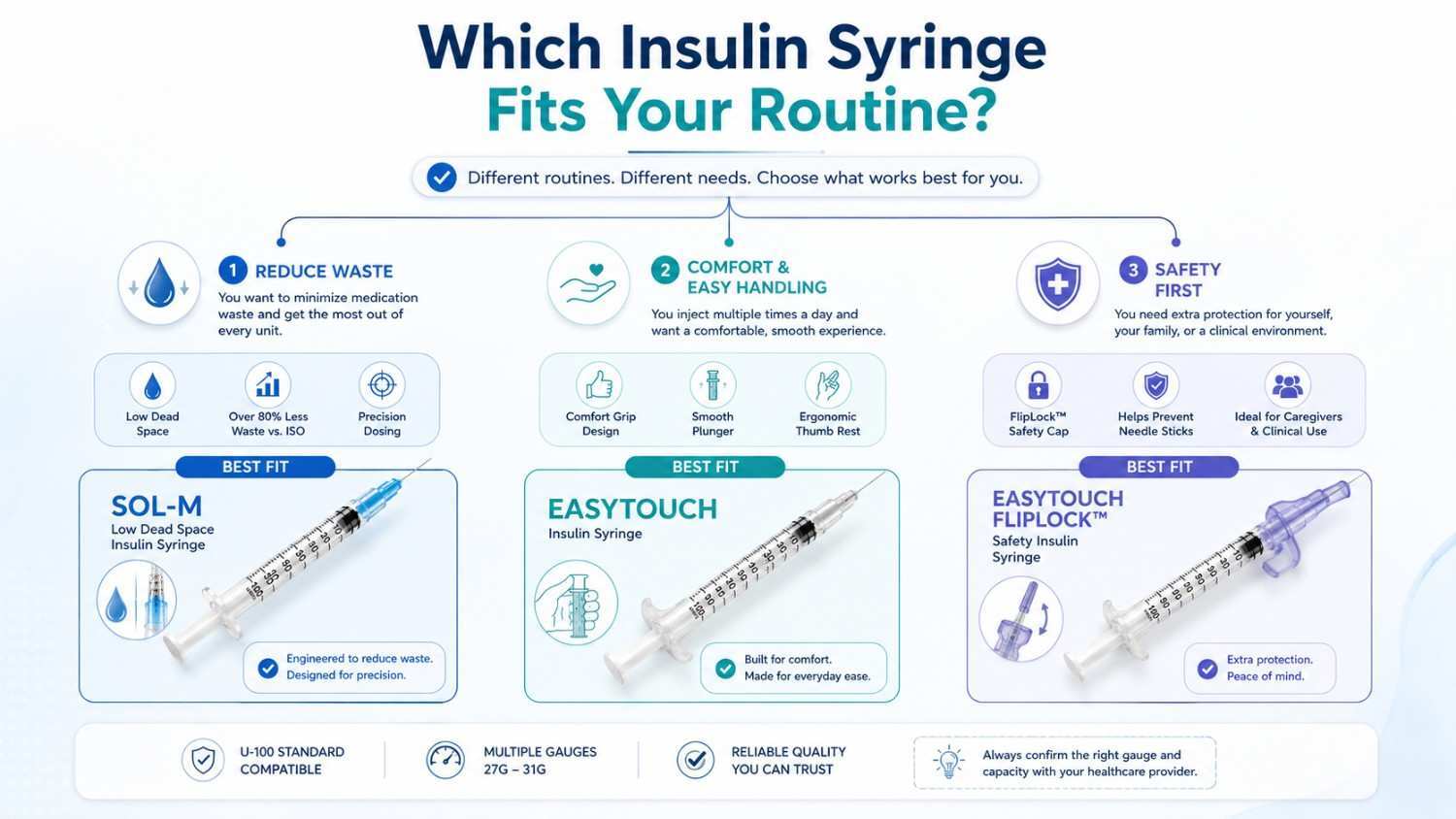
SOL-M's biggest strength is dead space, the small amount of insulin left behind in a syringe and needle after every injection. SOL-M's fixed-needle design reduces this dead space by more than 80% compared to the ISO standard. That shows up as the brand's signature feature in nearly every SOL-M insulin syringe review, and it matters most if you're tracking every unit of an expensive or tightly-dosed insulin, since less gets wasted with each injection. The needle itself uses a tri-bevel, anti-coring tip with a silicone oil coating, built for smoother entry and less drag going in. SOL-M is often the brand people land on when searching for a low dead space insulin syringe specifically, and the engineering backs up that reputation. Bold, easy-to-read dosage markings and a larger flange round out the design, which helps if small print or a narrow grip makes dosing harder to manage.
EasyTouch Insulin Syringes: Strengths
EasyTouch's biggest strength is the physical handling experience: the plunger and grip are built for a steady, comfortable draw. That matters most if you're injecting multiple times a day, since small comfort differences add up fast across dozens of injections a month. The finger flange and thumb rest are shaped to support a controlled draw without your hand cramping partway through, a recurring theme in any EasyTouch insulin syringe review. EasyTouch also offers the FlipLock safety syringe option, which locks a cap over the needle after use. That's a genuine differentiator for caregivers, clinics, or any shared household handling sharps, since it's purpose-built to prevent accidental needle sticks during disposal or handling.
Side-by-Side Comparison
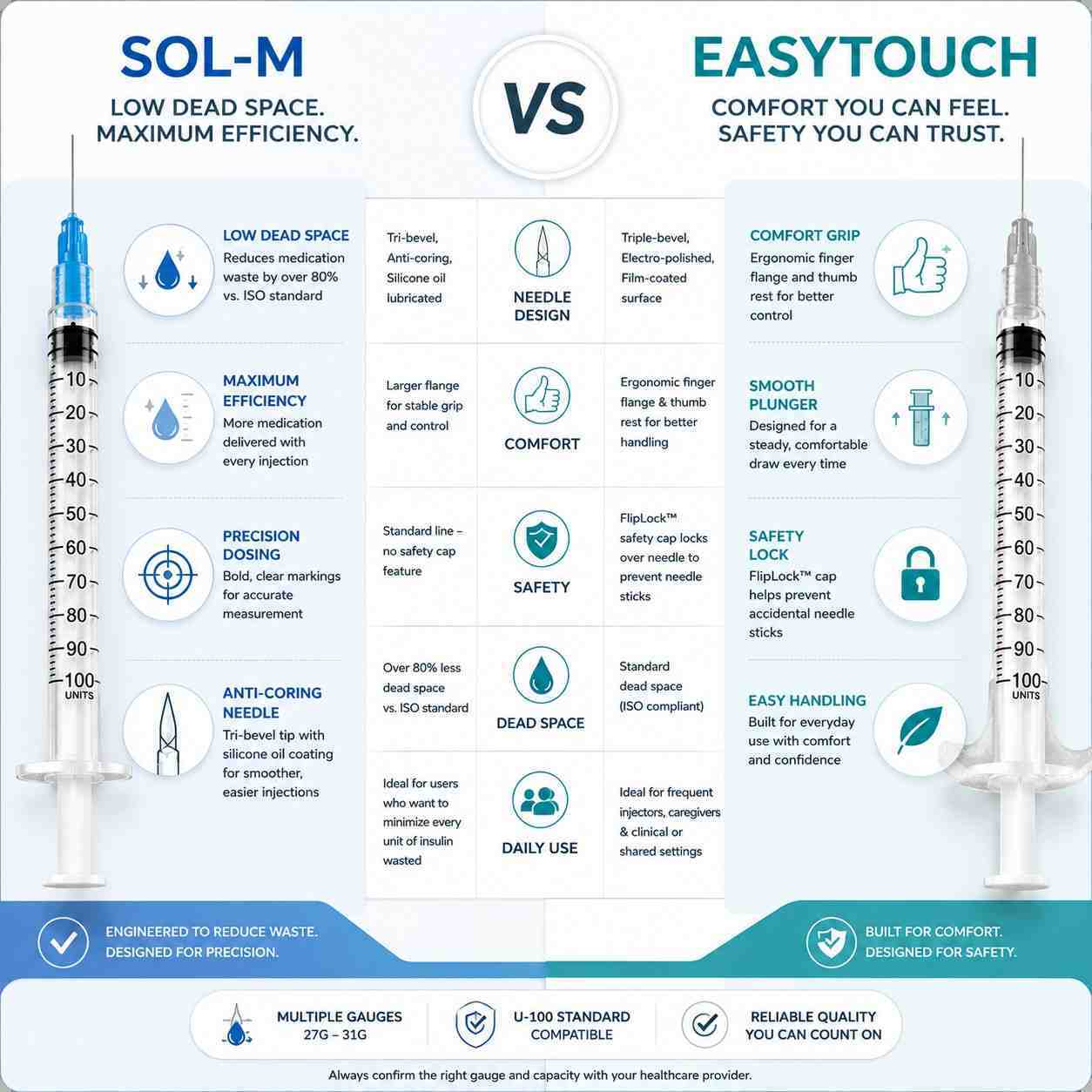
|
SOL-M |
EasyTouch |
|
|
Manufacturer |
Sol-Millennium |
MHC Medical |
|
Gauge range |
27G to 31G, fixed needle |
28G to 31G (U-100 standard line) |
|
Key engineering focus |
Low dead space, reduces medication waste by over 80% vs. ISO standard |
Plunger smoothness and grip ergonomics (finger flange, thumb rest) |
|
Needle design |
Tri-bevel, anti-coring, silicone oil lubricated |
Triple-bevel (FlipLock line), electro-polished, film-coated surface |
|
Safety-engineered option |
Not highlighted in the standard line |
FlipLock™ Safety Syringe with locking cap to prevent accidental needle sticks |
|
Capacity options |
0.5cc and 1cc |
Available across standard U-100 capacities |
Pricing varies by pack size and changes over time, so check the current SOL-M and EasyTouch options directly for up-to-date availability.
Which One Should You Choose?
The right choice comes down to matching the brand to what actually matters most in your routine.
- Prioritize minimizing medication waste: SOL-M is the stronger fit.
- Prioritize grip comfort as a frequent injector: EasyTouch is the stronger fit.
- Need a safety-locking cap for a clinical, caregiver, or shared-household setting: EasyTouch's FlipLock line specifically.
Both brands are widely used and considered reliable. This is a fit question based on what you need day to day, not a quality gap between the two.
If you already know your gauge and just need to pick a brand, the Insulin Syringe Gauge Guide covers that decision separately. For a closer look at SOL-M specifically, see the Sol-M brand review, or browse SOL-M's current lineup and the full needles and syringes catalog to compare both brands directly.
Frequently Asked Questions
Is SOL-M or EasyTouch better for insulin syringes?
Neither is universally better. SOL-M focuses on minimizing medication waste through low dead space, while EasyTouch focuses on grip comfort and, in its FlipLock line, built-in needle-stick safety. The right choice depends on which of those matters more for your routine.
What does "low dead space" mean, and why does SOL-M highlight it?
Dead space is the small amount of insulin left in the needle and syringe tip after injecting, which never reaches the patient. SOL-M's design reduces this by over 80% compared to the ISO standard, which can matter for tightly-dosed or costly insulin.
What is the EasyTouch FlipLock Safety Syringe?
It's a version of the EasyTouch syringe with a locking safety cap built to prevent accidental needle sticks after use, which is especially useful in clinical settings or households where sharps are handled by more than one person.
Can I switch between SOL-M and EasyTouch syringes?
Generally yes, as long as the gauge and capacity match what you currently use; both are standard U-100 insulin syringes. If you're unsure, confirm with your provider or pharmacist before switching.
Are SOL-M and EasyTouch syringes available in the same gauges?
Both brands offer a similar gauge range, generally 27G/28G through 31G, so you can typically find a comparable option in either brand for your current prescription.
(This article is for general educational purposes and isn't a substitute for guidance from your healthcare provider or pharmacist. Confirm any change in syringe brand, gauge, or capacity with your provider.)