
Reconstitution Errors: 7 Common Mistakes and How to Avoid Them
Jun 26th 2026
A single mixing error can turn a safe drug into a direct patient risk. Most medication reconstitution errors happen not from carelessness but from skipped steps and wrong assumptions. Knowing the seven most common mistakes puts you in control of every preparation you make.
Why Reconstitution Errors Are a Patient Safety Concern
Reconstitution error patient safety incidents are reported in hospitals, clinics, and in the home around the globe. A medicine given in the incorrect diluent or in the wrong quantity or incorrectly stored may be unsafe or ineffective. Reconstitution is one of the "high-risk tasks" associated with medication preparation, according to the Institute for Safe Medication Practices.
With the proper knowledge and consistent technique on every shot, these mistakes can be avoided entirely. It is important to know common reconstitution mistakes to ensure medication preparation is safe in any environment.
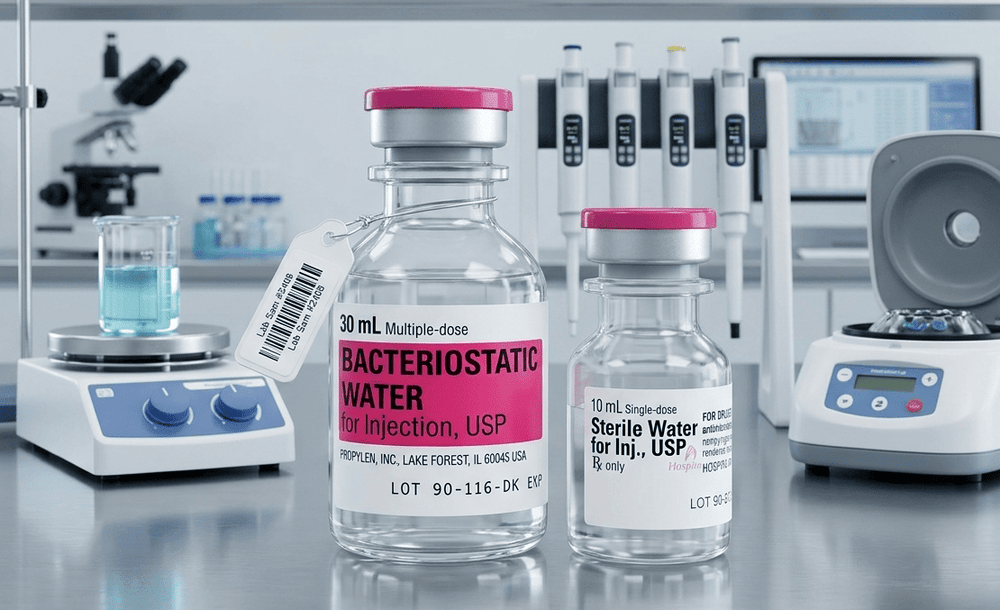
Mistake 1: Using the Wrong Diluent (e.g., Sterile Water Instead of BAC Water for Multi-Dose)
Wrong diluent reconstitution is one of the most dangerous errors a preparer can make. Sterile water and bacteriostatic water look identical but serve completely different clinical purposes. Sterile water in a multi-dose vial destroys the antimicrobial properties of the vial.
Bacteriostatic water; this water has 0.9% contents of benzyl alcohol and this inhibits the growth of bacteria between draws. Sterile water is not for preservation and should be used for one-time purposes. Always confirm your diluent type against the drug's prescribing information before you open anything.
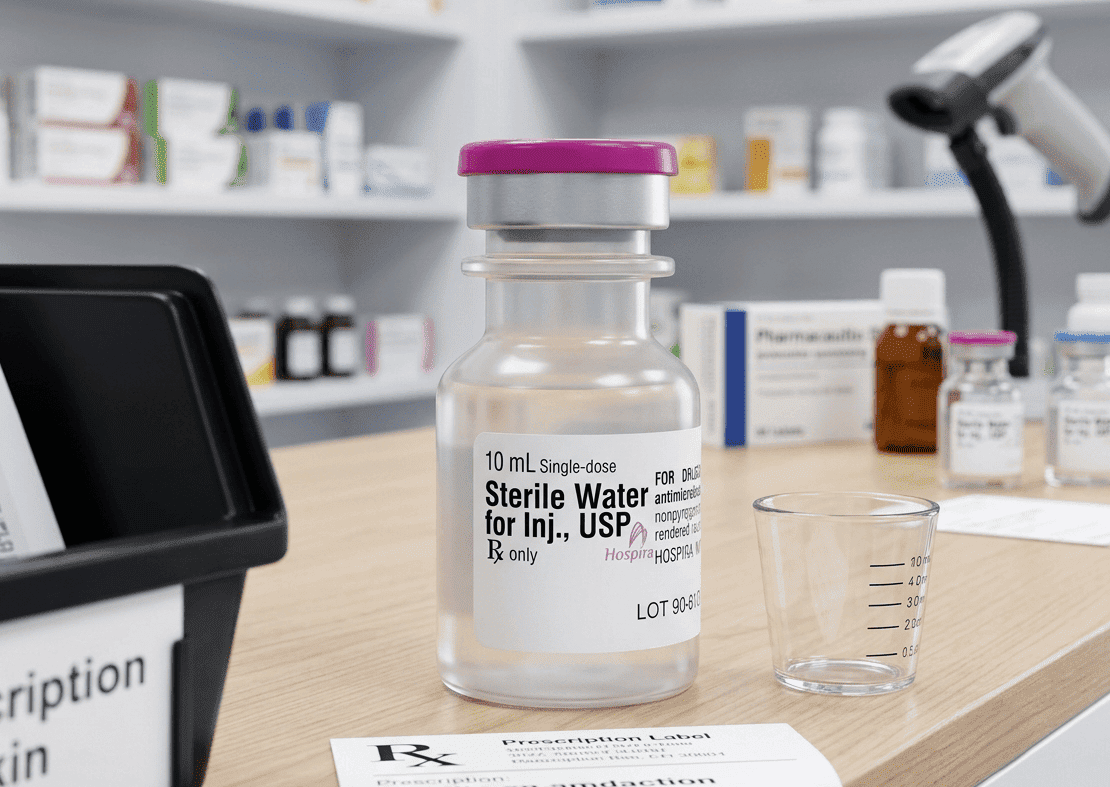
Hospira Bacteriostatic Water is the correct choice for multi-dose reconstitution in most protocols. For single-dose medications, Hospira Sterile Water is the safe and appropriate option. Browse the full range of diluent solutions to match the right product to your medication.
Mistake 2: Using the Wrong Volume of Diluent
If the diluent used is added in excess or in deficiency, the final concentration of the drug in the vial will be too high or too low. If any dose is taken from that vial, it will not be the same strength it was supposed to be. Both outcomes carry real clinical consequences for the patient, depending on the medication involved.
Always make sure to use a calibrated syringe containing the correct amount of diluent prior to using it. Read the drug label or package insert for the specific volume and adhere to the instructions on the label.
Why Volume Accuracy Is Critical for Dosing
The final concentration will depend completely on the diluent volume used when mixing. A mistake of just 0.1mL may lead to dosing outside the therapeutic range for narrow therapeutic index drugs. This is NOT a rounding problem; this is a clinical accuracy problem that has an impact on the patient.
Medication mixing mistakes are 100% avoidable when using the correct syringe and the right habit. Always use a fresh, calibrated syringe for every reconstitution and never estimate or reuse syringes from a previous draw.
Mistake 3: Shaking the Vial Instead of Swirling
Vials containing medications are often subjected to mechanical stress when shaken, and this could damage the medications. The appropriate method is a gentle swirl or rolling the vial between the palms so that it dissolves. When shaken vigorously, the foam will form, air will become trapped, and an accurate measurement of the amount of dosing will be difficult.
Read your medicines' reconstitution instructions before mixing. There are certain drugs that clearly carry the instruction “do not shake” on the container and there is a direct pharmacological reason for this.
Protein Denaturation and Foam Formation Risks
A protein-based drug becomes denatured when it is shaken; a permanent structural breakdown destroys its function. When the protein is denatured, it is unable to function in the patient's body in the same way as it does in other healthy cells. The dose becomes ineffective before it's even given to the patient.
Because of the presence of foam trapped in the solution, it is not possible to measure the dose volume. If there is foam before drawing the dose, turn the vial around and let it come to rest.
Mistake 4: Not Checking for Particulate Matter Before Drawing
All reconstituted solutions must be checked before they are drawn into the syringe. Contamination, incorrect mixing, or breakdown of a drug may be indicated by particle cloudiness, or color changes. If the solution is suspected of containing particulates, the risk to the patient is obvious.
Place the vial against a light background and rotate slowly to check for any anomalies. If there are any particles, haziness, or unusual color, the solution must be discarded immediately. This check takes under ten seconds and is your last line of defense before the drug enters the body.
Mistake 5: Reconstituting Too Far in Advance
Preparing a medication hours before it is needed introduces real stability and contamination risks. Once mixed, a biological and chemical clock starts running and cannot be paused or reversed. Most reconstituted medications have a strict usable window that must be followed without exception.
Prepare medications as close to the time of use as the clinical situation allows. When preparation is unavoidable, always follow the manufacturer's storage conditions exactly as written.
Stability Windows Vary by Drug: Always Check the Label
Every reconstituted drug has a stability window defined by its manufacturer for specific storage conditions. This window changes depending on whether the drug is refrigerated or kept at room temperature. The package insert is the only authoritative source, not habit, not memory, and not assumption.
How to avoid reconstitution errors related to stability starts with writing the expiration time directly on the vial. For multi-dose vial storage guidance, reading about how to store BAC water after opening provides clear and practical direction.
Mistake 6: Incorrect Storage After Reconstitution
A tenfold increase in the rate of drug degradation occurs for each 10° Celsius change in storage temperature after reconstitution. A 24 hours refrigerated drug can have a shelf life of just 4 hours at room temperature. This is a pharmacological fact and not a recommendation, and it is applicable to all medications with temperature sensitive effects.
Always transfer reconstituted vials to suitable storage, as soon as possible after preparation is complete. Do not leave vials sitting in preparation areas without temperature control between uses.
Leaving a Reconstituted Drug at Room Temperature Too Long
Room temperature storage beyond the approved window makes a reconstituted drug unsafe to administer. Even bacteriostatic water's preservative action has defined limits under prolonged warm conditions. Bacterial growth can begin in preserved solutions that have been left out too long.
Medication reconstitution errors linked to storage are among the easiest to prevent with simple timed habits. Set a timer when a vial comes out of refrigeration and return it promptly after use.
Mistake 7: Failing to Label the Vial with Date and Time
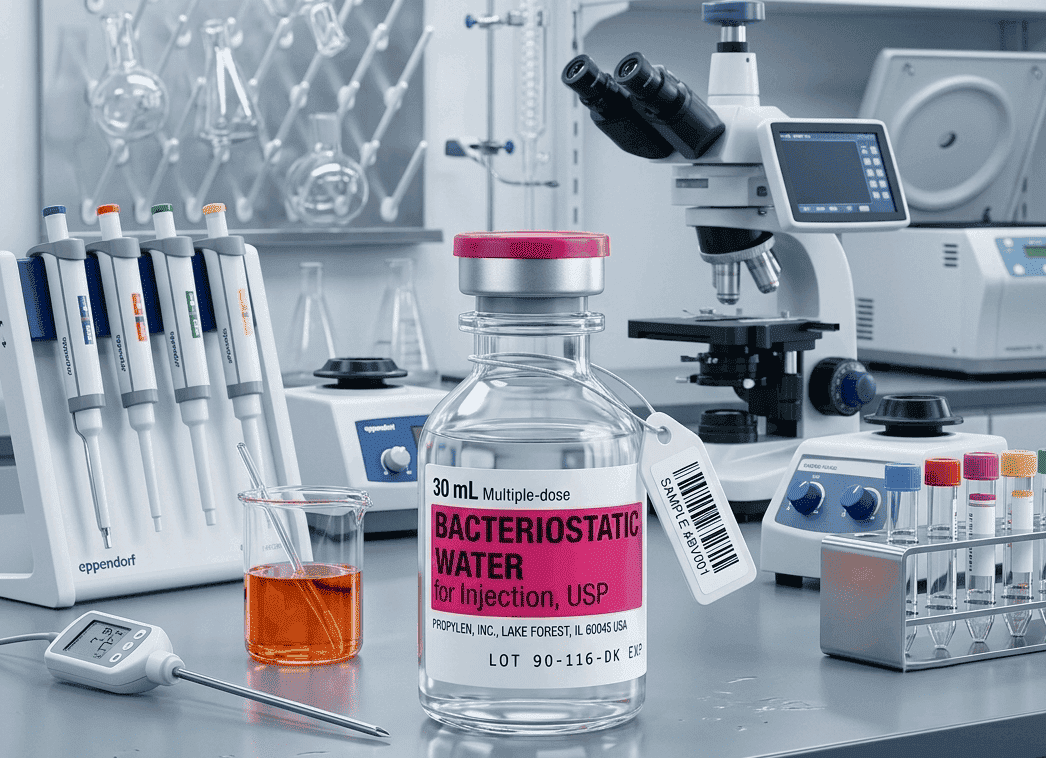
A patient safety issue is created by an unlabeled reconstituted vial for each person who uses it later. If no date and time are listed on the vial, nobody will be able to say whether the medicine is still usable or not. This risk increases in any situation where there are two or more individuals using the same vial.
Labeling takes under 30 seconds and eliminates an entire category of preventable reconstitution risk. Write the date, reconstitution time, and your initials on the vial the moment mixing is complete.
A Reconstitution Safety Checklist to Print and Use
Use this checklist every single time you reconstitute any medication:
- Confirm the correct diluent type for your medication (BAC water vs. sterile water)
- Measure the exact diluent volume using a fresh, calibrated syringe
- Swirl gently, never shake until the solution is fully clear
- Inspect for particles, cloudiness, or color changes before drawing any dose
- Calculate and record the stability expiration time on the vial immediately
- Store the vial at the correct temperature right after mixing
- Label the vial with the reconstitution date, time, and your initials
Following this checklist every time builds a safe, consistent technique that protects every patient you care for. For step-by-step guidance, explore short reads on how to properly use BAC water in multi-dose vials and how to reconstitute peptides using BAC water. You can also find all the reconstitution solutions you need in one trusted place.