
Primary vs Secondary Wound Dressings, Explained Simply
Jul 29th 2026
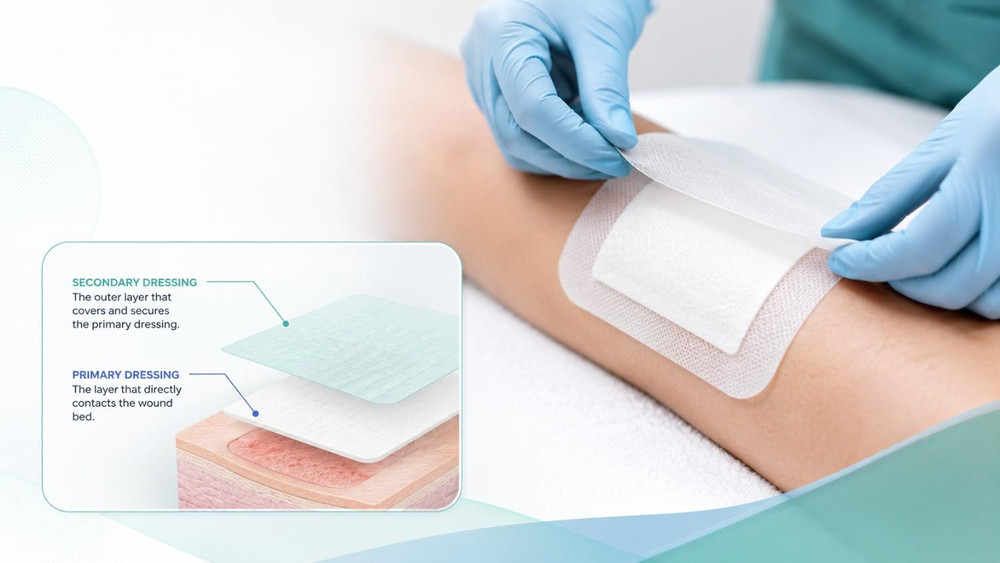
A primary vs secondary wound dressing comparison comes down to one thing: contact. A primary dressing touches the wound bed directly and manages it. A secondary dressing sits over the primary layer, without touching the wound, and holds it in place. Most wounds with real drainage use both together. This guide covers what each layer does, real product examples, and how to combine them correctly.
What's the Difference Between Primary and Secondary Dressing?
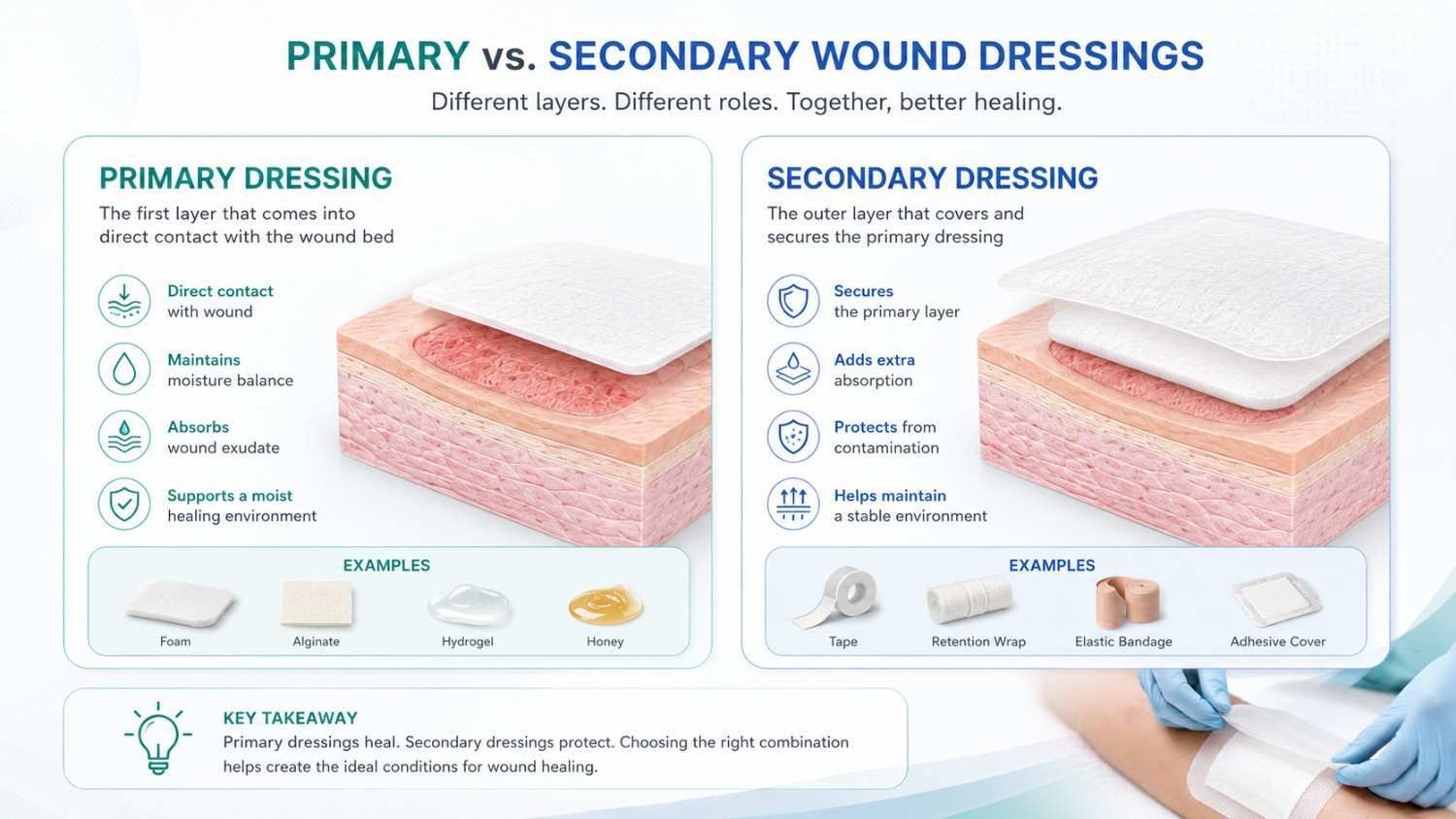
There are dozens of types of wound dressings on the market, but every one of them plays either a primary or a secondary role, the same split used in clinical nursing education. That distinction matters because each layer has a different job. Choosing the wrong role for a dressing can leave drainage unmanaged or let the whole thing come loose too soon. Use the table below as a quick reference, then read on for what each layer does in practice.
|
|
Primary Dressing |
Secondary Dressing |
|
Touches the wound? |
Yes, direct contact with the wound bed |
No, it sits over the primary dressing |
|
Main job |
Manages the wound itself: moisture, drainage, infection control |
Holds the primary dressing in place, adds absorption, blocks contamination |
|
Common examples |
Gauze, foam, hydrocolloid, alginate, hydrogel, transparent film, honey-based dressings |
Tape, retention wraps, elastic bandages, adhesive island covers |
|
Used alone or together? |
Often paired with a secondary dressing for moderate to heavy drainage |
Almost always used with a primary dressing underneath, not alone |
Primary Dressings, Explained
Primary dressings do more than sit on a wound. They actively manage the wound bed: controlling moisture, absorbing drainage (called exudate), and supporting your body's healing process. Some also deliver an active ingredient straight into the wound. Medical-grade honey is a good example of that.
Common types of primary dressings include:
- Gauze, for straightforward wounds with light to moderate drainage
- Foam, for wounds with heavier drainage that need extra cushioning
- Hydrocolloid, for wounds that need a moist healing environment
- Alginate, for wounds with heavy drainage, since it absorbs fluid well
- Hydrogel, for dry wounds that need added moisture
- Transparent film, for shallow wounds that still need to stay visible
- Honey-based dressings, for wounds that benefit from natural antibacterial support
Arpovo carries Medihoney gel and paste as a real example of an active primary dressing. Clinicians tend to reach for the gel on shallower wounds and the paste on deeper ones, since it holds its shape longer once applied. The breakdown of Medihoney gel versus paste covers when each format fits best.
Secondary Dressings, Explained
A secondary dressing earns its place through what it adds, not through contact with the wound. It secures the primary dressing so it can't shift, increases how much drainage the pairing can absorb, and blocks outside dirt and bacteria. Some versions add light compression too, which helps with wound types like venous leg ulcers.
Common types of secondary dressings include:
- Tape, for securing smaller dressings in place
- Retention wraps, for larger wounds or areas that move a lot
- Elastic bandages, for wounds that also benefit from mild compression
- Adhesive island dressing covers, for a simple, all-in-one secure fit
Some Dressings Can Be Either, Depending on the Wound
Foam and gauze do not always stay in one category. Depending on the wound, either one can work as a primary dressing or a secondary dressing.
This is a detail many guides skip. Foam placed straight onto a draining wound acts as a primary dressing. That same foam, placed over a different primary dressing to add absorption, becomes secondary instead. Gauze works the same way. Packed directly into a wound, it is primary. Wrapped around a limb to secure another dressing, it is secondary.
The category depends on where the material ends up, not what it's made of. When unsure, ask what is actually touching the wound right now, not what type of product it is in general.
Using Them Together: The "Combined Dressing" Approach
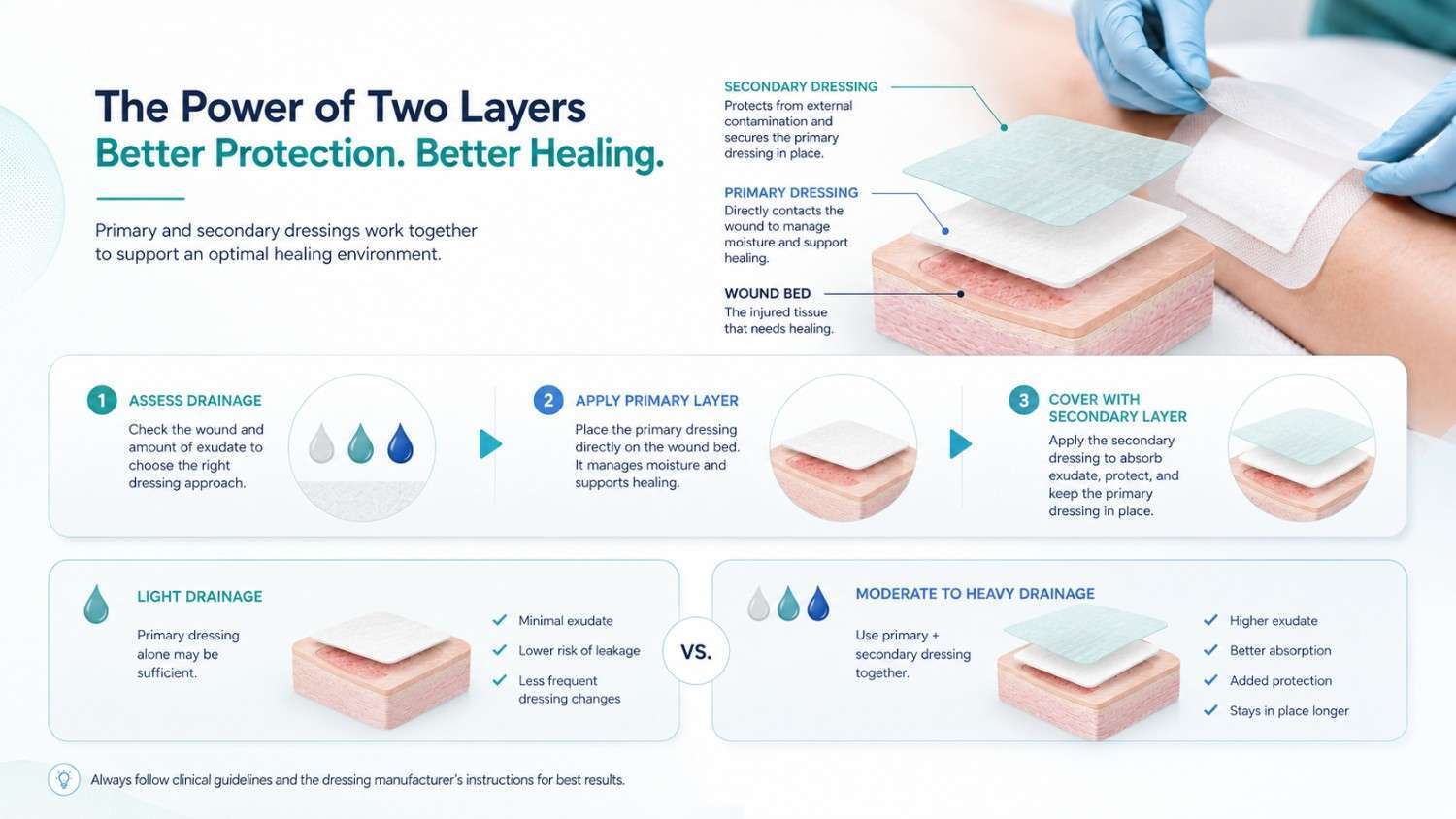
A combined wound dressing means using a primary and secondary layer at the same time. Reach for this approach once drainage moves from light to moderate or heavy, since a single layer can't absorb everything and stay effective on its own.
Pairing the two layers extends how long a dressing can stay in place before it needs changing. Fewer changes means less disruption to a healing wound and less handling overall, which lowers infection risk.
How to Choose the Right Combination
The right combination depends on your wound's depth, drainage level, location, and infection risk. No single dressing works for every wound.
A shallow, dry wound needs different support than a deep wound with heavy drainage. Location matters too: a wound over a joint that bends often needs a flexible, well-secured combination. Higher infection risk usually calls for a primary dressing with antibacterial properties, paired with a secondary dressing that blocks outside contamination.
This article covers the general categories only. How to dress a wound properly in your specific situation still depends on details a general guide cannot see, like wound depth or your medical history. A healthcare provider or wound care specialist can confirm the right combination for your exact wound.
Start with your wound's drainage level. Light drainage usually calls for a primary dressing alone. Moderate to heavy drainage calls for a primary and secondary dressing paired together.
Browse Arpovo's wound care catalog for primary and secondary dressing supplies, including Medihoney. For anything beyond routine, minor wound care, check with your healthcare provider or a wound care specialist first.
Frequently Asked Questions
Do I always need both a primary and secondary dressing?
No. A simple, low-drainage wound, like a small cut, often does fine with a primary dressing alone, such as a basic adhesive bandage. Save the two-layer approach for wounds that are actively draining.
Can the same dressing be primary or secondary?
Yes, in some cases. Foam and gauze can work as either a primary or a secondary dressing, depending on the wound and what else is being used alongside them.
What is a combined dressing?
It's the term for pairing a primary and secondary dressing on the same wound at the same time, rather than using either one by itself.
Does a secondary dressing touch the wound?
No. By definition, a secondary dressing stays on top of the primary layer and never contacts the wound bed underneath.
How do I know which dressing type is right for my wound?
It depends on your wound's depth, how much it drains, and where it sits on your body. This article covers the general categories, but a healthcare provider or wound care specialist should confirm the right choice for your specific wound.
(This article is for general educational purposes and isn't a substitute for advice from a healthcare provider or wound care specialist. Always follow your provider's specific wound care instructions.)