
Nitrile vs Latex vs Vinyl Exam Gloves: Which Is Best for You?
Aug 28th 2026
Choosing between nitrile vs latex exam gloves, or vinyl as a third option, comes down to matching the material to the task, not picking whichever sounds most premium. The wrong choice has real consequences: premature tearing, chemical exposure, an allergic reaction, or paying more than a low-risk task actually requires. Nitrile, latex, and vinyl each have genuine strengths and real trade-offs. This guide compares all three so you can match the material to your specific setting, whether that's a clinic, a lab, or a single box for home use.
Nitrile Gloves
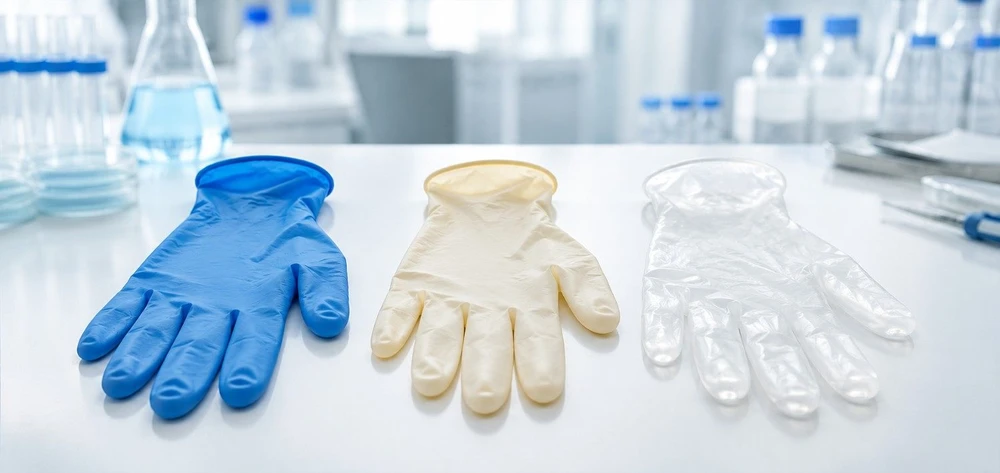
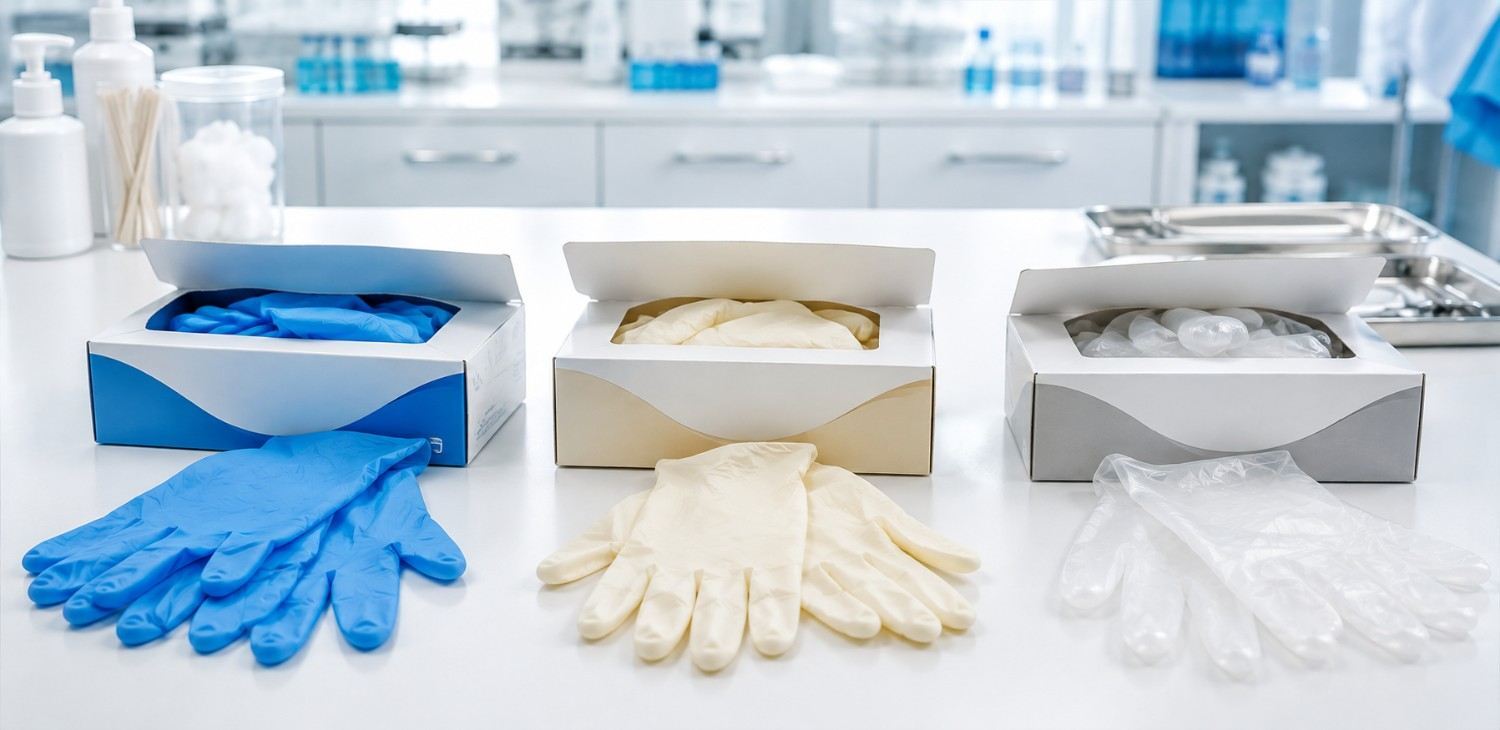
Nitrile gloves are synthetic, latex-free, and offer the strongest chemical and puncture resistance of the three materials. Made from acrylonitrile-butadiene rather than natural rubber, nitrile gloves meet the ASTM D6319 standard for medical exam gloves, with medical-grade options typically meeting an exam glove AQL rating of 1.5 or lower. That combination makes nitrile the default choice for clinical exams, lab work, chemical handling, and other higher-risk tasks where a torn or compromised glove is a real problem. The trade-off is cost: nitrile runs higher than vinyl, and some users find it feels slightly less like a second skin than latex. Ansell's MICROFLEX MidKnight nitrile exam glove is a solid example of what a medical-grade nitrile glove looks like in practice. If nitrile sounds like your material, the Ansell Nitrile Gloves guide goes further into AQL ratings and specific product lines once you've settled on it.

Latex Gloves
Latex gloves offer the best tactile sensitivity and elasticity of the three materials, with one major trade-off: allergy risk. Made from natural rubber and meeting the ASTM D3578 standard, latex gloves fit close to the hand and give the closest thing to a second-skin feel available, which is why some users still prefer them for precision work. The real limiting factor is allergy risk, estimated at 8 to 12% among healthcare workers with regular exposure. That's a meaningful number for any facility where many staff members handle gloves daily, and it's the main reason latex has lost ground to nitrile and vinyl, the two latex-free exam glove options, in many clinical settings.
Vinyl Gloves
Vinyl gloves are synthetic, latex-free, and the lowest-cost option, but they trade away chemical and puncture resistance to get there. Made from PVC with a looser, non-form-fitting design, vinyl gloves tear more easily under stress than nitrile or latex, and offer the weakest chemical resistance of the three. That makes them a poor fit for procedures involving chemical or significant fluid exposure. They're a genuinely good fit for short-duration, low-risk tasks instead: basic checks, food prep, or light cleaning, where cost matters more than maximum protection.
Side-by-Side Comparison
|
Factor |
Nitrile |
Latex |
Vinyl |
|
Material |
Synthetic (acrylonitrile-butadiene) |
Natural rubber |
Synthetic (PVC) |
|
Allergy risk |
None (latex-free) |
Yes, affects an estimated 8-12% of healthcare workers |
None (latex-free) |
|
Puncture resistance |
Highest of the three |
Moderate-high |
Lowest, tears easily |
|
Chemical resistance |
Strongest: oils, solvents, many chemicals |
Moderate |
Weakest |
|
Tactile sensitivity |
Good |
Best, close second-skin fit |
Loose fit, less precise |
|
Cost |
Mid-to-high |
Mid |
Lowest |
|
Best suited for |
Clinical exams, labs, chemical handling, higher-risk tasks |
Precision work where allergy isn't a concern |
Short-duration, low-risk tasks (basic checks, food prep) |
Which Glove Is Right for Your Situation
The right material depends on the task in front of you, not a single universal answer.
- Routine clinical exams and patient care: Nitrile is the standard choice.
- A facility with known latex sensitivity concerns: Nitrile or vinyl, never latex.
- Short, low-risk tasks on a tight budget: Vinyl is the practical pick.
- A specific procedure requiring maximum tactile precision with no allergy risk: Latex.
For a straight nitrile vs vinyl gloves call on a tight budget, the deciding question is usually risk level, not price alone. And when the choice comes down to latex vs vinyl gloves specifically, it's really a question of whether tactile precision or cost matters more for the task.
Whichever material fits your setting, browse Arpovo Health's full personal protective equipment catalog to compare current options and stock up in bulk.
Frequently Asked Questions
Are nitrile gloves always better than latex or vinyl?
Not universally. There's no single answer for the best exam gloves for medical use across every task: nitrile offers the strongest chemical and puncture resistance, but latex still edges it out on tactile sensitivity, and vinyl is the practical choice for short, low-risk tasks on a budget.
Which glove material is safest for someone with a latex allergy?
Nitrile or vinyl. Both are latex-free and carry no risk of triggering a latex allergy, unlike latex gloves.
Why are vinyl gloves so much cheaper than nitrile or latex?
Vinyl is made from PVC, a less expensive material to produce, but that lower cost comes with weaker chemical resistance and a higher chance of tearing under stress.
What does the AQL rating on a box of gloves mean?
AQL (Acceptable Quality Level) measures the maximum allowed defect rate in a batch. Medical exam-grade gloves are held to an AQL of 1.5 or lower, meaning fewer than 1.5% of the batch can have a defect like a pinhole.
Can vinyl gloves be used for medical exams?
They can be used for very short, low-risk tasks, but their weaker chemical resistance and higher tear rate make nitrile or latex the more dependable choice for most clinical exam settings.