
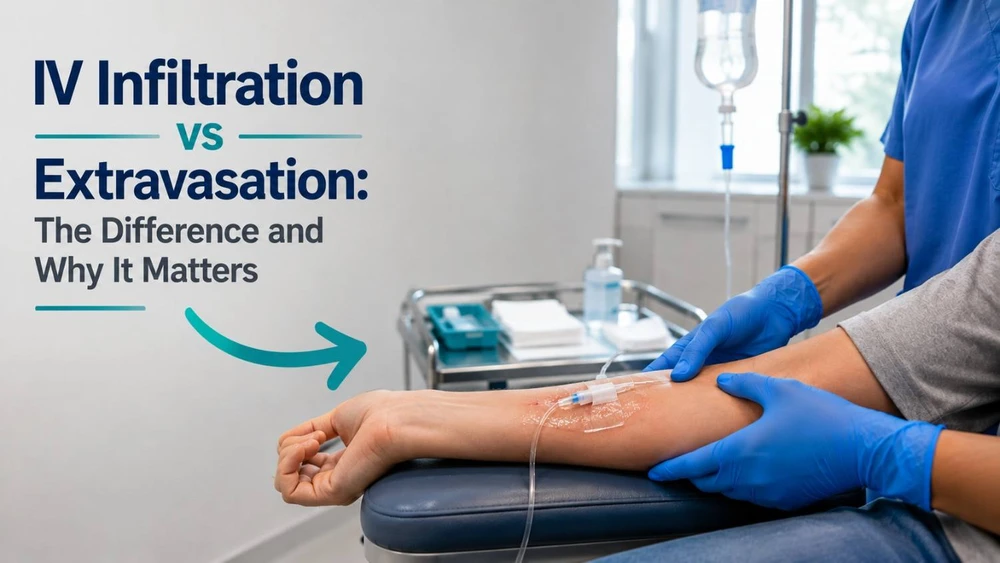
IV Infiltration vs Extravasation: What's the Difference and Why It Matters
Aug 19th 2026
Swelling around an IV site can mean two very different things, and telling them apart quickly matters. Per the Infusion Nurses Society (INS), the distinction comes down entirely to what's leaking: infiltration is a non-vesicant fluid or medication escaping into surrounding tissue, while extravasation is a vesicant an agent capable of causing blistering or tissue necrosis doing the same thing. Same mechanism, very different consequences.
What Is IV Infiltration?
Infiltration happens when the catheter shifts out of the vein, or the vein wall is compromised, and ordinary fluid (saline, standard hydration fluids) leaks into the tissue around it instead of flowing into the bloodstream. Most cases are uncomfortable rather than dangerous, and resolve without lasting effects once caught and the infusion is stopped.
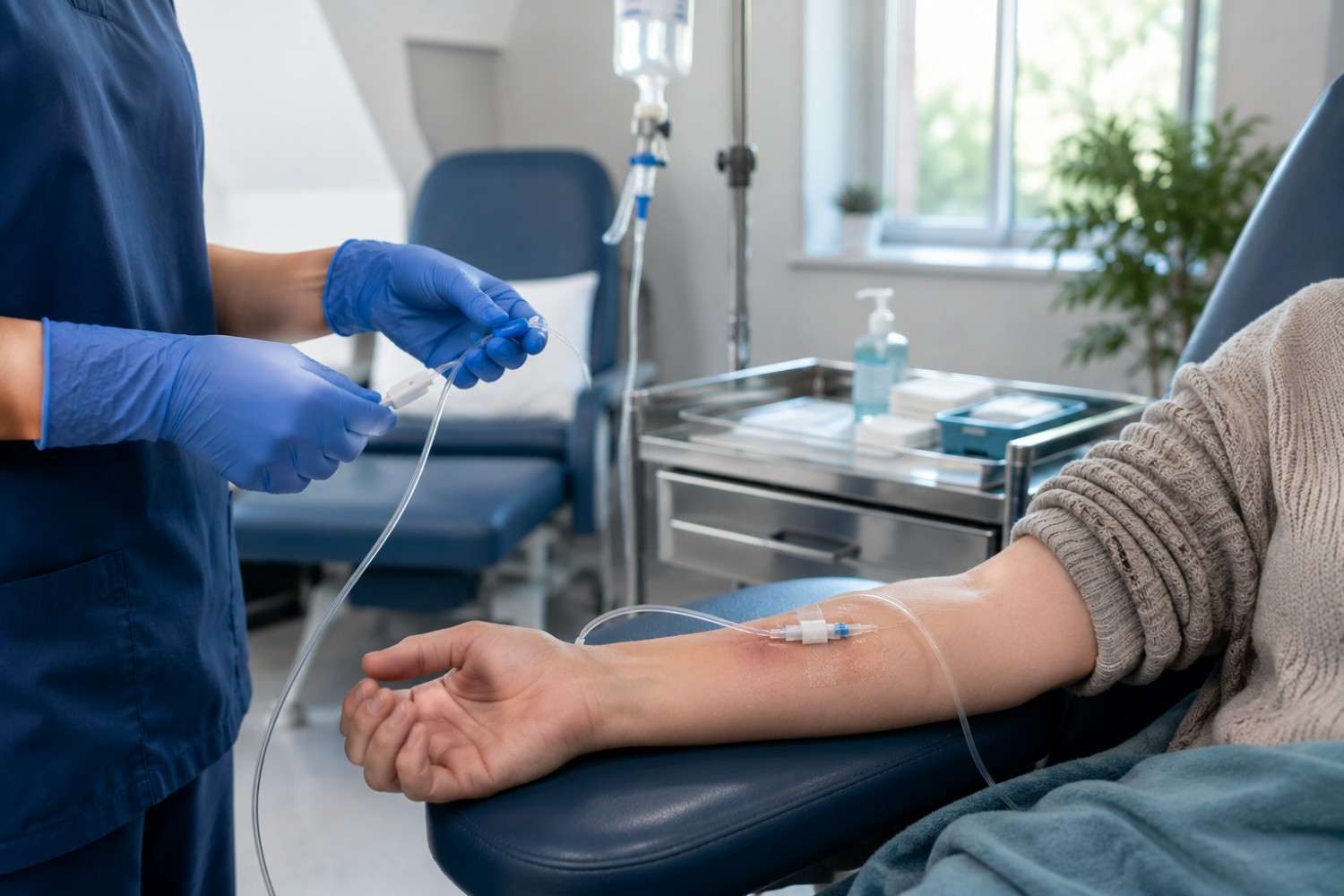
Signs to watch for: swelling around the insertion site, skin that feels cool to the touch, a slowed or stalled infusion rate, and mild discomfort or tightness near the site.
What Is IV Extravasation?
Extravasation is the same basic event fluid escaping the vein but with a vesicant medication instead of a plain fluid. That distinction is what makes it serious: vesicants can damage or destroy the surrounding tissue, and in some cases lead to necrosis requiring surgical evaluation. Common high-risk medications include certain chemotherapy agents, vasopressors, and concentrated potassium solutions.
The INS Grading Scale
The Infusion Nurses Society uses a 0–4 scale to grade severity, based on visible signs at the site:
|
Grade |
What It Looks Like |
|
0 |
No symptoms |
|
1 |
Skin blanched, swelling under 1 inch, cool to touch, with or without pain |
|
2 |
Skin blanched, swelling 1–6 inches, cool to touch |
|
3 |
Blanched and translucent skin, gross swelling over 6 inches, mild-to-moderate pain, possible numbness |
|
4 |
Blanched, translucent, tight, leaking, discolored or bruised skin, circulatory impairment, moderate-to-severe pain, deep pitting edema |
One important nuance: a vesicant extravasation can look mild at first and worsen significantly over hours to days, even after the infusion has stopped. Grade at the time of recognition, but don't assume a low initial grade means the injury is finished evolving.
Telling Them Apart at the Bedside
A few quick checks help distinguish infiltration from a more serious extravasation:
- Check the infusion rate. A slowed or stopped flow often signals the catheter has moved.
- Feel the site. Coolness is common to both, but increasing pain, tightness, or blistering points toward extravasation rather than simple infiltration.
- Know what's infusing. If the medication is a known vesicant (chemotherapy agent, vasopressor, concentrated electrolyte solution), treat any suspected leak as a potential extravasation until proven otherwise, rather than waiting to see how it develops.
Treating Infiltration
Most infiltration cases follow a straightforward protocol: stop the infusion, remove the catheter per facility policy, elevate the affected limb to reduce swelling, and apply a warm or cold compress depending on the fluid involved. Continue monitoring the site as swelling resolves.
Treating Extravasation
Extravasation calls for faster, more deliberate action:
- Stop the infusion immediately, but leave the catheter in place rather than removing it right away.
- Attempt to aspirate any remaining vesicant from the tissue using the existing catheter, without applying pressure to the site pressure disperses the drug into a wider area rather than containing it.
- Notify the provider without delay and check whether an antidote applies to the specific medication involved dexrazoxane and hyaluronidase are FDA-approved antidotes for certain vesicants.
- Apply thermal therapy as directed: cold compresses for most vesicants to limit spread, but warm compresses specifically for vinca alkaloids, etoposide, and oxaliplatin, which respond differently.
- Document thoroughly and continue monitoring, since injury severity can still increase after the initial event.
Grade 3 and 4 extravasations typically warrant an attending physician and plastic surgery consultation, given the tissue damage risk involved.
Prevention
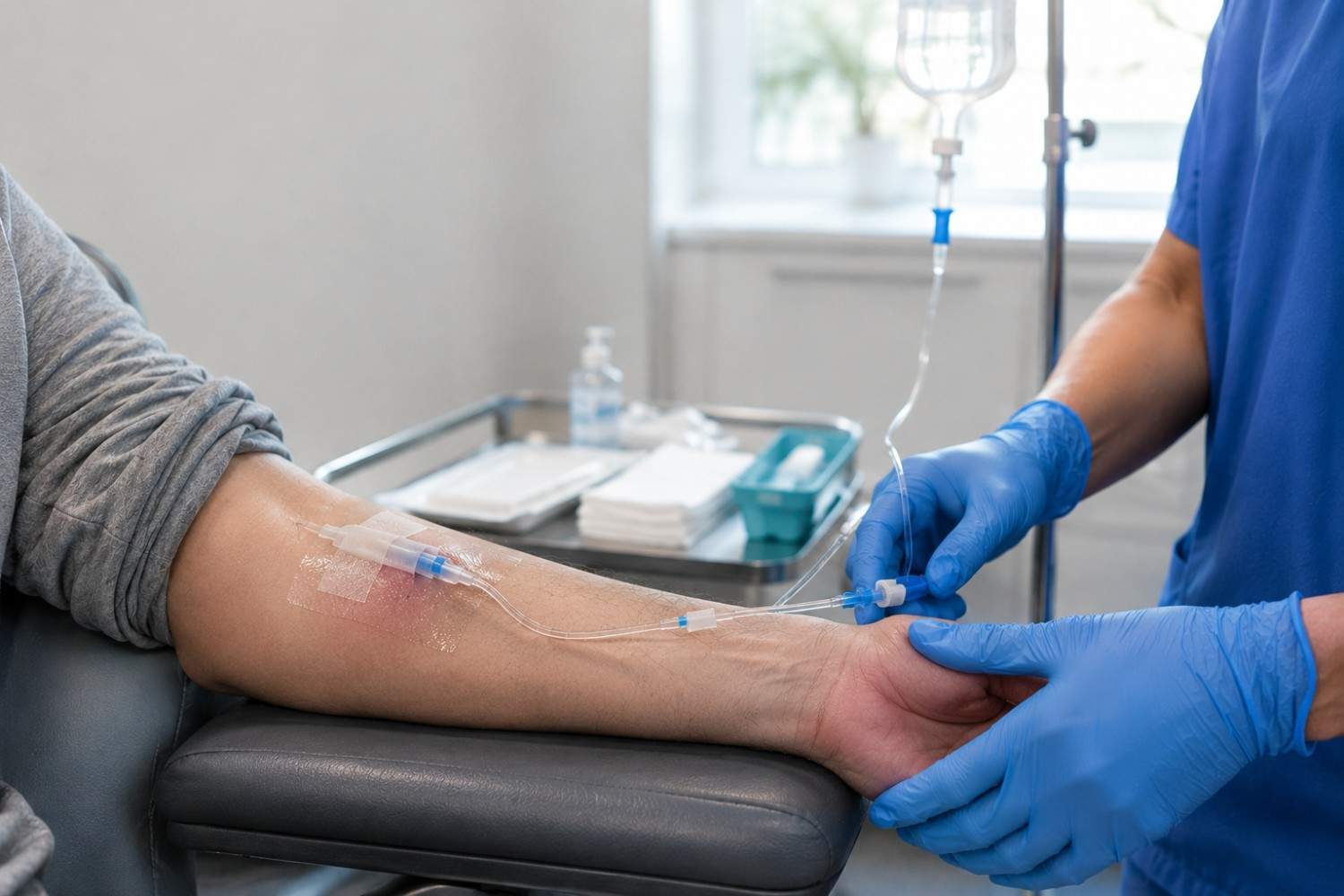
The most effective prevention is upstream of any incident: careful vein selection (avoiding fragile or previously used veins), secure catheter fixation, confirming blood return before and periodically during vesicant infusions, and more frequent site checks specifically during high-risk medication administration. For medications with significant vesicant risk, central venous access is often preferred over peripheral IV specifically to avoid this category of complication altogether.
Frequently Asked Questions
What's the simplest way to remember the difference between infiltration and extravasation?
Infiltration involves a non-vesicant (non-damaging) fluid leaking into tissue; extravasation involves a vesicant (tissue-damaging) fluid doing the same. The event is the same the fluid is what changes the risk.
Can a mild-looking extravasation still turn serious?
Yes. Vesicant injuries can worsen significantly over hours to days even after the infusion stops, which is why continued monitoring matters even after an initially low-grade assessment.
Is every case of swelling around an IV site cause for alarm?
No, but every case deserves a prompt check. Most infiltrations are grade 1 or 2 and resolve without complication once caught early the goal is catching it early, not assuming the worst every time.
Why does treatment differ between cold and warm compresses for extravasation?
It depends on the specific medication involved. Cold compresses limit the spread of most vesicants, but vinca alkaloids, etoposide, and oxaliplatin respond better to warm compresses that encourage dispersion instead.
This article is for general educational purposes for healthcare professionals and caregivers, and isn't a substitute for facility-specific protocols or professional clinical judgment.
Explore Arpovo's IV therapy supplies and IV accessories for safe infusion setup.