
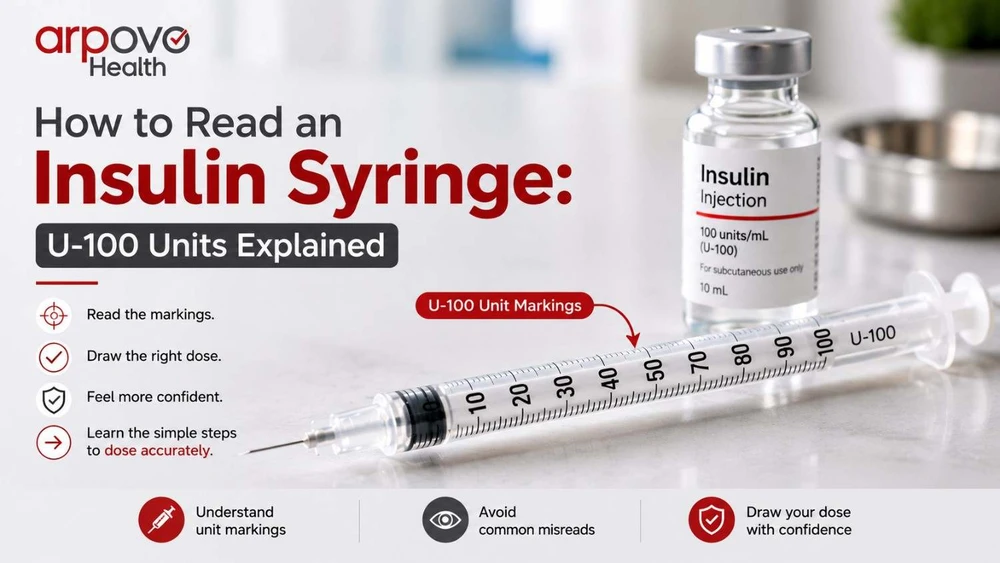
How to Read an Insulin Syringe: Understanding U-100 Unit Markings
Aug 21st 2026
Insulin syringes do not use the mL or cc markings you would see on most other syringes. They are marked in units, calibrated to the U-100 insulin standard, which means 100 units of insulin per 1 mL. That is a different system on purpose, not a more complicated one. This guide covers reading a syringe barrel specifically; if you are weighing a syringe against an insulin pen instead, that decision is covered separately. Here, we will walk through the three common sizes, where to read your dose, and the misreads that trip up unit-marked barrels.
Why Insulin Syringes Are Marked Differently (Units, Not mL)
Most syringes measure volume in mL or cc. Insulin syringes measure units instead, calibrated specifically to the U-100 standard. Once you understand that a "unit" line refers to insulin concentration, not fluid volume, the rest of the barrel is easy to read.
The Three Common Insulin Syringe Sizes, Side by Side
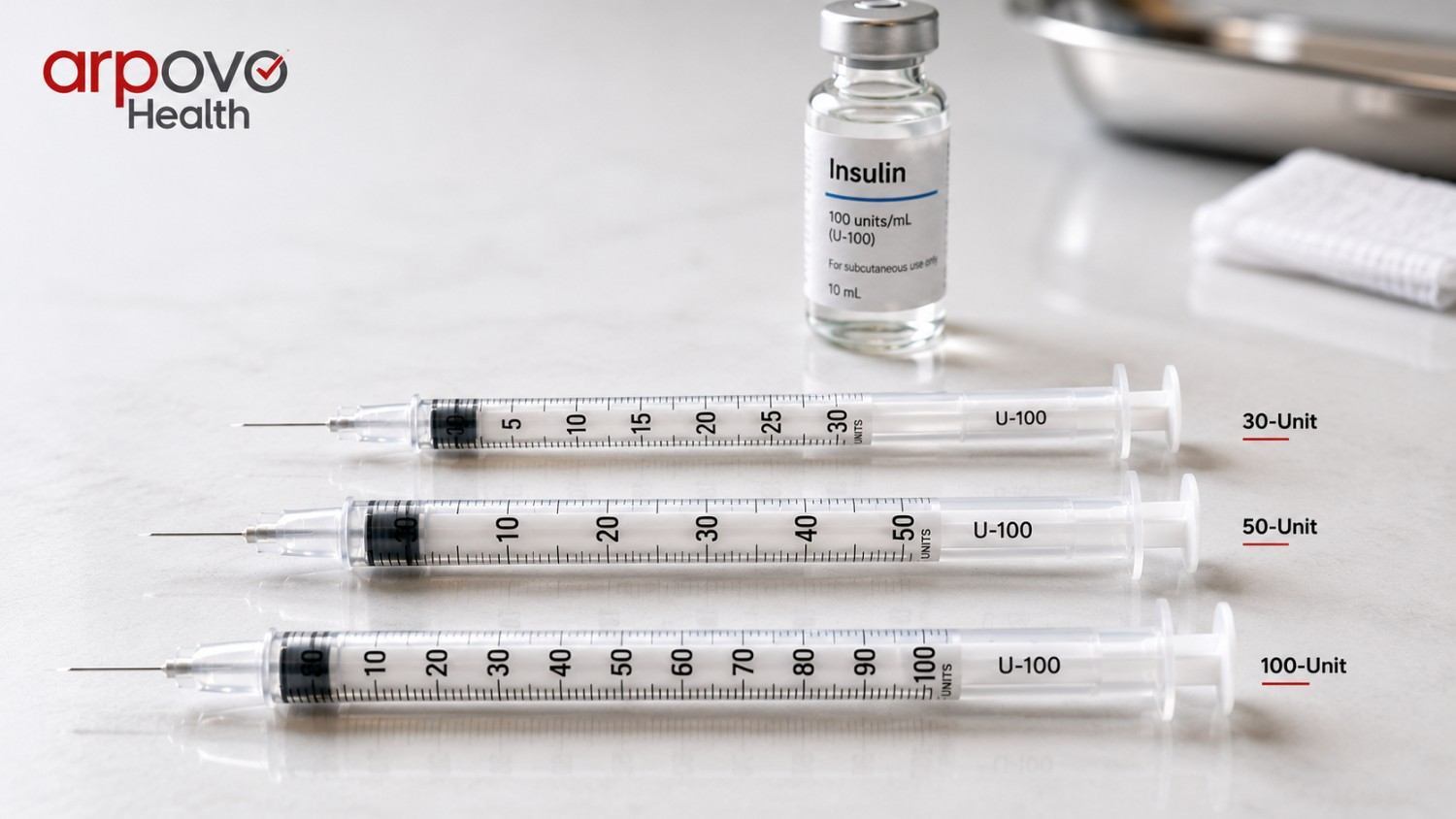
The three insulin syringe capacities you will commonly see are 30-unit, 50-unit, and 100-unit, and each is built for a different dose range.
|
Syringe capacity |
Total units |
Typical line increments |
Best suited for |
|
30-unit (0.3 mL) |
30 units |
Each line = 1 unit |
Small, precise doses (roughly 30 units or fewer) |
|
50-unit (0.5 mL) |
50 units |
Each line = 1 unit, bolder mark every 5 units |
Small-to-moderate doses (roughly up to 50 units) |
|
100-unit (1 mL) |
100 units |
Each line = 2 units, bolder mark every 10 units |
Larger doses (roughly 50 to 100 units) |
Smaller syringes give finer precision for small doses; a 100-unit syringe suits larger doses without as many lines to count.
(Line increments reflect the standard U-100 convention and may vary slightly by manufacturer; confirm the exact markings on your EasyTouch or SOL-M syringe before relying on them.)
Where to Read the Dose
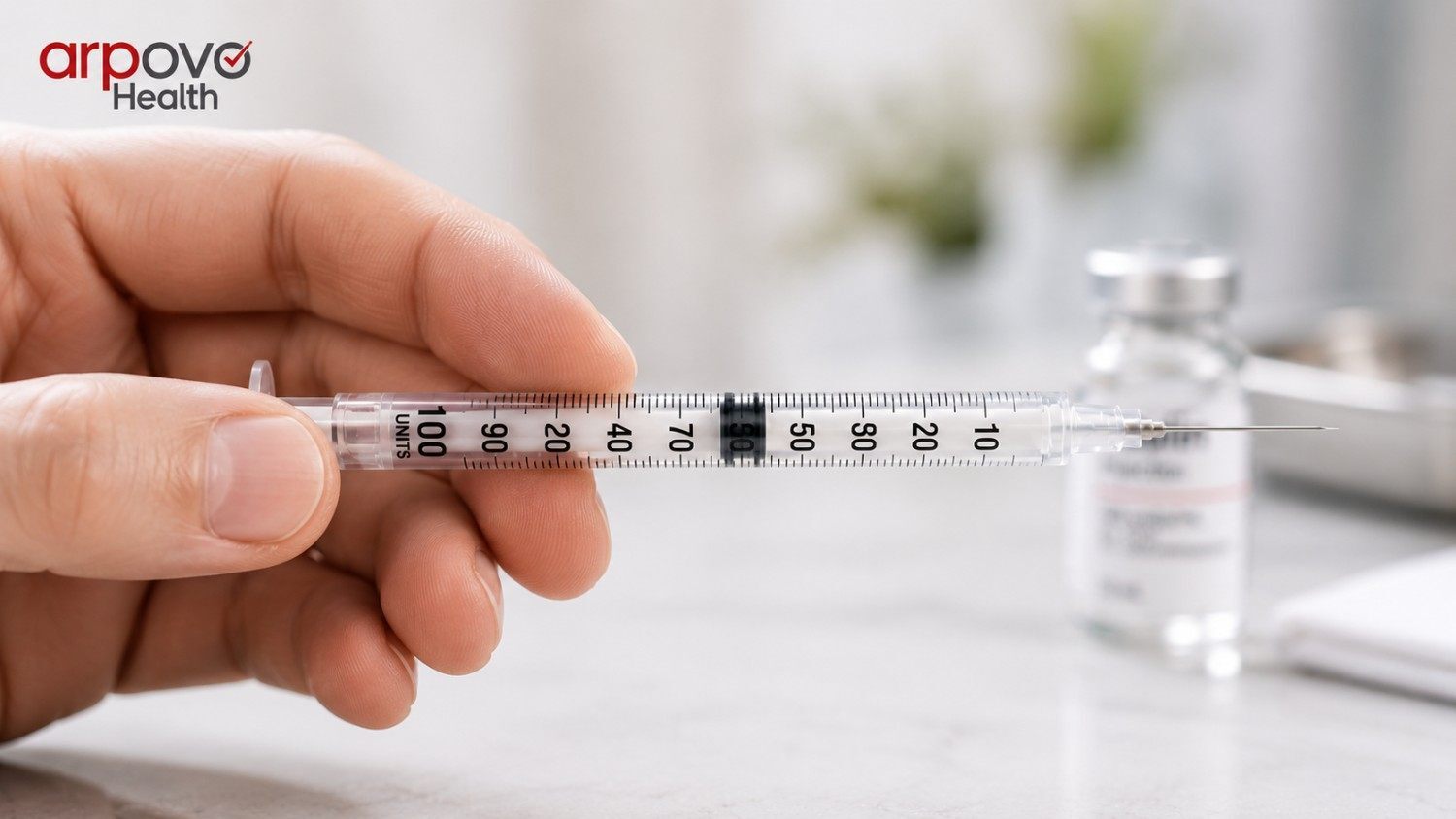
Your dose is read where the flat rim of the plunger lines up with the correct unit mark, not the raised tip and not the ridges further down.
This is an easy spot to misjudge, since the plunger has more than one raised feature. Hold the syringe at eye level, against a plain background, and look straight at the flat rim.
A Step-by-Step Walkthrough: Drawing an Accurate Dose
This walks through how to read the syringe correctly, not how much insulin to draw; your prescribed dose always comes from your provider.
- Wipe the top of the insulin vial with an alcohol swab.
- Draw air into the syringe equal to your prescribed dose.
- Inject that air into the vial.
- Invert the vial and syringe together.
- Draw insulin down to the correct unit line.
- Check for air bubbles before withdrawing the needle.
Before you inject, re-check the unit line one more time at eye level to catch a misread before it becomes a real dose.
Common Misreads and How to Avoid Them
A few mistakes account for most unit-marking errors. On a 50-unit syringe, the bold marks every 5 units can look like single units if you are reading quickly, leading to a dose off by a factor of five. Air bubbles can push the fill line higher than your actual dose, so clear bubbles before reading the final line. Reading at an angle distorts where the line sits. And switching capacities, say from 50-unit to 100-unit, changes the line spacing, so a habit built on one size can misread another.
U-100 vs U-40: Why Matching Your Syringe to Your Insulin Matters
Most insulin prescribed in the United States today is U-100; U-40 exists mainly for veterinary use. Your syringe and your insulin's concentration have to match. A U-100 syringe used with U-40 insulin, or the reverse, causes a dosing error large enough to matter, since the two concentrations are not close. If you are ever handed a syringe or insulin you do not recognize, confirm the match first. The American Diabetes Association has general guidance on insulin and syringe safety, and your pharmacist or provider can confirm your exact pairing on the spot.
For needle thickness, see the insulin syringe gauge guide; for non-insulin, mL-marked syringes, see the general guide to reading syringe markings. Deciding between a syringe and a pen? The Insulin Syringe vs Insulin Pen comparison can help.
When you are ready, browse Arpovo's full needles and syringes catalog for U-100 syringes in all three sizes.
Frequently Asked Questions
What does "U-100" mean on an insulin syringe?
It means the insulin is standardized at 100 units per milliliter, and the syringe's unit markings are calibrated to match that exact concentration.
Can I use a regular mL-marked syringe to give insulin?
Not accurately. A regular syringe measures volume, not insulin units, so using one risks a significant dosing error. Always use a syringe labeled specifically for insulin units.
What is the difference between a 30-unit, 50-unit, and 100-unit syringe?
They differ in total capacity and how many units each line on the barrel represents. Smaller-capacity syringes give finer precision for smaller doses.
Why do some U-100 insulin syringes look different even though they are the same standard?
Line spacing and bold-mark intervals vary slightly by manufacturer and capacity, even though all U-100 syringes measure the same units.
What should I do if I think I misread my syringe?
Do not give the dose. Clear the syringe, draw a fresh one, and re-check the line at eye level. If a dose has already been given and you are unsure it was correct, contact your provider.
(This article is for general educational purposes and is not a substitute for advice from your doctor, pharmacist, or diabetes care team. Always confirm your insulin dose and syringe type with your healthcare provider.)