
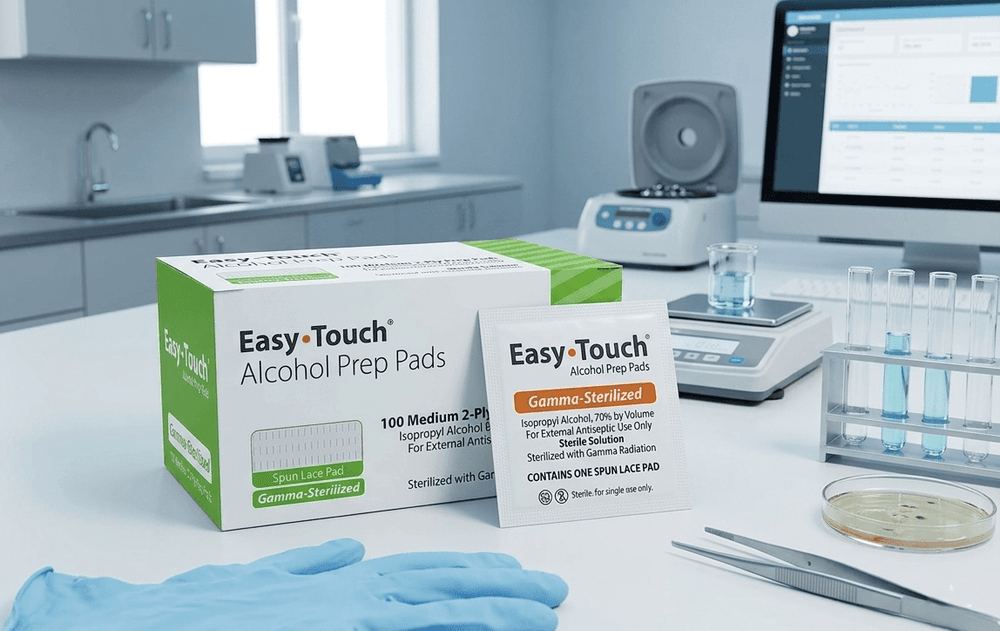
How Long Should You Wait After Using an Alcohol Prep Pad Before Injecting?
Jun 22nd 2026
Do you know why you swipe and wait? This is a simple step that most don't bother to take, and end up paying for. It's easy to get your alcohol prep pad injection timing correctly. All it takes is to know the facts and then put them into operation every time.
Why Timing Matters After Alcohol Skin Prep
Skipping the wait time after alcohol wipe injection is one of the most common mistakes. The skin needs a short moment to fully dry before the needle goes in. Rushing this step affects both your comfort and the safety of your injection.
Wet alcohol on the skin creates two real problems right away. It can carry bacteria into the puncture site instead of keeping it clean. It can also damage the medication you are injecting into your body.
The good news is that fixing this takes almost no extra effort at all. You simply wipe, pause, and inject. Once you understand what happens during that pause, you will never skip it again.
The Recommended Wait Time: 30 Seconds to 1 Minute
The standard answer to how long to wait after an alcohol prep pad before injection is simple. Most clinical guidelines recommend waiting between 30 seconds and 1 full minute. This window gives the alcohol enough time to do its full job.
Thirty seconds is the minimum you should give the skin after wiping. One minute is better if you are in a cooler room or using a thicker prep pad. The goal is always the same: no visible wetness before the needle touches the skin.
Do not start your injection if the area still looks or feels wet at all. A dry site is a safe site, and safe injection practice starts before the needle ever comes out.
Why the Alcohol Must Fully Evaporate
Alcohol needs to be completely dry before injection and every single time without exception. Alcohol works as an antiseptic only when it evaporates and takes bacteria with it from the skin. If it has not evaporated, it has not finished working yet.
The evaporation process is what actually kills the surface bacteria on your skin. Alcohol sitting wet on the surface is not done with its antiseptic job. You have to let chemistry finish before the needle breaks the skin barrier.
Patience here is not optional; it is part of the technique itself. A clean, dry site gives the alcohol prep pad credit for what it was designed to do. Rushing past evaporation wastes the prep step entirely.
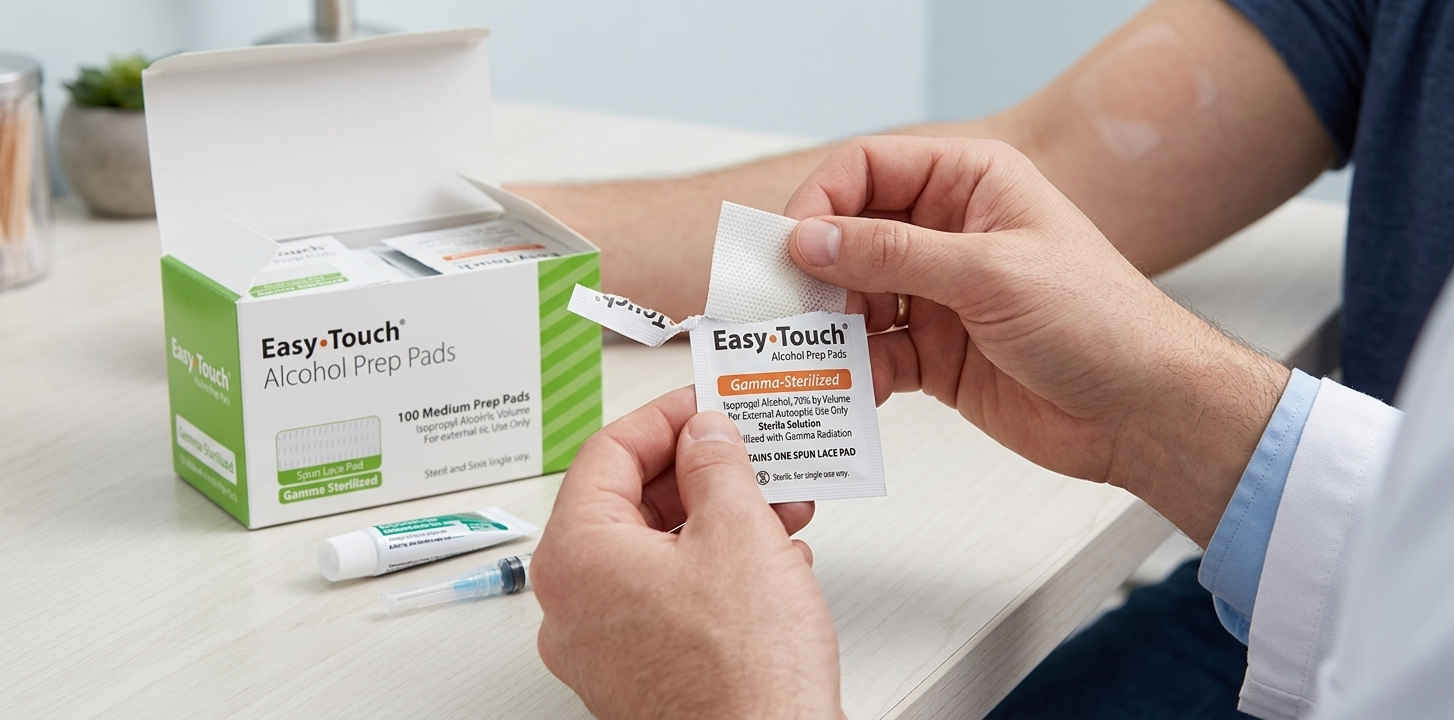
Wet Alcohol at the Injection Site Can Cause Stinging and Contaminate Medication
Wet alcohol at the injection site causes a sharp stinging sensation the moment the needle enters. This happens because alcohol is a chemical irritant to the tissue directly under the skin. The pain is avoidable and serves no purpose whatsoever.
Beyond the sting, wet alcohol can enter the puncture and interact with the medication. This is especially important for people using insulin or other sensitive compounds. Any contamination of the medication changes how it performs in the body.
Do a quick visual check before injection. If you can see a shine or be able to sense it is damp, give it another 15 seconds. This little contribution saves you as well as the drug you rely on.
What the Evidence Says: Clinical Research on Dry vs Wet Injection
Research has consistently shown that injecting over wet alcohol increases discomfort and risk. Studies examining diabetic injection protocols found that drying time significantly reduced patient-reported pain. The difference between dry and wet injection sites is both measurable and clinically meaningful.
Multiple diabetes organizations agree with the 30-second minimum rule for insulin injections. Complete drying is recommended by both the World Health Organization and the American Diabetes Association. These do not correspond to suggestions; they are based on patient data and are standard clinical recommendations.
The evidence also addresses infection risk directly and clearly. Wet alcohol does not effectively eliminate bacteria; it may actually spread organisms into the wound. A fully evaporated prep pad site reduces contamination risk to the lowest possible level.
Does the Type of Alcohol Wipe Affect Drying Time?
Yes, the construction of the prep pad changes how fast it dries. Not every wipe is made the same way, and that matters for how long alcohol takes to dry on the injection site calculation. The material and saturation level both play a real role here.
Thicker and more saturated pads release more alcohol onto the skin. This means they leave a wetter surface and take slightly longer to fully evaporate. Lightly saturated pads dry faster, which is ideal for speed-sensitive clinical settings.
Choosing the right pad for your routine makes the prep step easier and more consistent. You can explore saturation levels and how they affect performance by reading about alcohol prep pad saturation levels. Matching the pad to your needs is a simple upgrade to your injection routine.
Single vs Double-Ply, Spun Lace vs Pin Dot Saturation
Single-ply pads are thinner and generally dry in the lower end of the 30-second range. Double-ply pads hold more alcohol and may push drying time closer to the full minute. Neither is better or worse; it depends on the use case and your environment.
Spun lace construction holds fluid more uniformly across the pad's surface. Pin dot pads have a textured design that helps distribute alcohol evenly, but may release slightly less. Both types work well when you allow the proper alcohol prep pad injection timing before injecting.
If you want a trusted option for both material quality and consistent saturation, EasyTouch Spun Lace alcohol prep pads are a well-regarded choice for home and clinical use. They deliver reliable, even coverage every single time you prep a site. You can also browse the full range of alcohol prep pads to find the best fit for your routine.
Quick Visual Cue: Is the Skin Visibly Dry?
Your eyes are your best tool when the clock is not in reach. Look at the skin after wiping and before you inject every single time. If it reflects light or looks shiny, the alcohol has not finished evaporating yet.
A dry site looks matte and normal, just like the surrounding skin around it. The moment the sheen disappears, the alcohol has done its job, and you are ready. This visual check takes under three seconds and adds real safety to your process.
Train yourself to always look before you inject, not just count the seconds. Some days the alcohol dries faster, some days slower, depending on room conditions. Your eyes will always give you the most accurate signal at that exact moment.
Special Situations: Cold Weather and Slow Evaporation
Cold air dramatically slows down the evaporation rate of isopropyl alcohol on skin. In winter months or air-conditioned rooms, the standard 30 seconds may not be enough. You should extend your wait to a full minute or slightly beyond in cold conditions.
This is especially relevant for people who inject at home during winter mornings. A cold bathroom or bedroom can double the drying time on a single swipe. Add a few extra seconds to your routine during cold months as a standard habit.
If you are ever unsure whether the site is dry, simply wait a bit longer. There is no harm in waiting an extra 15 or 20 seconds before injecting. The entire process still takes under two minutes, and the safety benefit is always worth it.
For a deeper look at how to pick the right prep pad for your situation, read this guide to the best alcohol prep pads for medical use. It covers everything from material to saturation, so you can inject with confidence every time.
Common FAQ on Injection Site Prep Timing
Q: Can I blow on the skin to speed up drying?
No, blowing introduces bacteria from your mouth onto the clean site. Always let the alcohol air-dry naturally on its own without any assistance.
Q: Does rubbing the site after wiping help?
No, rubbing after wiping can recontaminate the skin and disrupt surface prep. Wipe once with firm pressure, then leave the site alone to dry.
Q: What if I accidentally touch the dried site before injecting?
If you touch the prepped area, wipe it again with a fresh pad. Then wait the full 30 to 60 seconds before proceeding with your injection.
Q: Is 70% isopropyl alcohol better than other concentrations?
Yes, 70% isopropyl alcohol is the most effective concentration for skin antisepsis. Higher concentrations actually evaporate too fast to kill bacteria effectively on the surface.
Q: Does this timing rule apply to all injection types?
Yes, the 30-second to 1-minute rule applies across insulin, testosterone, vaccines, and all subcutaneous or intramuscular injections. The skin prep principle does not change based on medication type.