
Home Blood Pressure Monitor Buyer's Guide
Sep 3rd 2026
The best home blood pressure monitor is not simply the most expensive model. Accuracy depends on the monitor type, cuff fit, and clinical validation. For most people, the American Heart Association recommends an automatic upper-arm monitor with the correct cuff size. A validated device also gives you stronger evidence that its readings meet accepted accuracy standards.
Why Monitor Choice Isn't Just a Preference
Your monitor can affect how useful your home readings are. A device that fits poorly or lacks appropriate validation may produce readings that do not reflect your actual blood pressure.
FDA clearance and clinical validation are also different things. A device can have FDA clearance without that clearance independently establishing clinical measurement accuracy. Validation involves testing the specific device against accepted clinical reference methods.
The AMA's ValidateBP program uses criteria that include FDA clearance, independent validation testing, and appropriate cuff sizes. Its listing therefore provides a useful way to check a specific device before buying.
Your technique matters too. Sit quietly for at least five minutes before measuring. Keep your back supported and feet flat. Rest your arm on a surface at heart level. Take two readings about one minute apart and record the results.
Upper Arm vs. Wrist vs. Finger Monitors
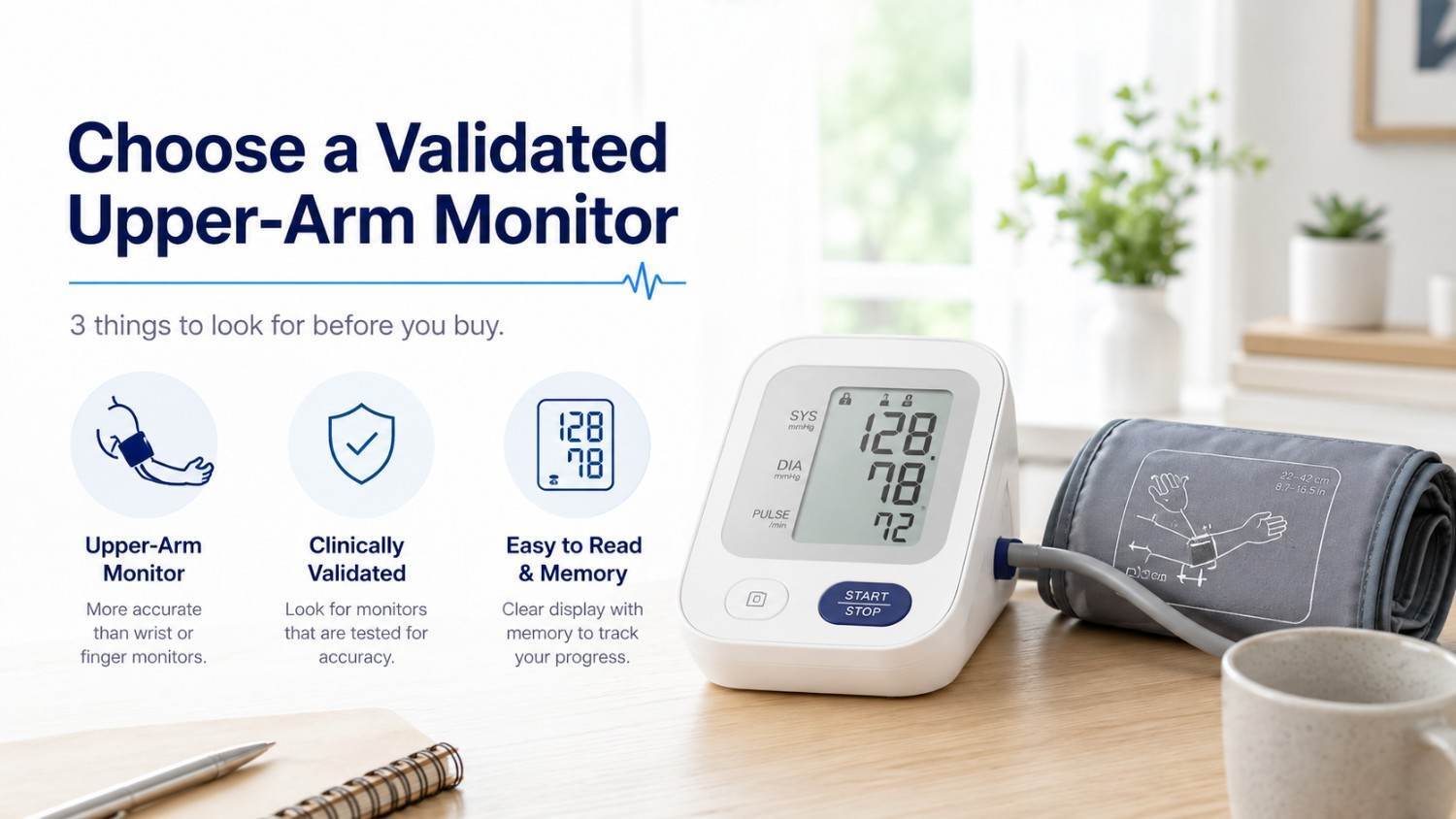
For most adults, choose an automatic upper-arm cuff monitor. The American Heart Association recommends upper-arm devices because they generally provide more reliable readings than wrist or finger monitors. Wrist devices can be more sensitive to positioning errors.
That does not make every wrist monitor useless. A wrist monitor may make sense when a properly fitting upper-arm cuff cannot be used. People with very large arms may have difficulty finding a suitable cuff. Certain medical situations may also make upper-arm measurement unsuitable.
If you use a wrist monitor, positioning becomes especially important. Keep the wrist at heart level during every reading. Follow the manufacturer's instructions closely.
Arpovo Health currently carries the SureLife® Premium Wrist Blood Pressure Monitor (Talking). It provides a jumbo LCD display, irregular heartbeat detection, automatic operation, and 99 memories across four groups. It also provides spoken readings in English, Spanish, and French but it shouldn't be treated as the universal first choice, since upper-arm monitoring remains the general recommendation for most people.
Cuff Size Is the #1 Accuracy Factor
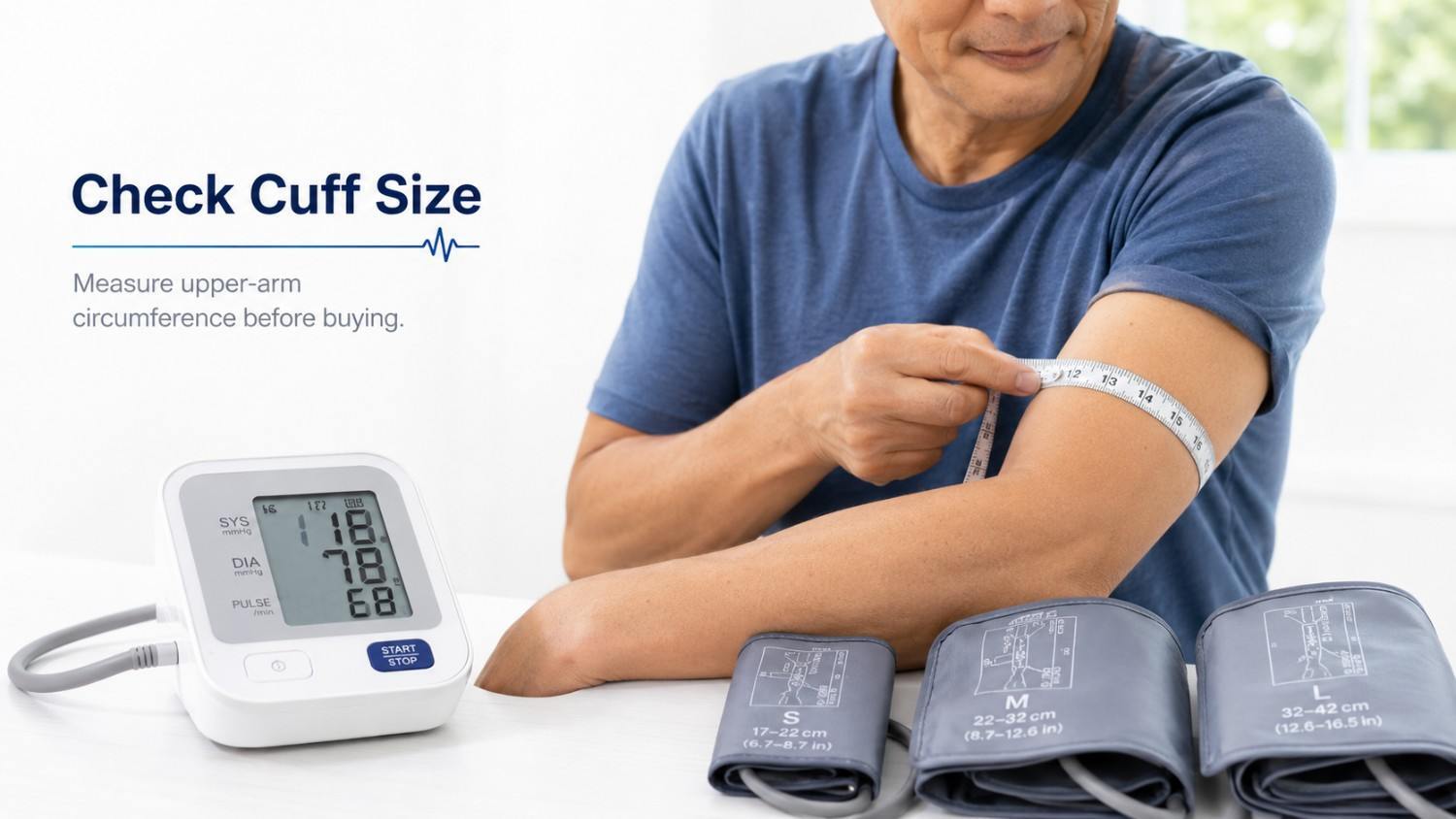
The right cuff size is essential for accurate blood pressure measurement. A cuff that is too small can produce readings that are falsely high. A cuff that is too large can also affect the result.
Measure your upper arm before buying a monitor. Measure around the bare arm at the midpoint between your shoulder and elbow. Then compare that measurement with the cuff range provided for the monitor.
This step matters more than many shoppers realize. An American Heart Association report found that commonly sold monitors may not provide suitable cuff coverage for as many as 18 million U.S. adults. The research estimated that nearly 7% of U.S. adults could have arm sizes outside the available ranges of popular devices.
Tip: Don't assume a "standard" or "universal" cuff will fit you. Check the actual measurement range before purchasing.
Look for a Validated Device
A validated blood pressure monitor has undergone testing against accepted clinical reference standards. This gives you stronger evidence about measurement accuracy than simply seeing a product marketed as medically accurate.
Before buying, search the exact model on the American Medical Association's ValidateBP device listing. The program reviews documentation for independent validation and appropriate cuff sizes before listing devices.
You can also check STRIDE BP's validated device database. STRIDE BP lists devices that have passed established validation procedures reviewed by its scientific advisory board. Its preferred home devices are generally validated upper-arm monitors with automated storage or data-transfer capabilities.
Tip: Always search by the exact model. Similar-looking monitors can have different validation evidence.
Useful Extra Features Worth Considering
Once accuracy and cuff fit are covered, consider features that make regular monitoring easier.
Irregular heartbeat detection can flag an irregular rhythm during a reading. It does not diagnose a heart condition. Instead, it can provide information worth discussing with your healthcare provider.
Multiple user memory helps households that share one monitor. Separate profiles can keep each person's readings and trends organized.
Large displays can make numbers easier to read. This matters if you have difficulty seeing smaller screens.
Voice readout can provide another accessibility option. The SureLife Premium Wrist Blood Pressure Monitor, Talking, available through Arpovo Health, includes spoken readings and a jumbo LCD display.
Features should support accurate, consistent monitoring. They should not replace validation, proper cuff fit, or correct measurement technique.
A Quick Decision Checklist
Use this table before buying a home blood pressure monitor.
|
Check |
What to look for |
Why it matters |
|
Monitor type |
Upper-arm cuff style, unless a specific reason rules it out |
AHA recommends arm over wrist and finger monitors for reliability |
|
Cuff size |
Matches your actual upper-arm circumference |
A cuff that is too small can cause falsely high readings |
|
Validation |
Listed on ValidateBP.org or STRIDE BP |
FDA clearance alone does not confirm measurement accuracy |
|
Irregular heartbeat detection |
Built-in alert for irregular rhythm during reading |
Flags something worth mentioning to your provider |
|
Memory/users |
Multiple user profiles if more than one person will use it |
Keeps household readings and trends separate |
|
Display & extras |
Large display; voice readout if vision is a concern |
Reduces the chance of misreading results |
For more diagnostic products and supplies, explore Arpovo Health's Diagnostic Instruments and Supplies. The catalog includes diagnostic tools alongside other medical supplies.
Final Thoughts
The right monitor starts with three things: an appropriate cuff, a validated device, and correct technique. Once those basics are covered, choose features that make regular monitoring easier. For a broader range of diagnostic products, visit Arpovo Health's Diagnostic Instruments and Supplies category.
Frequently Asked Questions
Are wrist blood pressure monitors accurate?
They can provide useful readings when used correctly. However, wrist positioning must remain at heart level. The American Heart Association recommends upper-arm monitors as the more reliable default for most people.
Does FDA clearance mean a blood pressure monitor is accurate?
Not on its own. FDA clearance and clinical validation serve different purposes. Look for independent validation evidence for the specific model before buying.
How do I know what cuff size I need?
Measure the circumference of your bare upper arm between your shoulder and elbow. Compare that measurement with the cuff range listed for the specific monitor.
What does "validated" mean for a blood pressure monitor?
It means the specific model has undergone testing against an accepted clinical reference standard.
What should I do if my home readings don't match my doctor's office readings?
Bring your home monitor to your next appointment. Your healthcare provider can compare its readings with office equipment and check your measurement technique. The American Heart Association recommends having home monitors checked for accuracy periodically.
This article is for general educational purposes and isn't a substitute for advice from your doctor. If you have concerns about your blood pressure readings, talk to your healthcare provider.