
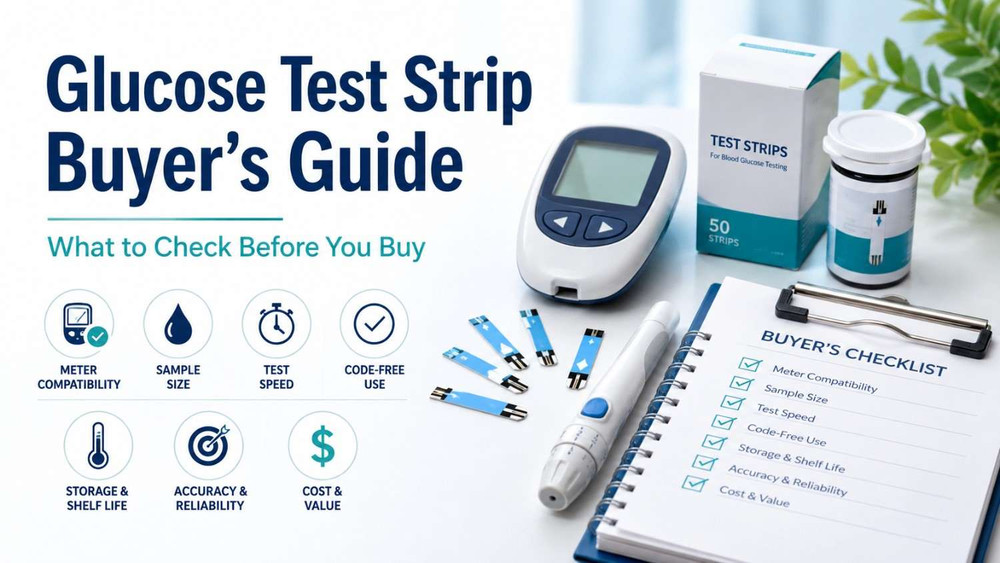
Glucose Test Strip Buyer's Guide: What to Check Before You Buy
Aug 24th 2026
The single most common and costly mistake shoppers make: assuming any strip works with any meter. Strips are calibrated to a specific meter model, and a mismatched pair can give an inaccurate reading even when the strip physically fits the slot. Getting that first decision right sets up everything else. New to testing and want the basics first? The beginner's guide to blood glucose test strips covers what a strip is and how it works; this guide picks up from there with eight things to check before you buy.
1. Meter Compatibility Comes First
Strips are calibrated to work with a specific meter model, not with test strips generally. A strip can fit into the wrong meter's slot and still give a reading, but the result may not be reliable, since the strip's chemistry was calibrated for a different device. Always confirm the box lists your exact meter model before buying, and check current glucose meter test strips against the meter you already own.
2. Blood Sample Size
Smaller sample requirements mean less squeezing to get a usable drop of blood. Modern strips commonly need well under 1 microliter, a real drop from older designs that demanded a much larger sample. This matters most for frequent testers and for anyone with circulation issues that make drawing blood harder. If daily testing has felt like a struggle to get enough blood, sample size is worth checking before you assume the technique is the problem.
3. Test Speed
Most current strips deliver a result in 5 to 10 seconds. Faster isn't just convenience. It matters more when testing a child who won't hold still, or testing on the go. A few extra seconds per test adds up fast across multiple daily checks, so speed is a legitimate criterion, not a minor spec.
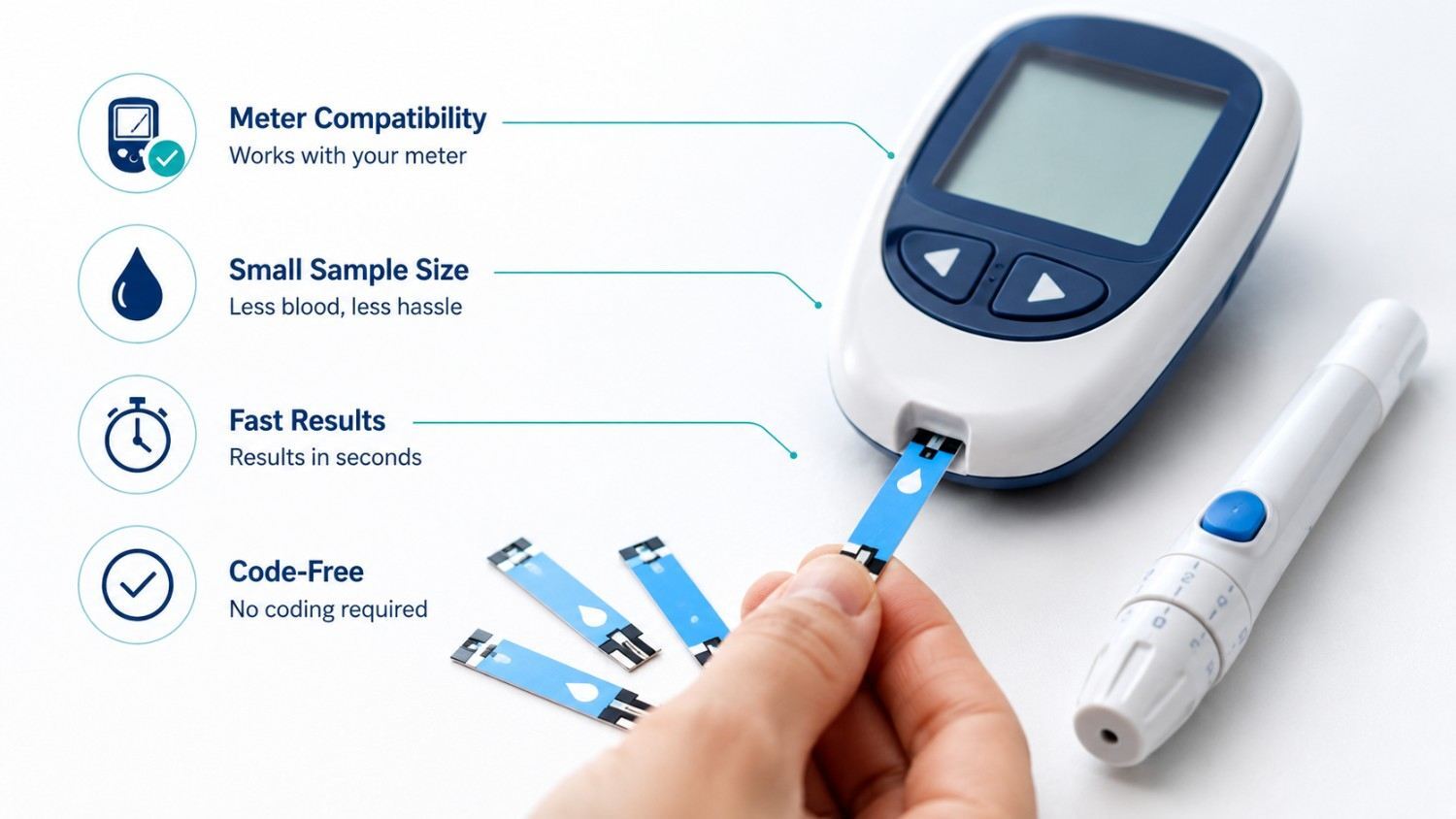
4. Code-Free vs. Manual Coding
Older systems require manually entering a code from the strip vial into the meter before testing. Getting that code wrong throws off every reading until someone catches the mistake, which can go unnoticed for days. Code-free glucose test strips remove that failure point entirely, since the meter and strip are matched without a manual entry step. If you or the person you're testing for has ever second-guessed a reading, manual coding is a common, overlooked cause.
5. Storage Sensitivity and Shelf Life
Test strips are sensitive to humidity and heat, and how they're packaged affects how well they hold up. Individually foil-wrapped strips resist humidity better than strips pulled from an open vial exposed to air with every use, which matters most for travel and humid climates. Always check the expiration date at purchase, not just when you open the box; a strip already close to expiring gives you a shorter usable window than the label suggests.
6. Accuracy Standard
Accuracy standards set the baseline for how close a strip's result needs to be to a real lab measurement. The ISO 15197:2013 standard calls a system accurate if at least 95% of its results fall within ±15 mg/dL of a lab reference for readings under 100 mg/dL, or within ±15% for readings at or above 100 mg/dL. The FDA uses its own, related but separate standard for U.S. clearance rather than adopting ISO 15197 directly, so the two shouldn't be treated as interchangeable, even though both exist to answer the same underlying question: how close is close enough. You can read the FDA's own guidance on self-monitoring blood glucose systems if you want the source document. In practice, the easiest way to check your own meter-and-strip pairing at home is a control solution test; the EasyTouch High/Low control solution is built specifically for that spot-check.
7. Package Size and Real Cost Per Strip
A bigger box often has a lower cost per glucose test strip, but only if you'll actually use them before they expire. Divide the total price by the strip count rather than comparing sticker prices across box sizes. A 100-count box priced higher than a 50-count box can still be the better deal per strip, but only if your testing frequency gets through it in time. Weigh cost per strip against your actual testing frequency, not the number on the shelf tag.
8. Insurance, FSA, and HSA Eligibility
Most glucose test strips qualify as an eligible expense under FSA and HSA plans, which can meaningfully offset the cost. That's a general pattern, not a guarantee for every plan. Since glucose test strips FSA eligibility status can vary by plan administrator, confirm eligibility with your specific plan before assuming the purchase will be covered. It's a quick check that can turn an out-of-pocket cost into a pre-tax one.
Putting It Together: A Quick Buying Checklist
|
Check |
Want to look for |
Why it matters |
|
Meter match |
Strip brand/model listed as compatible with your specific meter |
Strips and meters are calibrated as a pair; mismatched strips give unreliable readings |
|
Sample size |
Microliter (µL) volume needed per test |
Smaller samples mean less squeezing and an easier draw, especially for frequent testers |
|
Test speed |
Seconds to result, typically 5 to 10 sec |
Faster results matter most for on-the-go testing or testing children |
|
Coding |
Code-free vs. manual code entry |
Code-free removes a step where user error can throw off a reading |
|
Storage |
Individually foil-wrapped vs. open vial |
Strips are humidity- and heat-sensitive; storage format affects shelf stability |
|
Accuracy standard |
FDA clearance; ISO 15197:2013 conformance if listed |
Sets the baseline for how close a reading needs to be to a lab reference |
|
Cost per strip |
Total price divided by strip count, not just sticker price |
A larger box often costs less per strip for regular testers |
|
FSA/HSA |
Eligibility noted by strip brand or retailer |
Most glucose test strips qualify, which can meaningfully offset cost |
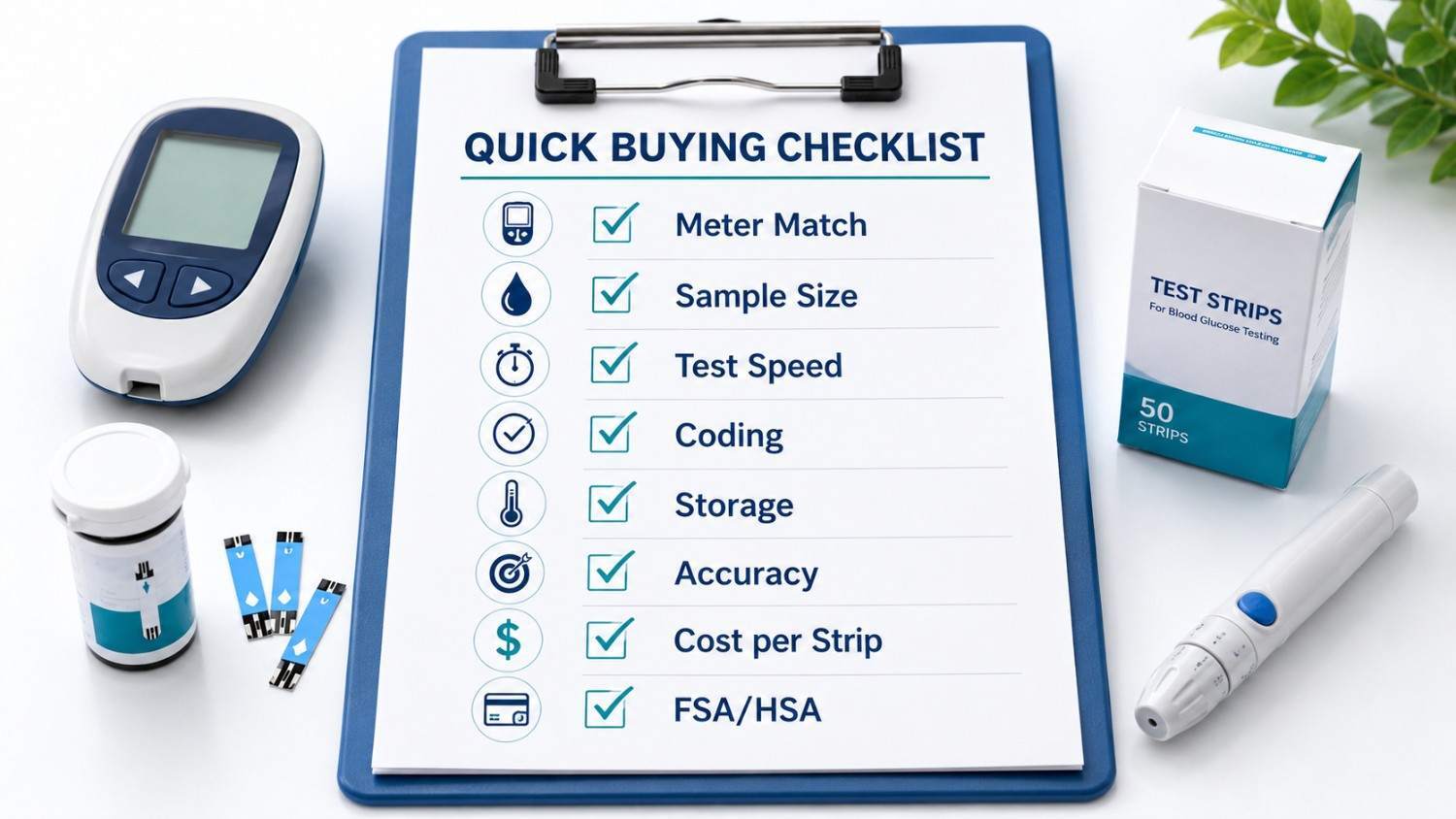
Once you know what to check, comparing options gets a lot easier. Browse Arpovo Health's full diagnostic instruments and supplies catalog to see current test strips and related testing supplies side by side.
Frequently Asked Questions
Can I use any brand of test strip with any glucose meter?
No. Strips are calibrated to work with a specific meter model, and using a mismatched pair can produce an inaccurate reading even if the strip physically fits.
How small a blood sample do modern test strips actually need?
Many current strips need well under 1 microliter, a significant drop from older models, which is part of why testing has gotten noticeably less uncomfortable over the past decade.
Are code-free test strips more accurate than ones that require a code?
Not inherently more accurate, but they remove a manual step where user error (entering the wrong code) can throw off every reading until it's corrected.
Do glucose test strips expire?
Yes, and they're sensitive to humidity and heat as well. Always check the expiration date at the time of purchase, and store strips as directed on the package.
Are glucose test strips FSA or HSA eligible?
Most are, since they're used to monitor a medical condition, but eligibility can vary by plan. It's worth a quick check with your plan administrator before assuming.
(This article is for general educational purposes and isn't a substitute for advice from your doctor or diabetes care team. Always confirm your specific testing supplies with your provider or pharmacist.)