

Finding the Right Size: A Hypodermic Needle Guide
Jan 19th 2026
Hypodermic needles facilitate daily medical care practice in hospitals, clinics, and homes nationwide. In the healthcare system of the United States, the professionals administer millions of injections daily. Vaccines, insulin, emergency drugs, as well as the fluids, rely on safe and accurate injection tools. Patients often do not pay attention to the size of the needles, but the size has a strong influence on comfort and medication effectiveness. The wrong choice of the needle may lead to pain, leakage, or inappropriate delivery of medication. Healthcare statistics indicate that injections are still among the most popular methods of treatment across the country. The right needle choice improves patient confidence and reduces anxiety during injections. The medical staff also enjoys better workflows and fewer injection-related complications. This guide explains hypodermic needle sizes for easy understanding. Clear explanations help patients and caregivers make safer, informed injection choices. Understanding size basics supports better outcomes in professional and home healthcare environments. The right needle choice balances comfort, accuracy, and safety for every injection scenario.
Needle Gauge Explained (The G Number)
Needle gauge describes needle thickness and uses a confusing but standardized numbering system. Higher gauge numbers actually represent thinner needles, which surprises many new users. For example, a 30G needle feels much thinner than a wide 18G needle. This explanation helps beginners clearly understand the needle gauge without confusion. Thinner needles reduce pain and skin damage during injections. Diabetes care often uses higher gauge needles for daily insulin injections. Vaccination programs also favor thinner needles for patient comfort and compliance. Lower gauge needles allow faster fluid flow during emergency medical treatments. Hospitals frequently use broader needles when speed matters more than comfort. Choosing a gauge depends on the medication type, the injection site, and the patient's needs. Understanding gauge supports choosing the right needle for your injection confidently. Standard healthcare tools follow national sizing practices for consistency and safety. Many injection tools fit within established needles and syringes classifications. Proper gauge selection protects tissue while ensuring effective medication delivery. Learning gauge basics removes fear and guesswork from injection preparation.
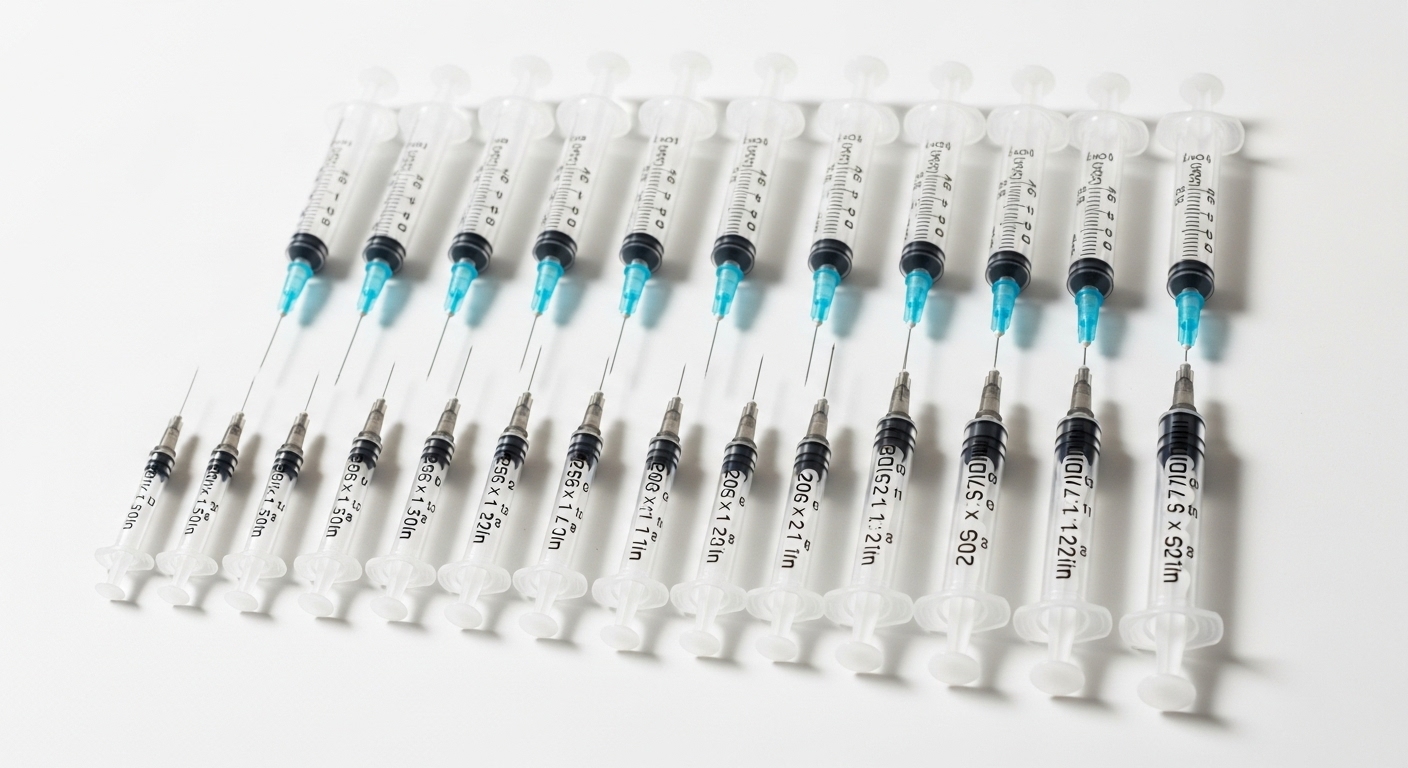
Needle Length Explained (Inches or mm)
Needle length controls how deeply medication enters the body during injection procedures. Manufacturers measure length in inches or millimeters for clear size identification. Healthcare providers choose the length based on body type and injection method. Short needles work best for subcutaneous injections like insulin delivery. These injections place medication just beneath the skin safely. Longer needles reach muscle tissue during intramuscular injection treatments. Emergency care often requires deeper delivery for rapid medication absorption. Clinics and hospitals follow standardized length recommendations for patient safety. Incorrect needle length may cause pain or ineffective medication placement. Healthcare guidelines recommend shorter needles for lean patients and children. Longer needles suit adults with greater muscle mass. Standardized hypodermic needle sizes follow regulated manufacturing requirements. FDA guidelines ensure consistent length measurements across medical supply providers. Correct length selection improves comfort and reduces injection-related complications. Understanding length removes uncertainty during injection preparation and administration.
Chart: Recommended Sizes for Different Injection Types
This simple reference helps users quickly match needles with common injection needs. Standard charts reduce confusion and support safer injection practices nationwide. Healthcare facilities rely on charts to reduce medication administration errors. Typical insulin injections use small gauge and short length combinations. Vaccinations often require mid-gauge needles with moderate length. Intramuscular medications need longer needles for proper muscle delivery. Blood withdrawal tasks require thicker needles for efficient fluid flow. The chart supports understanding small syringe needle use in daily care. It also highlights scenarios needing thick syringe needles for faster transfer.
- Insulin injections: 29G–31G, short length
- Vaccinations: 22G–25G, medium length
- Intramuscular medications: 21G–23G, longer length
- Blood drawing: 18G–20G, medium length
- Medication preparation: 18G needle for vial access
Standardized charts simplify training for nurses and home caregivers. Clear visuals support confident selection without technical overload. These tools help reduce errors that remain common clinical concerns nationwide. Proper chart use improves patient safety and staff efficiency simultaneously.
What is an 18 Gauge Needle Used For?
An 18 gauge hypodermic needle is thick and designed for high-flow tasks. It prioritizes efficiency rather than patient comfort during use. Healthcare professionals use this needle for drawing blood quickly. Emergency rooms rely on it for rapid fluid transfer. Medication preparation often requires this size for accessing sealed vials. The wide bore allows smooth movement of thick liquids. This needle size is not ideal for routine injections. Patients may experience discomfort if used for injections. Hospitals favor it for speed-critical situations and surgical preparation. Safety-focused facilities increasingly use safety needle designs with this size. These designs help reduce accidental needle-stick injuries. Thousands of healthcare workers still face needle injuries annually nationwide. Training emphasizes careful handling of thicker needles. Understanding proper use prevents misuse and improves workplace safety. Correct application supports safe, efficient medical workflows across healthcare environments.

Conclusion
Understanding needle size improves injection safety and patient comfort significantly. Knowledge of gauge and length removes confusion during medical procedures. Healthcare providers benefit from accurate medication delivery and reduced complications. Patients experience less pain and greater confidence during treatments. Correct selection supports better outcomes across hospitals and home care. The United States healthcare system relies on proper injection practices daily. Matching needle size to purpose reduces waste and improves efficiency. Clear guidance empowers responsible use in professional and personal settings. Education strengthens safety standards and supports better healthcare experiences nationwide.
Readers can explore trusted educational resources covering injection tools and sizing guidance. Staying informed aligns with current US healthcare safety recommendations and supports better decision-making in both clinical and personal care environments.