
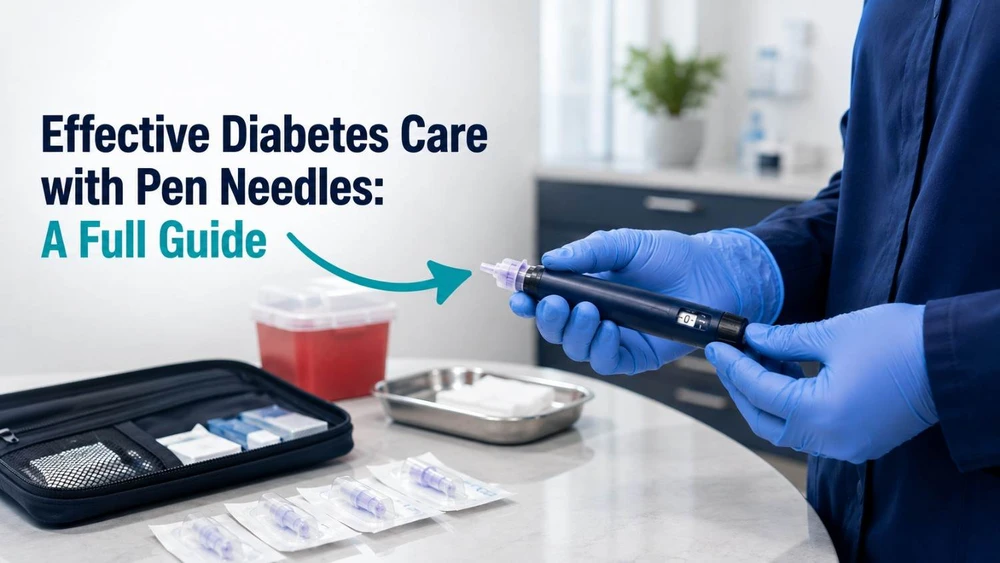
Effective Diabetes Care with Pen Needles
Aug 19th 2026
Pen needles are the small, disposable needles that attach to an insulin pen for each injection simple in concept, but the length and gauge you choose has a real effect on comfort, technique, and how consistently insulin actually gets delivered where it needs to go.
Length Matters More Than Most People Realize
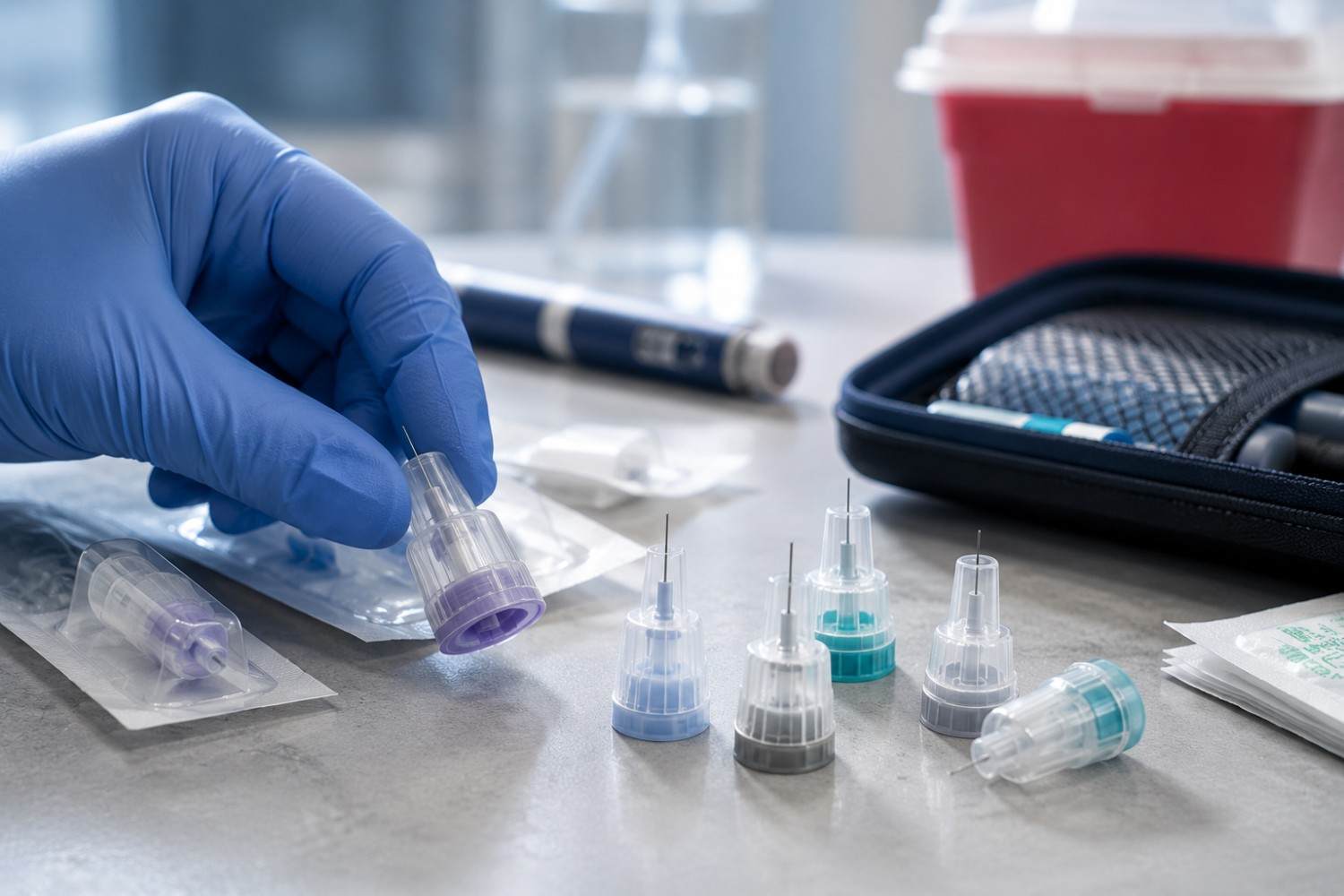
Pen needles range from about 4mm to 12mm, and the right length depends on body type more than personal preference alone. Shorter needles (4–6mm) are now recommended for most adults, including those with higher BMI, because they're designed to reliably reach the subcutaneous (fatty) layer without requiring a skin fold or risking an intramuscular injection which can change how quickly insulin is absorbed. Longer needles were historically the default, but clinical guidance has shifted toward shorter needles as the standard first choice for most adults, reserving longer lengths for situations where a provider has specifically recommended one.
Gauge Affects Comfort, Not Effectiveness
Pen needle gauge typically runs between 29G and 32G the higher the number, the thinner the needle. Thinner gauges (31G, 32G) reduce the sensation of the injection itself, which matters for anyone injecting multiple times a day. The trade-off is that very fine needles can bend slightly more easily during handling, so they benefit from a bit more care when attaching and removing them from the pen.
Importantly, gauge doesn't affect how well the insulin works it only affects the physical sensation of delivering it. Choosing based on comfort is the right approach here.
Getting Technique Right
A few technique details affect both comfort and dosing accuracy:
- Use a new needle for every injection. Reused needles dull quickly, which increases both pain and the risk of the needle bending or breaking off. The tip also becomes less sterile with each use.
- Prime the pen before each injection (a small "air shot" per the pen's instructions) to clear air from the needle and confirm it's flowing properly before dosing.
- Hold the needle in place for several seconds after the dose delivers, rather than withdrawing immediately this gives the full dose time to clear the needle rather than leaving some behind in the pen tip.
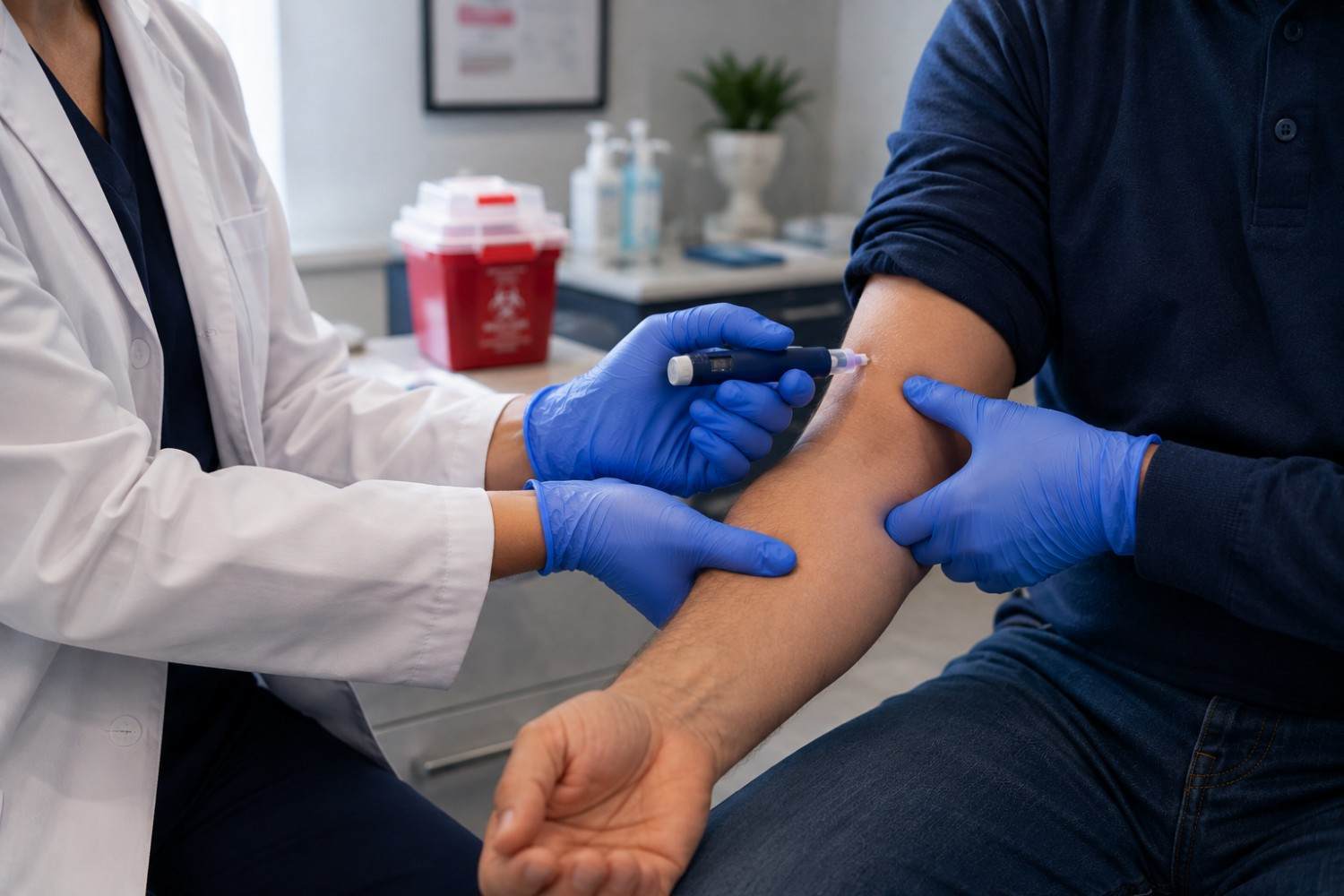
- Rotate injection sites within the recommended areas (abdomen, thigh, upper arm) to avoid lipohypertrophy, a buildup of fatty tissue at overused injection sites that can make insulin absorption less predictable over time.
Safety Features to Look For
Most current pen needles include a protective outer cap and inner shield that covers the needle until the moment of injection, reducing accidental needlestick risk both before use and during disposal. After use, needles should go directly into an FDA-cleared sharps container never back into household trash regardless of how the needle is capped.
Choosing Your Starting Point
If you're new to pen needles or switching from syringes, a reasonable starting point is a 4mm or 5mm needle at 31G or 32G, which suits the majority of adults comfortably. From there, adjust based on your own experience: if you're bruising easily or the injection feels uncomfortable at your current length, that's worth raising with your provider rather than assuming it's just something to get used to.
Frequently Asked Questions
What length pen needle is right for most adults?
Current guidance favors shorter needles (4–6mm) for most adults, including those with higher BMI, since they reliably reach the subcutaneous layer without needing a skin fold technique.
Does a thinner gauge pen needle deliver insulin less effectively?
No. Gauge affects comfort and sensation only it has no effect on how well the insulin itself works once delivered.
Can I reuse a pen needle to save money?
It's not recommended. Reused needles dull quickly, increasing discomfort and the risk of bending, and lose sterility with repeated use.
Why do I need to hold the needle in place after injecting?
Holding for several seconds after the dose delivers ensures the full dose clears the needle rather than remaining in the pen tip, which matters for dosing accuracy.
What's lipohypertrophy, and why does site rotation matter?
It's a buildup of fatty tissue at injection sites used repeatedly without rotation, which can make insulin absorption less predictable. Rotating between recommended sites helps avoid it.
Browse Arpovo Health's full Pen Needles catalog to find the length and gauge that fits your routine.