
Bacteriostatic Water vs Reconstitution Solution Guide
Sep 5th 2025
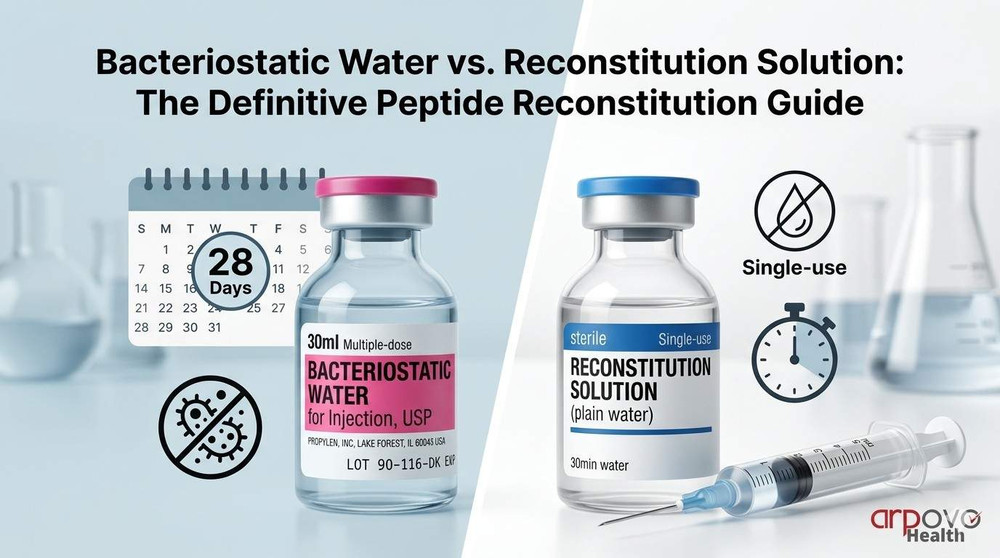
When preparing peptides, the choice of diluent decides stability and effectiveness. Many users often wonder about bacteriostatic water vs reconstitution solutions and their proper applications. These two solutions have different purposes within medical and research contexts, yet are both vital. A proper selection of diluent will provide accurate dosage and help avoid contamination and peptide quality.
Arpovo Health is a trusted supplier providing medical-grade diluents for professional and research needs. Their reliable quality gives confidence to users handling sensitive materials like peptides or hormones. Understanding differences between the two helps users make safer and smarter choices.
Bacteriostatic water and sterile water are both common reconstitution diluents, but the right one for you often depends on the specific peptide or compound you're working with, not just the general differences between the two. For a full side-by-side comparison of bacteriostatic water, sterile water, and saline, see our complete diluent comparison guide. Here, we'll focus on how to choose the right diluent for your specific peptide.
How to Use Bacteriostatic Water and Reconstitution Solutions Effectively
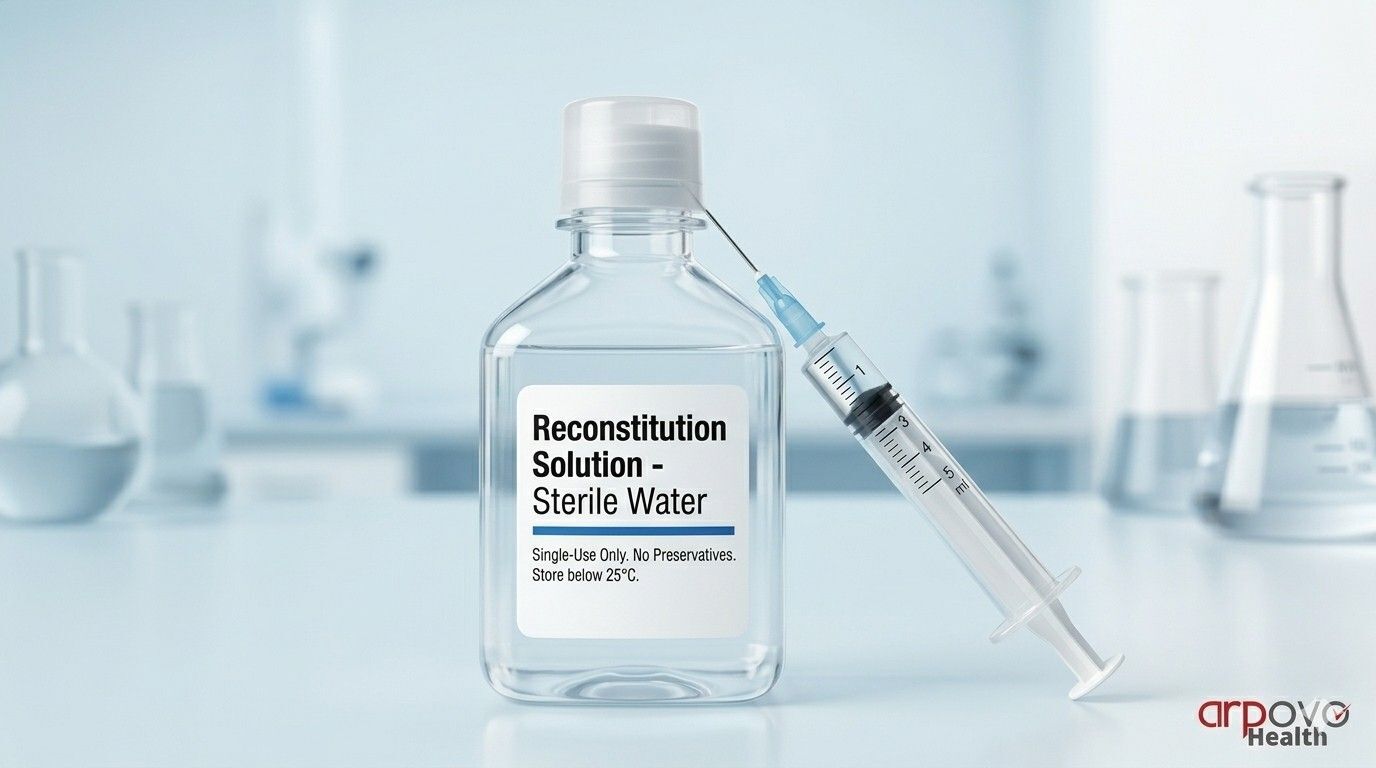
The correct application of these diluents is the key to proper peptide reconstitution and safety of applications. Those new users can also be taken through a step-by-step process to prevent mistakes.
- Always wash hands and sanitize the working area before beginning the process.
- Draw antimicrobial water or sterile diluent with syringes and needles.
- Insert the syringe on the peptide vial without shaking the powder.
- Gradually pour out the liquid on the vial wall to avoid the formation of foam.
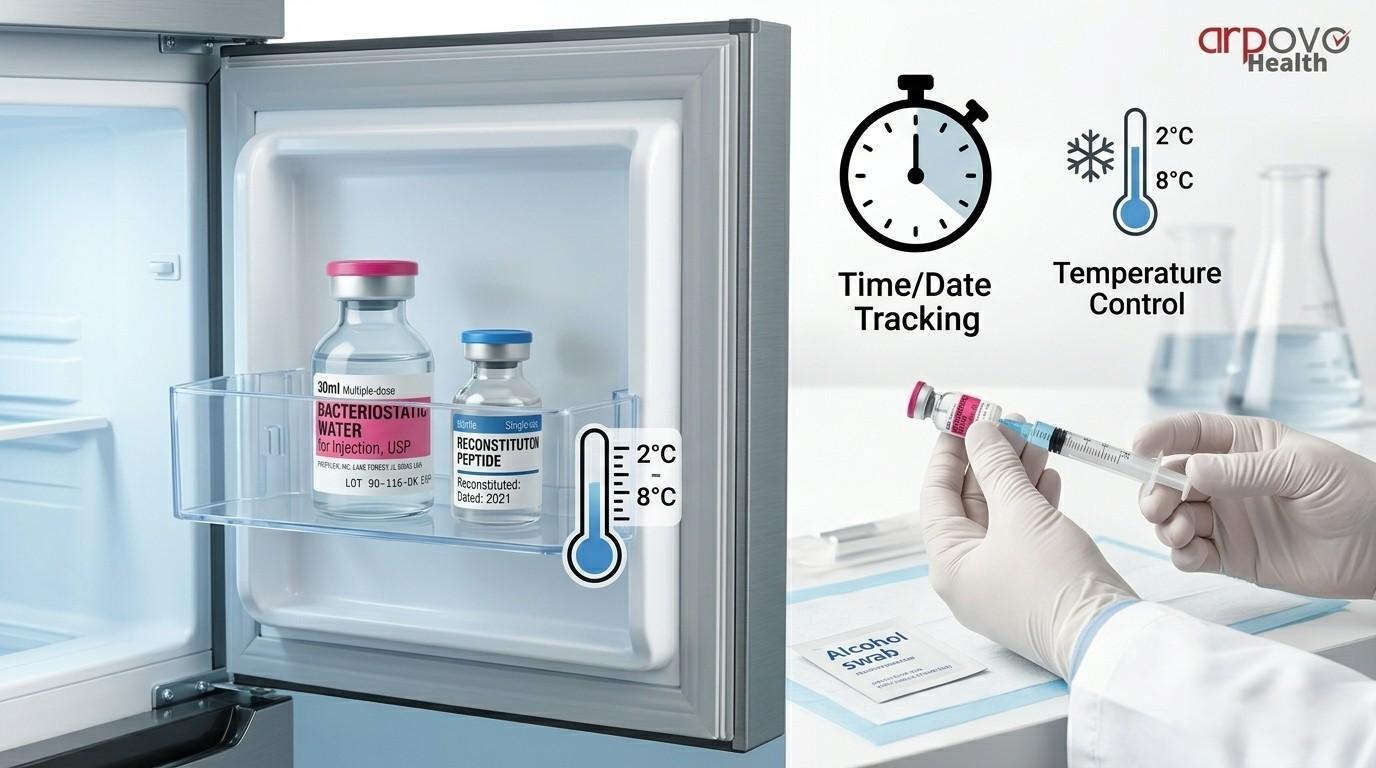
- To be more stable and safe, store the reconstituted peptide at a refrigerated temperature.
Another best practice is to label vials in a clear way with the date of preparation. Refrigeration matters because users will ask: should the reconstitution solution be refrigerated after mixing. Effective storage reduces the chance of degradation or contamination. For additional products, go for the medical solutions.
Benefits of Choosing the Right Solution
Correct diluent selection brings multiple benefits for researchers, patients, and healthcare providers.
- Accurate dosage preparation improves reliability of every injection or dose.
- Extended peptide stability through bacteriostatic diluent for injection reduces wastage.
- Reduced contamination risk prevents bacterial growth and ensures safe use.
- Cost-effectiveness, especially when choosing bacteriostatic water for HGH mixing.
These advantages prove the value of being extremely attentive to the selection of the bacteriostatic diluent and reconstitution solution.
Potential Risks and Precautions
Incorrect usage of diluents often leads to peptide damage or unsafe administration. Using wrong solutions reduces stability and wastes costly research peptides or hormones.
Overusing preserved sterile water beyond recommended days risks bacterial contamination. Misuse of sterile diluents without proper refrigeration causes peptide degradation. Always follow professional medical advice before selecting a reconstitution solution for injection in sensitive projects. Safety must remain a top priority during peptide preparation or hormone administration.
Choosing Between Bacteriostatic Water and Reconstitution Solution
Not every peptide reconstitutes the same way. Stability, sensitivity to preservatives, and how often you'll draw from the vial all affect which diluent makes sense for a given compound.
Peptides reconstituted for repeated use over several weeks are typically mixed with bacteriostatic water, since its benzyl alcohol preservative is what allows the same vial to be used safely multiple times. This is the most common approach for standard peptide reconstitution, including common HGH preparations, where a single vial is drawn from daily or several times a week over an extended period.
Some more sensitive compounds don't tolerate the benzyl alcohol preservative well and are better suited to preservative-free sterile water or saline, even though this typically means the reconstituted solution should be used sooner rather than stored for weeks. If a peptide's manufacturer or supplier specifies a particular diluent, that guidance should always take priority over general defaults.
As a general pattern:
- Standard multi-week reconstitution, repeated draws → bacteriostatic water
- Preservative-sensitive compounds, shorter-use windows → sterile water or saline
- When in doubt → follow the specific product's own reconstitution instructions
|
Situation |
Typically Reconstituted With |
|
Multi-dose vial, drawn from repeatedly over weeks |
Bacteriostatic Water |
|
Preservative-sensitive compound |
Sterile Water or Saline |
|
Manufacturer specifies a particular diluent |
Follow manufacturer's guidance |
This is general information, not dosing or product-specific advice; always follow the specific product's own instructions.
Final Thoughts
Choosing between reconstitution solution and bacteriostatic water depends on practical needs and usage goals. Every researcher or patient benefits from understanding how shelf life and preservatives work. Safe handling, refrigeration, and sterile techniques remain important for peptide success.
Arpovo Health provides medical-grade diluents trusted by researchers and healthcare professionals. Their solutions meet high standards, ensuring accurate peptide reconstitution and safe injections every time. Customers seeking to buy this antimicrobial diluent online can explore reliable options directly from them.
For reliable peptide mixing solutions, trust Arpovo Health as your supplier. Explore bacteriostatic and sterile diluents, including HGH reconstitution solution guide resources. Visit today to browse safe, effective, and professional-grade products.
FAQs
What is the difference between bacteriostatic water and sterile reconstitution solution?
The difference lies in preservatives and shelf life of each product. Antimicrobial diluent vs reconstitution fluid highlights benzyl alcohol preservatives in bacteriostatic diluent. Sterile solutions remain single-use and lack preservatives for extended vial use.
Which is better for peptide reconstitution?
The choice depends on peptide sensitivity and user requirements for shelf life. Peptide reconstitution fluid is best for sensitive peptides requiring sterile-only environments. Bacteriostatic diluent used in peptide reconstitution suits multi-use vials within 28 days.
Can I use bacteriostatic water for HGH mixing?
Yes, it is often recommended for repeated daily use. Its preservative prevents bacterial growth, allowing multiple withdrawals from the same vial. However, always confirm through professional HGH reconstitution fluid guide resources before use.
How do I properly reconstitute peptides?
Follow sterile methods using syringes, alcohol swabs, and clean working conditions. Add bacteriostatic diluent for injection or sterile diluent slowly along the vial wall. Refrigerate after mixing, especially when asking: does reconstitution fluid need to be refrigerated?
Is bacteriostatic water safe for injections?
Yes, it is safe when used correctly under professional advice. It contains benzyl alcohol, preventing contamination during multiple vial withdrawals. Always follow storage rules and instructions when handling reconstitution fluids for injection.