
Multi-Dose Vial Storage Guidelines
Mar 16th 2026
Hospitals deal with thousands of injectable medications every day which requires high levels of safety. Healthcare professionals adhere to established guidelines of storage of multi-doses of medications in a safe manner. Multi-dose vials enable one to safely withdraw the medication more than once in the same vial. Such vials have preservatives that slow down the growth of bacteria once the seal is punctured.
Due to this design, they are used by clinics with vaccines, antibiotics and research medications. Nevertheless, improper storage of multi-dose vials may quickly lead to dangerous contamination problems. The Centers of Disease Control and Prevention cited several cases of outbreaks of infections. These outbreaks were as a result of unsafe injection practices involving multi dose vials.
These events occurred across healthcare facilities during the past two decades. Healthcare experts therefore emphasize strict infection prevention and medication safety procedures. Injection therapy continues expanding rapidly in modern healthcare systems worldwide. More than sixteen billion injections occur annually in the United States.
This large number increases the importance of reliable multi-dose vial storage safety practices. Hospitals therefore apply clear storage rules, labeling systems, and contamination prevention procedures. These structured practices reduce infection risk and unnecessary medication waste. Professionals also review resources discussing proper bacteriostatic water storage after opening.

Refrigeration vs Room Temperature
Many injectable medicines require careful temperature control to maintain chemical stability. Healthcare providers often evaluate refrigeration vs room temperature medication storage carefully.
The United States Pharmacopeia defines controlled room temperature storage standards clearly. Controlled room temperature usually remains between twenty and twenty five degrees Celsius. This temperature equals sixty eight to seventy seven degrees Fahrenheit in healthcare facilities.
Refrigerated medications usually have to be kept at a temperature between two and eight degrees Celsius. Proper temperatures maintain performance in terms of medication potency and preservative during storage.
Preservatives might be compromised due to improper storage and microbial growth within opened vials becomes more possible. Adherence to these rules will facilitate safe storing of multi-dose vials in medical settings.
Medication-Specific Requirements
Each injectable drug follows unique medication-specific storage requirements defined by manufacturers. These instructions appear on product labels and official prescribing documentation.
Some antibiotics and biologic medicines require refrigeration immediately after vial opening. Other medicines remain stable at controlled room temperature for longer periods. Clinical pharmacists review compatibility charts before preparing repeated medication withdrawals. These reviews ensure compliance with proper medication-specific storage requirements in clinical practice.
Healthcare teams also review guidance explaining safe bacteriostatic water preparation procedures.
Bacteriostatic Water Storage
Preserved diluents play an important role in safe injectable medication preparation. Healthcare workers follow strict rules for proper bacteriostatic water storage practices.
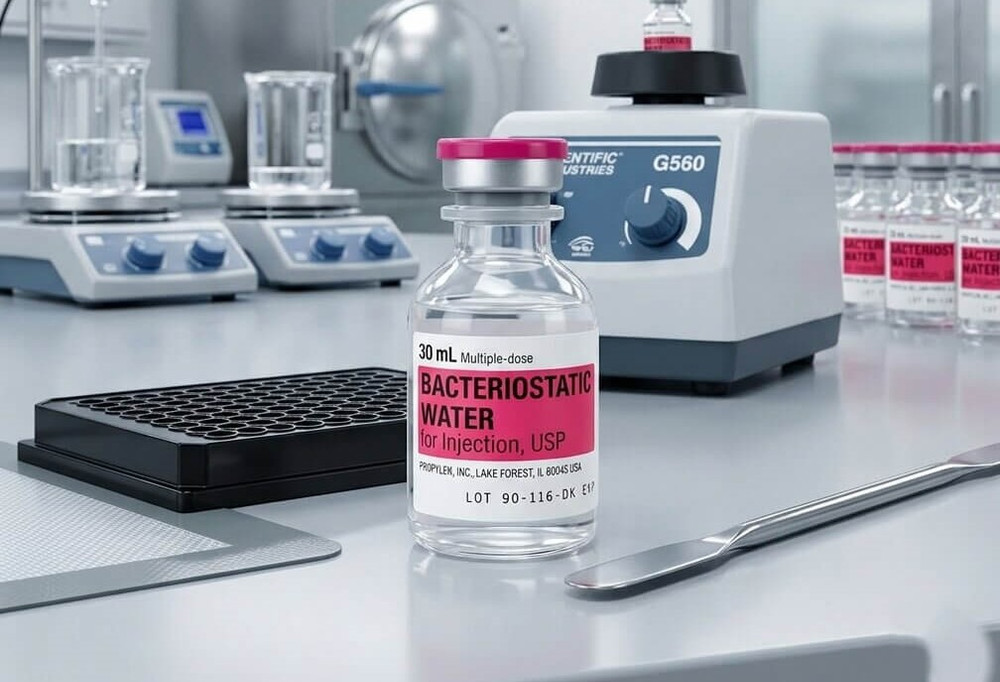
Bacteriostatic water contains benzyl alcohol, which slows bacterial growth after puncture. Because of this preservative, the solution supports repeated sterile withdrawals safely. Medical professionals commonly use it when diluting injectable medications before administration. Proper bacteriostatic water storage protects sterility during repeated access and preparation.
Educational materials also explain differences between bacteriostatic water and sterile water.
28-Day Rule for Multi-Dose Vials
Healthcare safety standards strongly support the multi-dose vial 28-day rule across medical facilities. This rule protects patients from contamination risks linked to opened medication containers.
The CDC and USP sterile compounding guidance recommend discarding most vials. Healthcare staff must discard multi-dose vials twenty eight days after first puncture. Manufacturers sometimes specify shorter or longer timelines for certain medications.
Preservatives cannot guarantee complete sterility indefinitely after puncturing the rubber stopper. Several infection investigations linked contamination cases to expired multi-dose vials. These studies confirmed increased contamination risks beyond recommended usage timeframes.
Many hospitals follow strict multi-dose vial expiration policy procedures for patient safety. Modern pharmacy systems track vial usage dates through automated monitoring software. These systems improve safety compliance and support the multi-dose vial 28-day rule. Prepared solutions during peptide reconstitution also follow the same safety timelines.
Labeling and Date Tracking
Clear multi-dose vial labeling prevents accidental medication misuse inside healthcare facilities. Proper labeling remains one of the simplest infection prevention strategies.
The Institute for Safe Medication Practices strongly recommends labeling opened vials immediately. Staff must record both the opening date and the calculated discard date. Hospitals often apply color coded stickers to improve visibility during medication handling. Pharmacy software systems also help maintain consistent multi-dose vial labeling practices.
Opening Date Notation
Healthcare workers carefully record the vial opening date notation during medication preparation. Pharmacy departments usually place labels directly on the vial immediately after opening.
This simple step helps staff monitor the safe usage window accurately. Proper vial opening date notation ensures compliance with recommended medication timelines. Without clear labels, staff may incorrectly assume the vial remains unused. This misunderstanding increases contamination risks and unsafe medication administration.
Discard Date Calculation
Healthcare teams perform discard date calculation vial procedures immediately after opening. The discard date usually equals twenty eight days after the opening date.
Some medicines follow different timelines based on manufacturer stability data. Hospitals therefore review guidelines within their official multi-dose vial expiration policy. Many healthcare systems automate discard date calculation vials using pharmacy software. Automated reminders reduce human error during medication safety monitoring.
Preventing Contamination
Strict preventing vial contamination practices protect both patients and healthcare professionals. The CDC Injection Safety Program provides several important safety recommendations.
- Always use a new sterile needle and syringe for each entry
- Disinfect the rubber stopper using alcohol before puncturing the vial
- Store medication vials away from direct patient treatment areas
- Avoid sharing the same vial among multiple patients whenever possible
These practices support safe multi-dose vial storage and reduce infection risks. Healthcare investigations linked unsafe injections to outbreaks affecting thousands of patients.

When to Discard Early
Healthcare teams must understand when to discard multi-dose vial medications earlier. The standard twenty eight day timeline does not apply in certain conditions.
- The solution appears cloudy or changes color unexpectedly
- Visible particles appear floating inside the medication solution
- Sterility might have been compromised during medication preparation
- The vial experienced improper temperature conditions during storage
These checks support strict compliance with the multi-dose vial expiration policy. Routine inspection helps healthcare professionals avoid unsafe medication administration.
Healthcare professionals rely on safe multi-dose vial storage guidelines daily. Correct temperature control, labeling, and timelines protect medication safety and effectiveness. Understanding refrigeration vs room temperature medication storage helps maintain drug stability. Proper preventing vial contamination procedures also reduce serious infection risks.
Professionals frequently review trusted medical resources for updated preparation guidance. These resources explain sterile diluents, dilution techniques, and safe storage practices clearly. Detailed references also describe safe bacteriostatic water storage and medication preparation.