
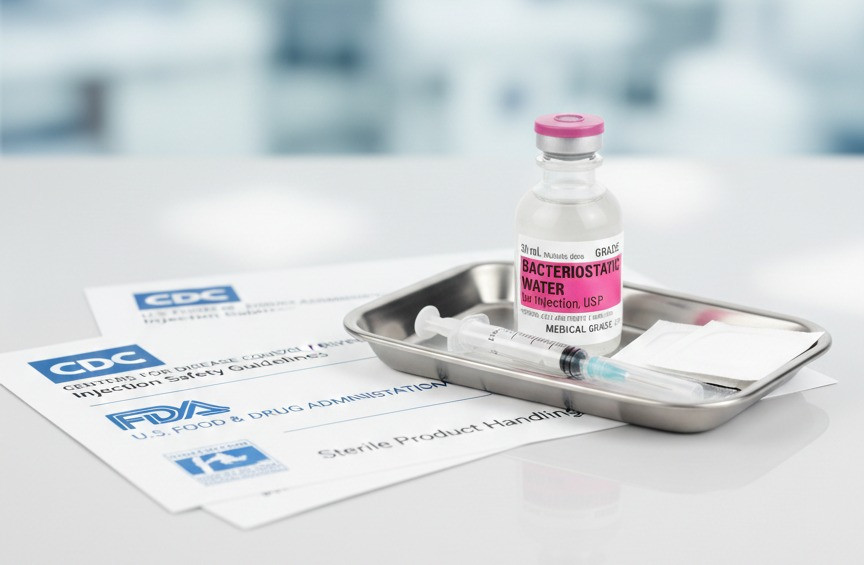
How to Properly Use BAC Water in Multi-Dose Vials
Feb 13th 2026
Sterile injection safety protects patients from harmful and preventable infections. Proper preparation reduces contamination risks during medication handling procedures. Healthcare providers follow strict methods for sterile medication handling daily. Safe handling protects patients during routine and complex treatment sessions. In United States hospitals, injections occur every day for diverse treatments. The CDC reports over seven billion injections annually across healthcare facilities. This high volume increases contamination risks without consistent sterile practices. Strict safety habits protect patients from harmful and preventable infections.
Improper handling of multi-dose vials increases cross contamination risks greatly. Several outbreaks linked improper vial handling to dangerous viral infections. Both CDC and FDA emphasize careful sterile handling during preparation. Each step during preparation influences patient safety outcomes significantly. Correct BAC water use reduces contamination during medication preparation steps. Healthcare workers follow defined bacteriostatic water techniques for safety. Proper injection preparation protects patients during clinical medication handling. Careful handling of every multi-dose vial reduces infection transmission risks. Safe medication mixing supports patient trust in clinical treatment processes.
Healthcare environments require consistent attention to sterile handling procedures. Clear routines protect patients during medication reconstitution and administration. Small handling mistakes may cause large public health consequences later. Every preparation step influences patient outcomes across healthcare settings.

Step-by-Step Guide to Using BAC Water
Healthcare teams follow standard processes during sterile medication preparation. The CDC highlights preventable infections caused by unsafe vial handling. Clear procedures reduce contamination risks during medication preparation routines. Proper handling protects patients from bloodstream infections during therapy.
Preparing a Clean Workspace
Clean surfaces reduce environmental bacteria during medication preparation activities. The FDA recommends disinfected surfaces away from sinks and waste areas. Low traffic areas reduce airborne contamination risks during preparation tasks. Healthcare workers maintain clean spaces before medication handling begins. Environmental bacteria commonly contaminate preparation areas within busy clinics. Surfaces should remain dry before medication preparation begins properly. Clean gloves reduce contamination during sterile preparation procedures. Clear surfaces improve focus during careful medication handling tasks. Clean environments support reliable injection preparation for patient safety.
Sanitizing Vials and Equipment
Alcohol swabs clean rubber stoppers before needle insertion occurs. Seventy percent isopropyl alcohol kills surface bacteria effectively. Swabbing reduces contamination during needle entry into vials. Alcohol should dry completely before puncturing vial stoppers.
Benzyl alcohol preserves bacteriostatic water between controlled vial uses. Preservatives do not remove contamination introduced by poor handling. Improper handling defeats proper bacteriostatic water technique during preparation. Careful cleaning supports safe BAC water use during reconstitution.
Healthcare workers must understand bacteriostatic and single use water differences. This distinction protects patients from contamination risks during preparation. Clear knowledge improves safe medication mixing during clinical tasks.
Drawing BAC Water into the Syringe
New sterile syringes reduce contamination during medication preparation. The CDC warns against syringe reuse even with the same patients. Reuse has caused multiple outbreaks across several states previously. Single use syringes protect patients during every injection event.
Sterile needles prevent contamination during vial access procedures. Healthcare workers discard syringes immediately after single patient use. Fresh equipment supports safe BAC water use during medication preparation. Proper technique improves injection preparation across healthcare environments.
Mixing BAC Water Safely
Slow injection protects medication stability during vial mixing processes. Gentle swirling prevents damage to sensitive biological medications. Vigorous shaking destabilizes peptide therapies during preparation stages. Biologic therapies require careful handling during medication preparation.
Market growth increased biologic therapies across healthcare treatment plans. Proper mixing supports consistent treatment results for patients. Careful handling maintains medication effectiveness during reconstitution steps. Correct safe medication mixing supports patient safety outcomes.
Supplies Needed Before Starting
Healthcare supply demand increases with home therapy growth trends. The medical supplies industry exceeded one hundred sixty billion dollars recently. Growth reflects rising demand for sterile single use supplies. Chronic disease management drives increased sterile product usage.
BAC Water Vial
Multi dose bacteriostatic water contains benzyl alcohol preservative. Preservatives reduce bacterial growth between controlled vial uses. Proper storage supports safe BAC water use across multiple doses. Pharmaceutical grade products meet strict quality and safety standards.
Sterile Syringes and Needles
Single use needles reduce infection risks during medication preparation. The FDA prohibits the reuse of disposable syringes for safety. Proper disposal prevents injury and the spread of infection. Sterile tools support safe injection preparation for patients.
Alcohol Swabs
Seventy percent isopropyl alcohol disinfects vial stoppers effectively. Swabs clean injection sites before needle contact occurs. Proper cleaning reduces surface bacteria during medication handling. Alcohol swabs support safe bacteriostatic water technique routines.
Clean Mixing Vials
Sterile empty vials support medication preparation in clinical settings. Compliance ensures sterile environments during medication reconstitution tasks. Clean vials prevent contamination during preparation processes. Sterile containers support safe medication mixing procedures.
Sharps Disposal Container
Approved sharps containers prevent accidental needle injuries. Immediate disposal reduces exposure to biohazardous waste materials. Proper disposal protects healthcare workers from injury risks. Safe disposal supports responsible BAC water use practices.
Correct Injection and Mixing Technique
Safe injection technique prevents cross contamination during medication handling. Healthcare workers follow strict rules during medication preparation routines.
- Never reuse needles or syringes for patient safety.
- Never share a multi-dose vial between different patients.
- Discard vials according to recommended time based safety guidelines.
Unsafe injection practices caused multistate outbreaks previously documented. These outbreaks occurred between two thousand one and twenty three. Unsafe handling caused bloodstream infections across multiple healthcare settings.
Safe practices remain necessary within hospitals and home care. Consistency protects patients during routine medication preparation steps. Strict routines support patient safety during injection preparation. Correct bacteriostatic water technique reduces contamination risks.
Safe handling ensures proper medication mixing every time. Reliable BAC water use supports safer medication administration. Careful methods protect patients from preventable healthcare infections.
Storing Vials Safely After Opening
Proper storage protects preservative strength during repeated vial access. Correct storage reduces contamination risks during ongoing medication usage. Benzyl alcohol works best under controlled and stable conditions. Improper storage weakens preservative action within opened vials.
- Each opened multi-dose vial requires clear labeling with use dates. Labeling prevents accidental use beyond safe time limits. Clear dates support safe tracking during routine medication handling. Visible labels reduce confusion during busy clinical workflows.
- Controlled room temperature protects medication stability during storage. Excess heat reduces preservative strength within stored vials. Cold exposure may affect medication consistency during later usage. Stable conditions support safe BAC water use across treatment periods.
- Direct sunlight degrades solution quality during extended storage periods. Dark storage areas protect vial contents from light exposure. Shaded storage improves medication stability across healthcare environments. Protected storage supports reliable safe medication mixing practices.
- Discard opened vials after twenty eight days consistently. Time limits reduce microbial growth despite preservative presence. Expired vials increase contamination risks during patient treatments. Safe disposal supports strict bacteriostatic water technique standards.
Improper storage increases contamination risks despite preservative protection. Careful storage supports reliable injection preparation for patient safety. Proper routines protect patients from preventable bloodstream infections. Strict storage habits improve clinical safety outcomes daily.
Signs of Contamination to Watch For
Cloudy solutions indicate possible bacterial contamination risks. Floating particles suggest compromised sterility within medication vials. Visible debris signals immediate disposal needs for patient safety. Clear solutions support reliable BAC water use during preparation.
Cracked vials expose contents to harmful environmental bacteria. Damaged seals compromise sterility during routine handling processes. Broken seals increase contamination risks during medication preparation. Compromised containers defeat proper bacteriostatic water technique practices.
Color changes indicate chemical changes within stored solutions. Altered color suggests compromised solution stability and safety. Discolored vials require immediate disposal without hesitation. Visual changes signal unsafe conditions for safe medication mixing.
Expired vials increase risks for dangerous bacterial contamination. Expired preservatives lose effectiveness during prolonged storage periods. Outdated products compromise patient safety during injections. Discarding expired vials protects injection preparation standards.
Sepsis affects approximately one point seven million adults yearly. Contaminated injections contribute to dangerous bloodstream infections nationwide. Prompt disposal protects patients from severe health complications. Safe disposal aligns with strict federal infection control standards.
Conclusion
Safe handling ensures reliable outcomes during medication preparation routines. Careful technique protects patients during sterile injection processes. Strict standards guide BAC water use within clinical environments. Clear procedures support consistent bacteriostatic water technique practices.
Proper habits reduce contamination risks during routine medication handling. Consistent routines protect each multi-dose vial from unsafe handling. Safe injection preparation prevents bloodstream infection risks. Careful safe medication mixing supports patient trust in treatments.
Billions of injections occur across the United States healthcare systems. Small handling mistakes create large public health consequences nationally. Strict compliance supports safer outcomes across diverse healthcare settings. Consistent methods protect patients during every medication preparation event.
Maintaining compliance with national safety recommendations protects patient health daily. Sourcing regulated supplies ensures consistent BAC water use across clinical environments. Following approved preparation standards improves safe handling during routine treatments. Trusted healthcare supply channels support reliable injection materials for daily care. Responsible sourcing strengthens sterile preparation habits across professional care environments.