

Are Clorox Wipes Flammable? A Safety Guide
Dec 29th 2025
Household disinfecting wipes play a daily role in many American homes. People use them for kitchen cleaning, bathroom hygiene, and workplace sanitation. Clinics and schools also trust them for quick cleaning tasks. According to reported cleaning habits, many homes depend on these wipes every week. Over 75% of American households rely on disposable disinfectant wipes today. This widespread usage has led many people to be curious about their safety levels. Fire safety is a common concern in every modern household environment. People often ask if regular wipes can start fires near heat sources. Many users wonder if Clorox wipes are flammable because they want clarity and peace of mind. Understanding fire risk helps families and workplaces stay safe during daily cleaning. A clear guide also helps healthcare and commercial users build safe cleaning habits.
Analyzing the Ingredients of Clorox Wipes
Most disinfecting wipes use mostly water combined with mild cleaning solutions. These solutions help remove germs, dirt, and surface contamination effectively. They are created mainly for cleaning hard surfaces and common touch areas. Unlike medical cleaning supplies, they are not designed for skin preparation tasks. They support hygiene routines inside homes, offices, schools, and public places. Many users compare them with professional sanitation supplies used in medical environments. Some healthcare workers compare them to surgical area disinfection tools. Others compare them with workplace personal protective hygiene products. People feel safer when they understand what they use daily. They also want to know whether heat exposure causes danger. Users sometimes place cleaning wipes near heaters, chargers, or cooking areas. That is why they want practical and clear safety awareness.
The Low to Non-Existent Alcohol Content
Many regular household disinfecting wipes contain little or no alcohol. This makes their formula different from high alcohol cleaning wipes. Some products in healthcare facilities contain strong alcohol levels. Those wipes kill germs quickly but come with higher ignition concerns. Household disinfecting wipes usually avoid such strong alcohol levels. People often ask if Clorox disinfecting wipes have alcohol in them because they worry about safety. Safety comparisons often discuss clorox wipes' alcohol content because alcohol increases ignition possibilities. Educational discussions usually explain that lower alcohol reduces the chances. This is why many home cleaning wipes stay safer in warm environments. Less alcohol usually means much lower fire risk during normal daily cleaning.
The Official Flammability Rating
From a regulatory view, products with very small alcohol amounts behave differently. They usually stay outside dangerous flammable product classifications. They do not react like strong alcohol based wipes under heat. Safety assessments show that most water based disinfectant wipes resist flames. They do not continue burning without constant direct fire. Many tests show they cannot maintain combustion under normal home conditions. That is why they fall under a lower fire risk category. This separates them from strong alcohol, medical wipes or industrial cleaners. These regulatory safety findings help people feel safer using daily cleaning wipes. They also help organizations create responsible cleaning guidelines. Families, schools, and facilities feel more confident about safe cleaning behavior.
How They Compare to High-Alcohol Wipes
In medical and hospital environments, disinfecting wipes often contain strong alcohol. They are designed to kill dangerous microorganisms very quickly. These wipes belong to a much more powerful sanitation level. Their alcohol content makes them highly effective but more risky. Strong disinfectant wipes sometimes include bleach or high alcohol fluid. Healthcare wipes like sani cloth prime are often used in hospitals. These wipes come with visible warning labels for better professional awareness. Medical audits sometimes report small fires caused by alcohol wipes near heat. Sparks, static electricity, or strong heat can cause ignition sometimes. These wipes are safer only under strict professional safety handling. Homes normally do not need such high strength wipes for daily cleaning. Household wipes normally use milder solutions with safer behavior around everyday heating appliances.
Safe Use and Storage to Prevent Fire Risk
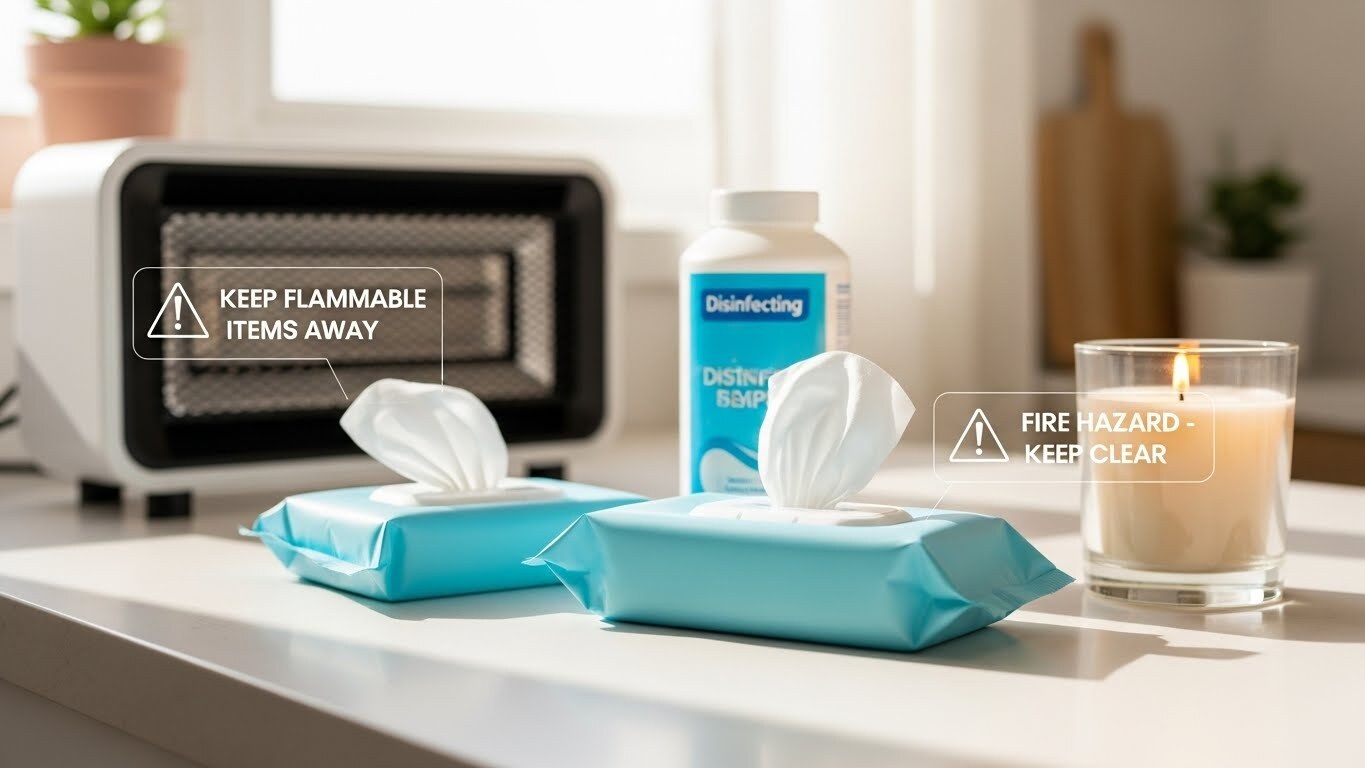
Even products with low risk require basic safe handling. Safety experts always suggest keeping cleaning supplies away from fire sources. Users should avoid placing disinfecting wipes near open flames. Heaters, candles, stoves, and smoking areas need extra caution. Storing wipes in cool environments keeps them safer. Direct sunlight can heat plastic containers and create unsafe conditions. Workplaces should use clear labeling for disinfecting products. Hospitals and clinics should separate household wipes from medical wipes. This helps reduce confusion between low alcohol wipes and high alcohol medical supplies. This separation also reduces incidents caused by product misunderstanding. Some safety reports show that proper storage reduces chemical accidents significantly. This applies to schools, hospitals, workplaces, and industrial environments. Even in homes, simple safe placement prevents many possible risks. Good storage behavior supports careful and smart everyday cleaning.
Comparing Household Disinfecting Wipes to Medical Alcohol Pads
Household wipes are mainly suitable for cleaning tables, handles, and general surfaces. Medical alcohol pads work for skin disinfection before injections or procedures. Alcohol pads often contain seventy percent alcohol or more. This makes them much easier to ignite near sparks or flames. Household disinfecting wipes stay safer because of lower alcohol. Many people compare them because they look similar in packaging. However their functions and chemical designs differ greatly. Household wipes are not substitutes for medical disinfection tasks. Hospitals use strong germicidal wipes for infection control. Homes mostly need regular cleaning rather than deep surgical sanitation. This difference explains why flammability ratings also change between products. Understanding this comparison helps users choose correctly and safely.
Real World Safety Awareness
People sometimes leave cleaning wipes inside cars, kitchens, or garages. Cars can become very hot during the summer months. Kitchens have heat from cooking appliances and electrical tools. Garages may hold fuel containers or heated equipment. People sometimes worry if stored wipes could catch fire unexpectedly. Knowing flame behavior helps reduce fear and improves confidence. When users ask if Clorox wipes are flammable, they want honest answers. They want to know if containers can ignite from heat alone. They want to know if wiping near warm appliances is dangerous. Daily safety understanding creates smarter cleaning decisions. Many parents especially want safety and clarity for family environments. Businesses also want safe facilities for staff and customers.
Understanding Label Warnings and Instructions
Cleaning wipe manufacturers generally provide safety instructions on packaging. Reading labels helps users understand the best use methods. Label information usually includes storage temperature guidance. Users also learn about disposal recommendations and safe handling directions. Following these instructions keeps households safer. Hospitals carefully train staff to follow safety instructions strictly. Schools and offices also follow guidance for safe cleaning behavior. These instructions help prevent careless unsafe usage. Users feel more confident when they understand written instructions clearly. Proper label reading becomes part of responsible cleaning behavior. Awareness helps prevent unnecessary fear and confusion.
Why People Compare Different Cleaning Wipe Brands
Many consumers also compare popular brands to understand safety and cleaning strength. Some compare formula 409 vs clorox vs alcohol wipes to evaluate differences. Every brand has slightly different ingredients and cleaning power. Some focus on strong disinfecting ability. Some focus on household convenience and safe composition. Alcohol based wipes clean faster but raise fire concerns. Household wipes take slightly longer but remain safer around heat. People can choose based on needs, environment, and usage. Homes may prefer safer household wipes. Hospitals may require alcohol based wipes for infection control. Understanding each purpose avoids misuse and helps safer selection.
Final Thoughts on Ingredient Safety Understanding
Knowing product ingredients helps users stay aware of safety. When people understand what wipes contain, they feel more confident. They learn when to worry and when to stay relaxed. They also learn when extra caution becomes necessary. Responsible understanding always supports safer daily living and smarter decision making.
Household disinfecting wipes are generally safer because they usually contain little or no alcohol. Their formulas are mainly water based, making them much less likely to ignite under normal daily environments. They behave very differently from high alcohol medical wipes used in hospitals. Understanding their ingredients and safe storage helps users avoid unnecessary fear. Careful awareness and safe handling always support better cleaning confidence.
Understanding cleaning product composition helps every user make safer daily choices. With correct knowledge, people can clean their homes, workplaces, and healthcare environments confidently without increasing fire danger.