
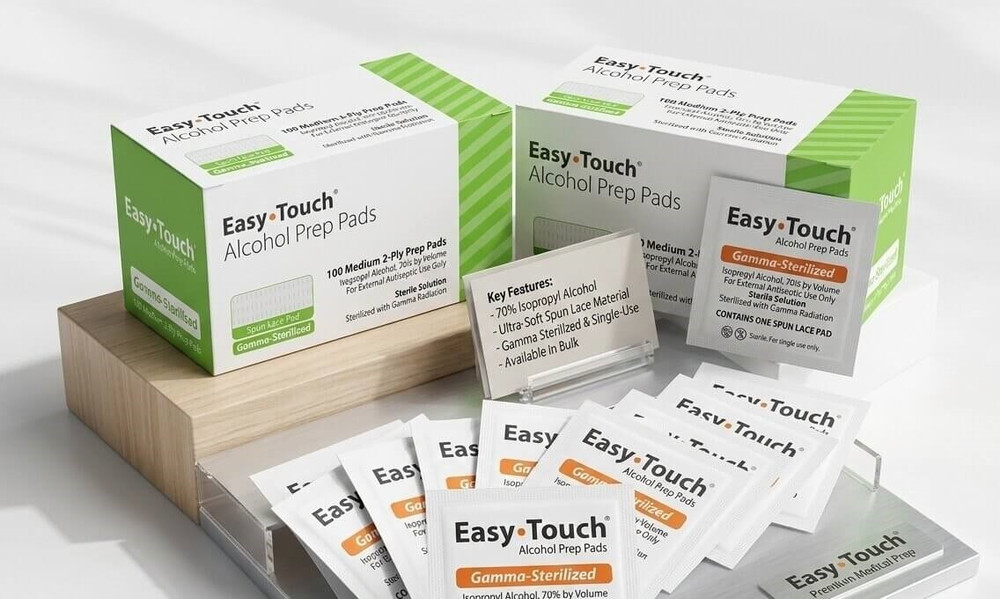
Alcohol Prep Pad Saturation Levels
Mar 9th 2026
Clean skin preparation always starts with correct moisture balance during antiseptic application. Proper alcohol prep pad saturation level directly supports safer care during daily medical procedures. Correct saturation allows antiseptic spread without dripping, dryness, or uneven surface coverage. Healthcare teams rely on consistent saturation to lower contamination risks during routine care. In the United States, infection prevention remains essential due to expanding outpatient treatment volumes.
According to the Centers for Disease Control and Prevention, millions of injections occur yearly across clinical settings. This demand increases reliance on dependable alcohol prep pads across healthcare environments. Over-saturated pads waste alcohol and create handling problems during patient preparation. Under-saturated pads reduce antimicrobial contact and lower disinfection performance. Balanced saturation supports reliable microbial reduction during injections and wound preparation.
Professionals also examine pad fabric, alcohol strength, and packaging quality. Logical selection reduces variability and improves infection control outcomes. Educational tools help teams compare standards and improve product understanding. Many clinicians review trusted guides explaining medical alcohol wipes performance and safety.

70% Isopropyl Alcohol Standard
Seventy percent alcohol concentration remains the accepted balance for reliable disinfection performance. This standard supports effective germ removal without excessive evaporation or skin irritation. Most 70% isopropyl alcohol pads follow this widely accepted clinical guideline.
Why Not Higher or Lower
Seventy percent alcohol penetrates microbial cell walls more effectively than stronger solutions. Higher concentrations evaporate quickly and shorten effective surface contact time. Lower concentrations fail to deliver reliable antimicrobial action during skin preparation.
Public health research supports this balance for safe and effective infection prevention. Healthcare facilities follow this standard to maintain compliance and consistent outcomes.
Optimal Disinfection
Effective disinfection depends on coverage, contact time, and even alcohol distribution. Proper saturation keeps pads moist long enough to destroy bacteria and viruses. Healthcare providers rely on this consistency to lower procedure related infection risks. Guidance referenced by the World Health Organization confirms correct antiseptic use reduces infections.
Pad Size and Coverage Area
Pad dimensions influence coverage, efficiency, and waste control during patient preparation. Larger pads support wider surfaces during wound care and device cleaning. Smaller pads improve accuracy during injections and fingerstick testing procedures. Correct prep pad size and coverage ensures effective cleaning without unnecessary alcohol loss. Clinical tasks like venipuncture require surface coverage without excess fluid spread.
Outpatient and home-care growth increases demand for multiple pad size options. Healthcare professionals evaluate size alongside saturation and fabric construction. Comparison resources help teams assess suitability across various medical applications. Many clinicians explore alcohol swabs for injections when precision matters most.
Individual Wrapping Benefits
Packaging design strongly influences saturation stability and hygiene reliability. Individually sealed products preserve alcohol strength during storage and transport. Healthcare teams trust individually wrapped alcohol pads for consistent clinical performance.
Moisture Retention
Individual wrapping prevents evaporation and protects alcohol concentration over time. Sealed packaging maintains sterility and consistent saturation until point of use. Facilities depend on controlled packaging to meet infection control requirements. Supply studies show moisture retention improves reliability and reduces product waste.
Portability
Individually wrapped pads support easy transport in emergency and home-care kits. Portable antiseptic solutions improve infection control in mobile treatment environments. Rising telehealth adoption increases demand for compact medical preparation supplies. Many providers explore guidance covering portable sterile alcohol prep pads usage standards.
Bulk Buying Prep Pads
Bulk purchasing supports cost control and uninterrupted supply for healthcare providers. Large facilities benefit from stable pricing and predictable inventory management. The growing medical disposables market reflects rising chronic disease management needs. Bulk alcohol prep pads also support emergency readiness and infection control planning.
Healthcare buyers compare saturation consistency, fabric strength, and packaging durability. Group purchasing improves access to quality supplies across multiple care locations. Centralised sourcing platforms support informed purchasing and logistical efficiency.

Arpovo Alcohol Prep Pad Options
Alcohol prep pads vary widely based on material design and absorbency performance. Fabric choice directly affects strength, softness, and alcohol retention capabilities. Spun-lace materials offer durability with high fluid holding capacity. Many Arpovo alcohol prep pads use spun-lace construction for reliable saturation. Material selection supports patient comfort during frequent skin preparation.
Clinical environments require dependable performance across varied procedures. Detailed material insights explain how fabric technology improves consistency. Healthcare teams assess quality, packaging, and saturation during product evaluation.
Conclusion
Alcohol prep pad saturation influences safety, hygiene, and procedural effectiveness. Understanding alcohol concentration supports better antiseptic performance across care settings. Pad size selection improves coverage and reduces unnecessary material waste. Proper packaging preserves moisture and protects product sterility during storage. Reliable supplies support confidence during injections and routine medical care. As outpatient care expands, dependable antiseptic solutions remain essential.
Continue learning about infection control practices and antiseptic product quality. Consistent preparation standards protect patients across clinical and home environments. Ongoing education strengthens safety awareness and improves long term outcomes.
[ Explore trusted alcohol prep pad solutions for safer care ]